A Japanese hotel listing tells you almost everything you need, if you know where to look on it: the width of the bed, the meal code, the hour your free cancellation runs out and the price band your city taxes. Miss one of the four and you get a room for two that is 120 centimeters wide, a ryokan dinner you arrive too late to eat, or a charge for the whole stay because you canceled at lunchtime.
Contents10 parts
- The kinds of stay, and what each costs
- When to book for the busy weeks
- Where to book: direct, the global platforms, or the Japanese ones
- Reading a listing
- What a ryokan booking includes, and the time you must arrive
- Accommodation taxes by city, as of November 2026
- Cancellation rules and fees
- Check-in with a passport
- One direct booking, step by step: Toyoko Inn
- Sending your luggage ahead
None of it is hard, but the listings are written for Japanese travelers, and the English versions of the big sites translate the words without explaining the habits behind them.
I book business hotels for city nights and one ryokan for the night a trip is built around. That keeps the budget sane and puts the money where it shows.


The kinds of stay, and what each costs
Japan has no official hotel star rating, as JNTO’s accommodation guide points out, so a “four-star” label on a booking site is the site’s own guess. The type of property tells you more: how the room is priced, what the bath is like, whether dinner is part of the deal.
For a price anchor, the most useful recent figure comes from Tokyo Shoko Research’s survey of listed hotel chains, published in June 2026. Across nine business-hotel brands the average room rate for the year to March 2026 was ¥14,463 (about US$91), up 8.9 percent on the year before, and across three city-hotel brands it was ¥25,490 (about US$160). Those are averages, so a Kyoto room in cherry-blossom week sits well above them and a Tuesday in a regional city well below.
Seven nights at the business-hotel average comes to roughly ¥101,000 (about US$635) for the room, before tax and before the ryokan night that costs more than any two of the others.
Business hotels
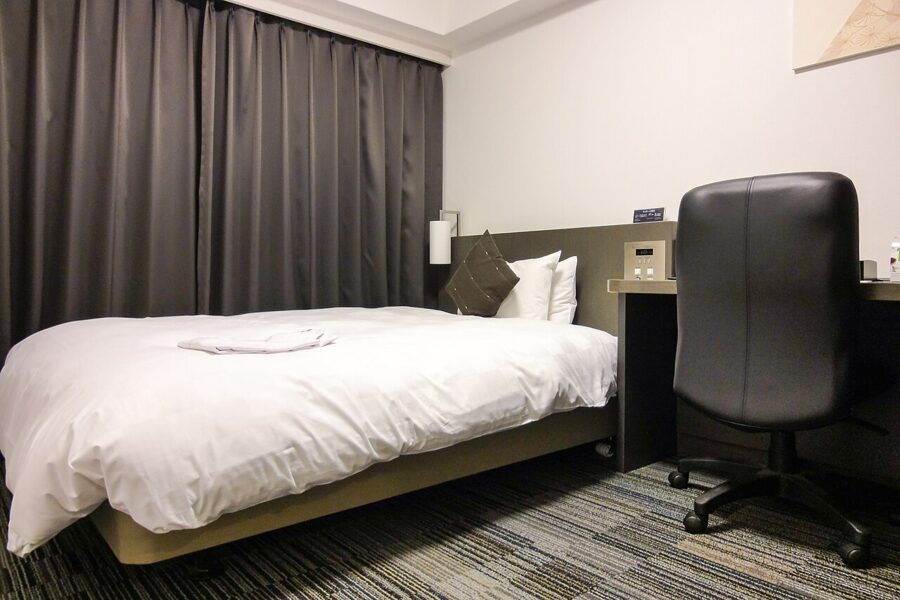
The business hotel is the workhorse of travel in Japan: a compact Western-style room near a station, a unit bathroom, a kettle, a fridge, sleepwear on the bed and often a breakfast room downstairs. Chains such as Toyoko Inn, Dormy Inn, APA, Daiwa Roynet and Mitsui Garden run hundreds of nearly identical properties, so if you liked one, you know the next.
The listing gives the room size in square meters. A single in the low teens is normal and sleeps one person and a suitcase that stays closed; a couple with two large bags should filter for twins or for 18 square meters and up.

City hotels
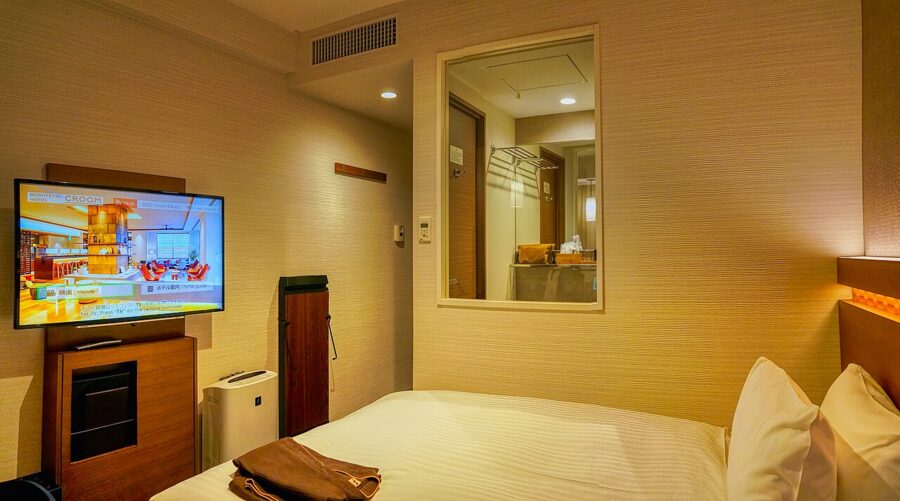
“City hotel” is the Japanese industry’s name for the full-service hotel: restaurants, a concierge, banquet floors, bigger rooms. Japanese groups such as Okura, New Otani and Prince sit beside the international brands. For a first night after a long flight, one beside a major station is worth the premium.
Ryokan
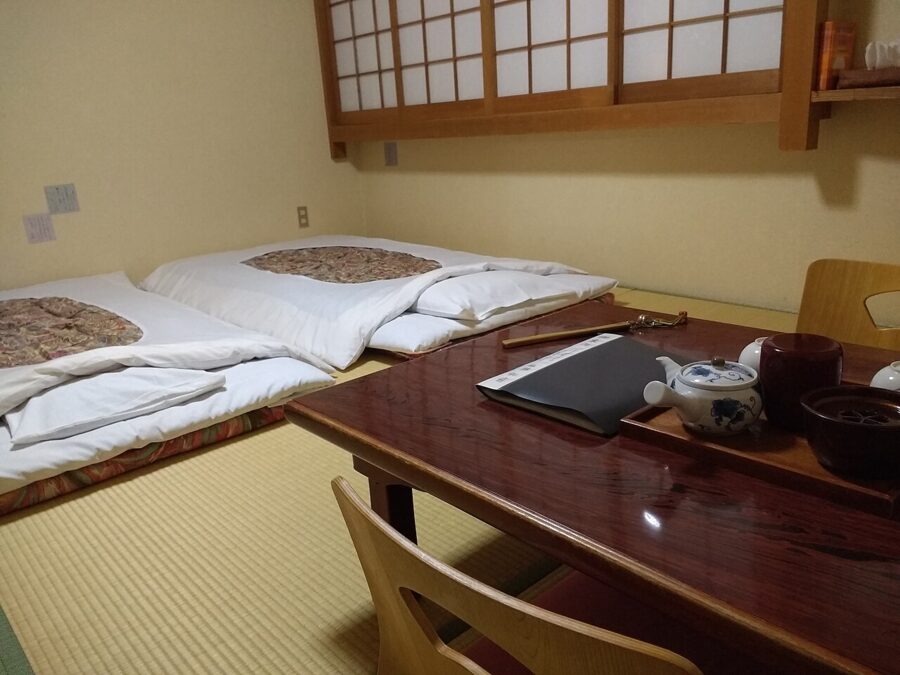
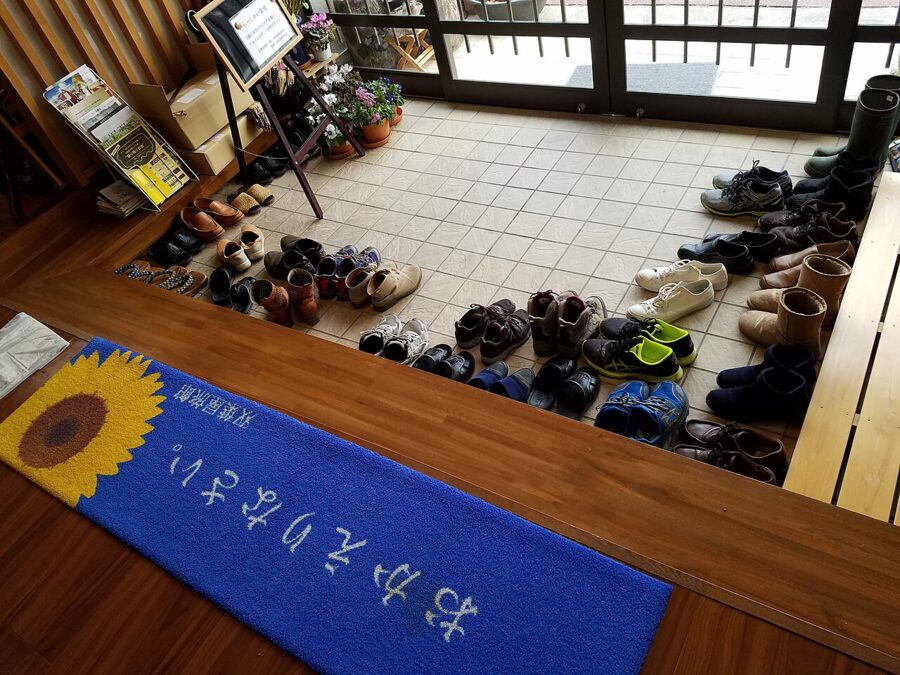
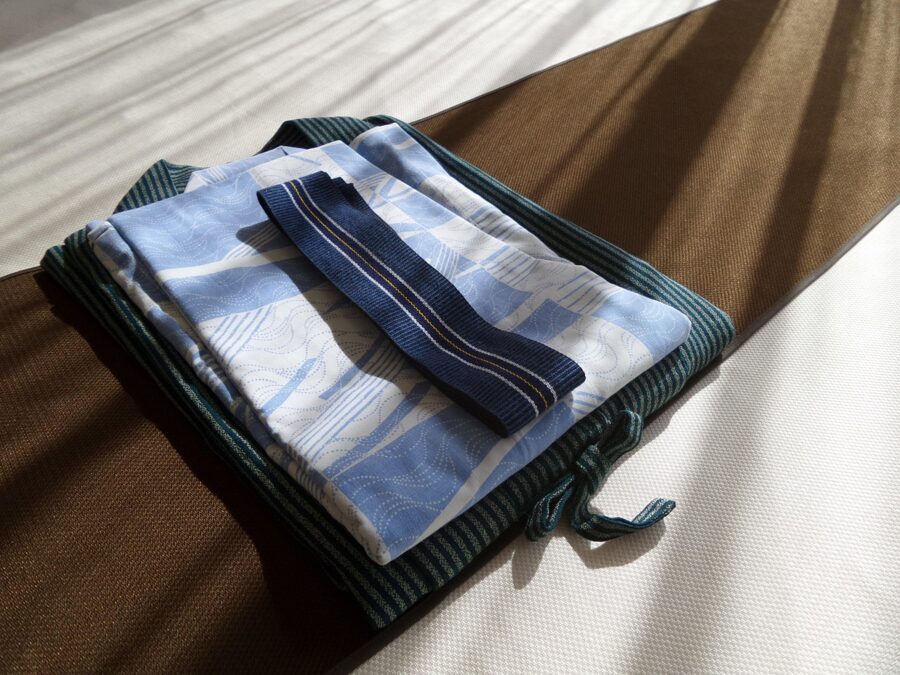
A ryokan is an inn built around the Japanese way of staying: tatami floors, futon laid out at night, a communal bath (often a hot spring), a cotton robe called a yukata, and dinner and breakfast included. You pay per person, not per room, and the meal is most of what you are paying for. Boyé Lafayette De Mente described the routine for Western readers in Exotic Japan, and the ritual of shoes off at the door, tea on arrival and the bath before dinner has barely moved since.

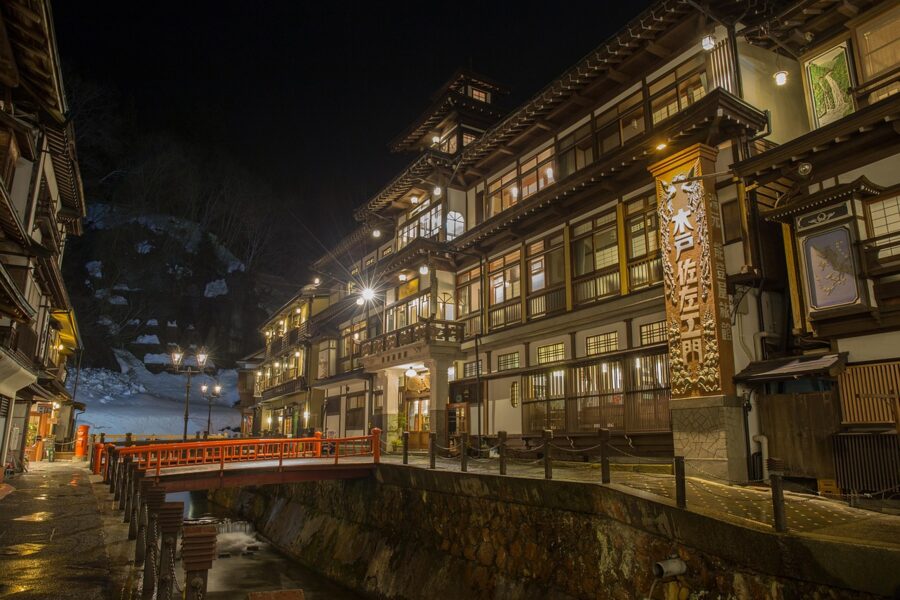
Ryokan range from family inns with six rooms to hot-spring resorts with buffet halls. The cheapest plans are often room-only plans at inns whose real business is the dinner, so read the plan before you compare prices.
Minshuku
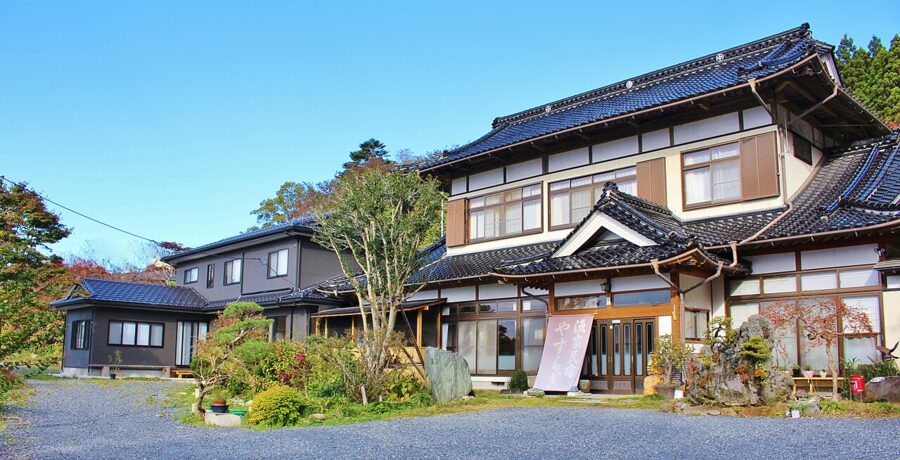
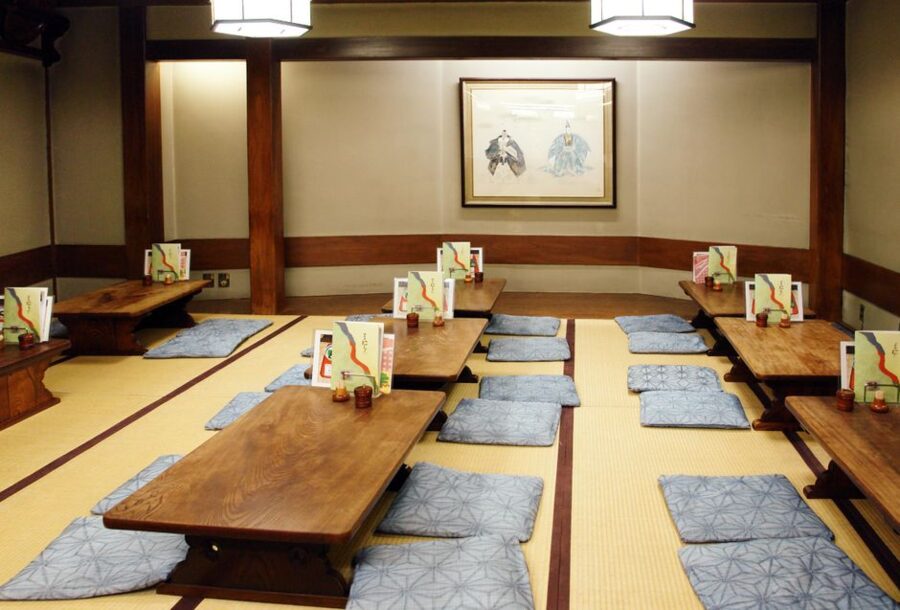
A minshuku is a family-run guesthouse, usually in a home or a converted farmhouse, often by the sea or in the mountains. Expect Japanese-style rooms, shared washrooms, home cooking at a set time, and futon you may be asked to lay out yourself. They cost less than a ryokan, and for a fishing village or a mountain hamlet they may be the only beds there are.

Capsule hotels
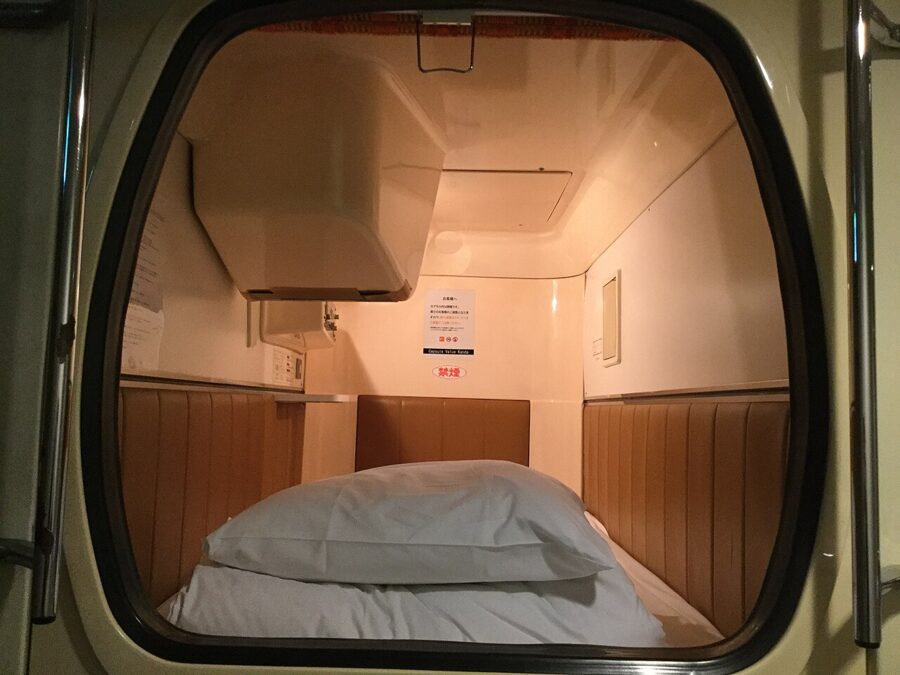
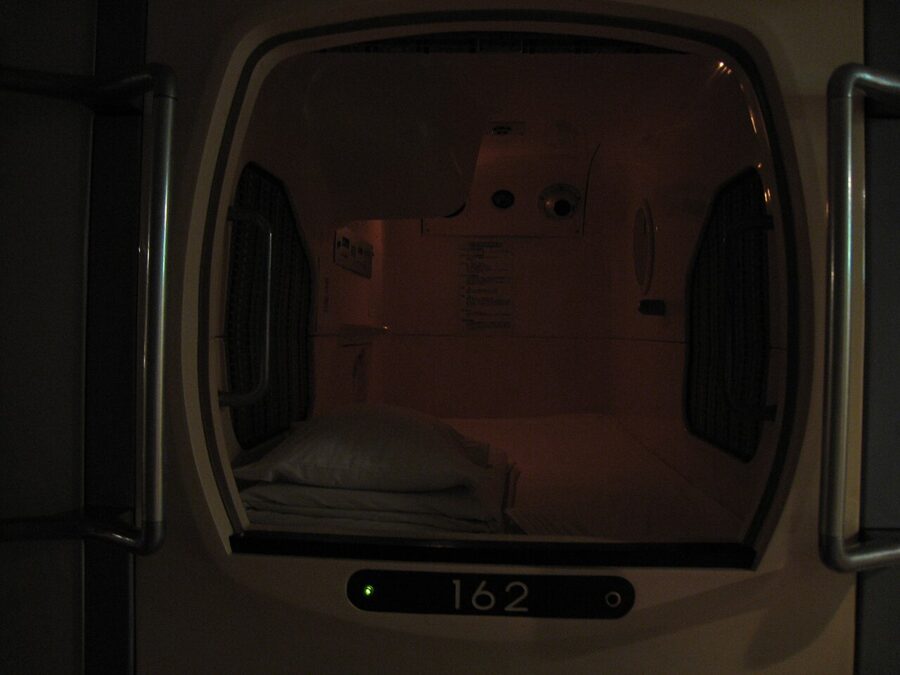
Capsule hotels rent a sleeping pod, a locker and a share of a bathhouse. Many newer ones take women on separate floors, but plenty of older ones are men only, so check that first. One night is fun; three in a row tests your earplugs.
Machiya and other rentals
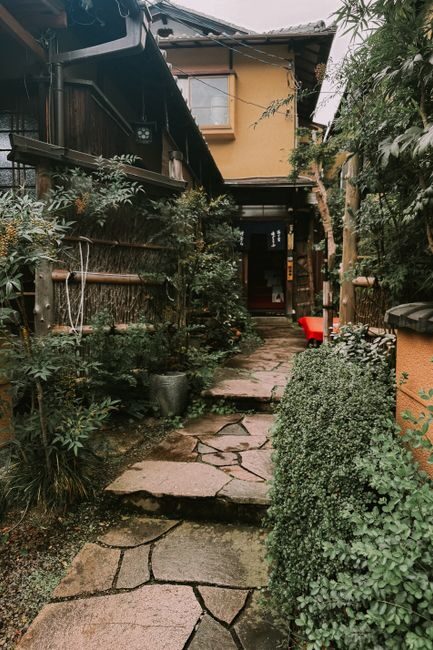
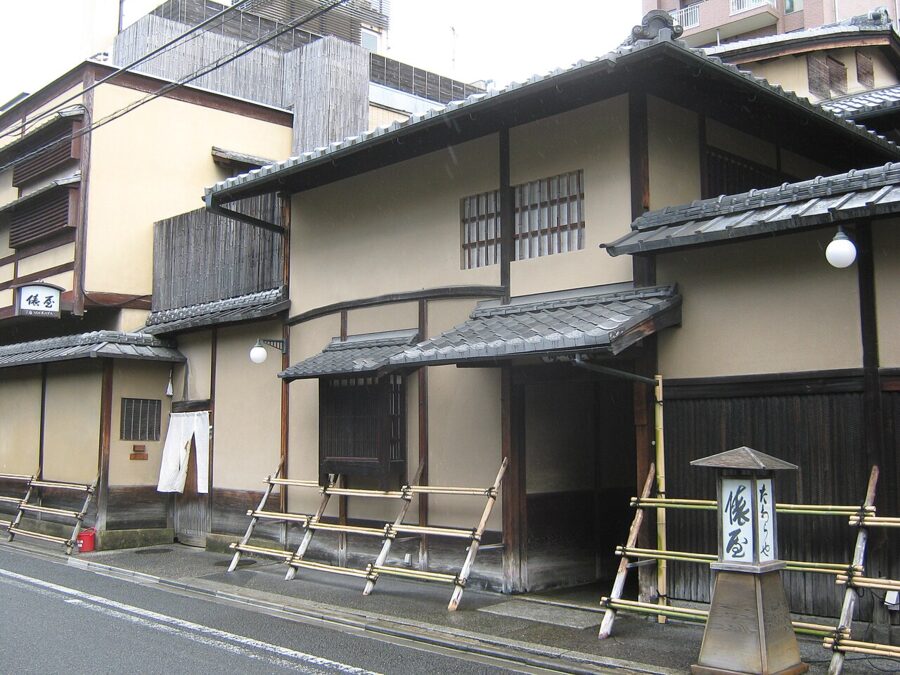
A machiya is a wooden townhouse of the old merchant quarters, and in Kyoto many have been restored and rented out whole. They suit a family or a small group for three nights or more: a kitchen, a garden the size of a rug, a wooden bath and no front desk. Some are licensed as inns under the Inns and Hotels Act, others as minpaku (民泊, private lodging).
Under the Private Lodging Business Act a minpaku can host guests for at most 180 nights a year and must notify the local government before it opens, and booking platforms are supposed to confirm that notification. Skip a rental that shows no license or notification number.
When to book for the busy weeks
Book as soon as your dates are fixed. Rates in Japan generally climb as a date fills, and the inexpensive rooms go first. Calendars open many months ahead; pick a date late in your trip and see whether it loads.
These are the weeks when Japanese travelers fill the rooms you want:
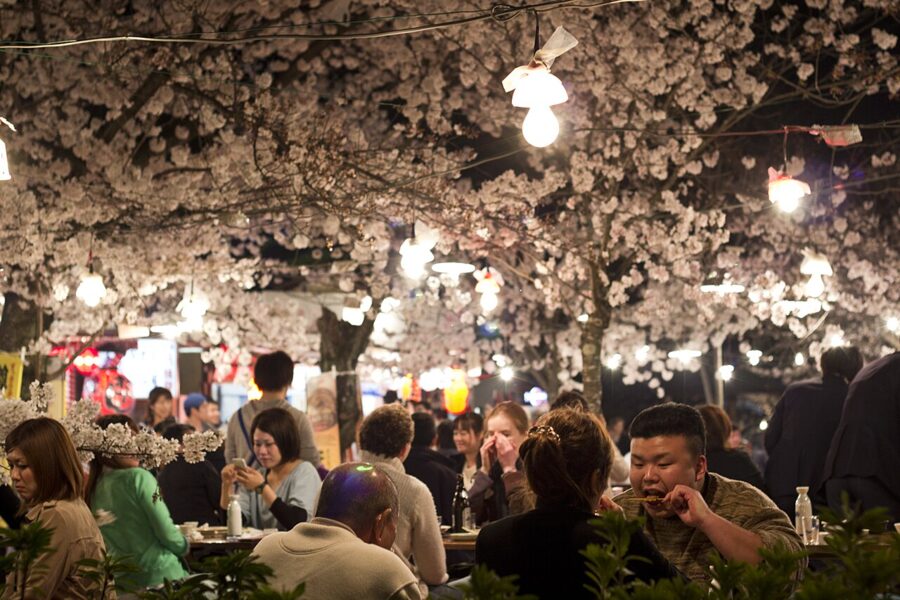
- Cherry-blossom season, late March to early April in Tokyo, Kyoto and Osaka, later further north.
- Golden Week, the cluster of public holidays from Showa Day on April 29 to Children’s Day on May 5.
- Obon, the middle of August, when families travel home and to the coast.
- Autumn leaves, November in Kyoto, Nikko and the mountain onsen towns.
- The New Year holiday, roughly December 29 to January 3.
- Saturday nights at any ryokan, all year. A Saturday can cost far more than the Sunday after it at the same inn.

For those weeks, book a refundable room at once and keep looking. Generous cancellation rules let you hold a room while you plan the route around your Japan Rail Pass or your trains.
Where to book: direct, the global platforms, or the Japanese ones
The same room often appears in all three places at different prices and with different rules, and I check all three for anything over a few nights.
Direct, on the hotel’s own site
The chains have strong reasons to want you on their own sites. Toyoko Inn, for one, promises its best price on its official website and gives a coupon for joining its member club. Booking direct also means the cancellation rule is the hotel’s own and a change of dates is one email. Many small ryokan run their own booking engines, sometimes the only place their best rooms appear.
The global platforms
Booking.com, Agoda, Expedia, Hotels.com and Trip.com list most city hotels and many ryokan. Their virtues are English everywhere, one account for a whole trip and easy refundable rates. Their weakness is the ryokan: dinner plans are often missing or simplified, and rules on arrival times reach you late or not at all.
Whatever you book through a platform, the contract on the night is with the hotel. If a booking matters, send the property a short email after you book with your name, dates and confirmation number, which is the cheapest insurance there is.
The Japanese platforms: Rakuten Travel, Jalan and Ikyu
The three big domestic sites are where Japanese travelers book, and they carry many inns and plans the global sites do not. Each now has an English version.
- Rakuten Travel, part of the Rakuten group, lists hotels and ryokan across the country and runs an English site at travel.rakuten.com.
- Jalan is run by Recruit. Its English site covers hotels, ryokan, pensions and public inns, in English, Chinese, Korean, Thai, Indonesian and Malay.
- Ikyu specializes in upscale hotels and ryokan, which makes it the first place to look for a splurge night.
The habit that catches people out on all three is per-person pricing. A ryokan plan at ¥30,000 (about US$189) is usually ¥30,000 each, so a couple pays twice that before tax. Change the guest count in the search box to the real number of people before you compare anything.
If the English site hides a plan you can see on the Japanese one, browser translation does a workable job. Type your name in capital roman letters exactly as in your passport.
Reading a listing
The room name on a Japanese listing is code for three things: the beds, the floor and the meals. Each can turn a cheap rate into a bad night.
Beds and room types
A single has one bed for one person. A semi-double (セミダブル) has a bed often about 120 centimeters wide, between an American twin (about 99 centimeters) and a full (about 137). Japanese hotels sell semi-doubles to two people, and the listing will say “2 guests” without blinking. Two adults of any size in 120 centimeters is a long night, so a couple should book a double, a queen or a twin.
A twin means two single beds. A “Hollywood twin” is two singles pushed together. A triple is often a twin with a sofa bed or an extra bed rolled in, so check the photos.
Japanese-style rooms
A washitsu (和室, Japanese-style room) has tatami floors and futon instead of beds, and its size is given in jō (畳), the number of mats. Six mats is roughly 10 square meters; ten mats is a good size for two. A wayōshitsu (和洋室, Japanese-Western room) has a tatami area plus Western beds, and is the right choice for anyone who wants the look of a ryokan without sleeping on the floor.
The meal code
Every Japanese plan carries one of three meal labels, usually in the first line of the plan name:
- Sudomari (素泊まり): room only.
- Chōshoku-tsuki (朝食付き): with breakfast.
- Ippaku nishoku (1泊2食付き): one night with two meals, dinner and breakfast. The standard ryokan plan.
Below that sits the detail that matters: whether dinner is served in your room, a private dining room or a hall, and whether it is “kaiseki” (a sequence of small courses) or a buffet. If you have an allergy or do not eat meat or fish, say so in the request box and again by email, because a set menu is bought days ahead.
Baths and tattoos
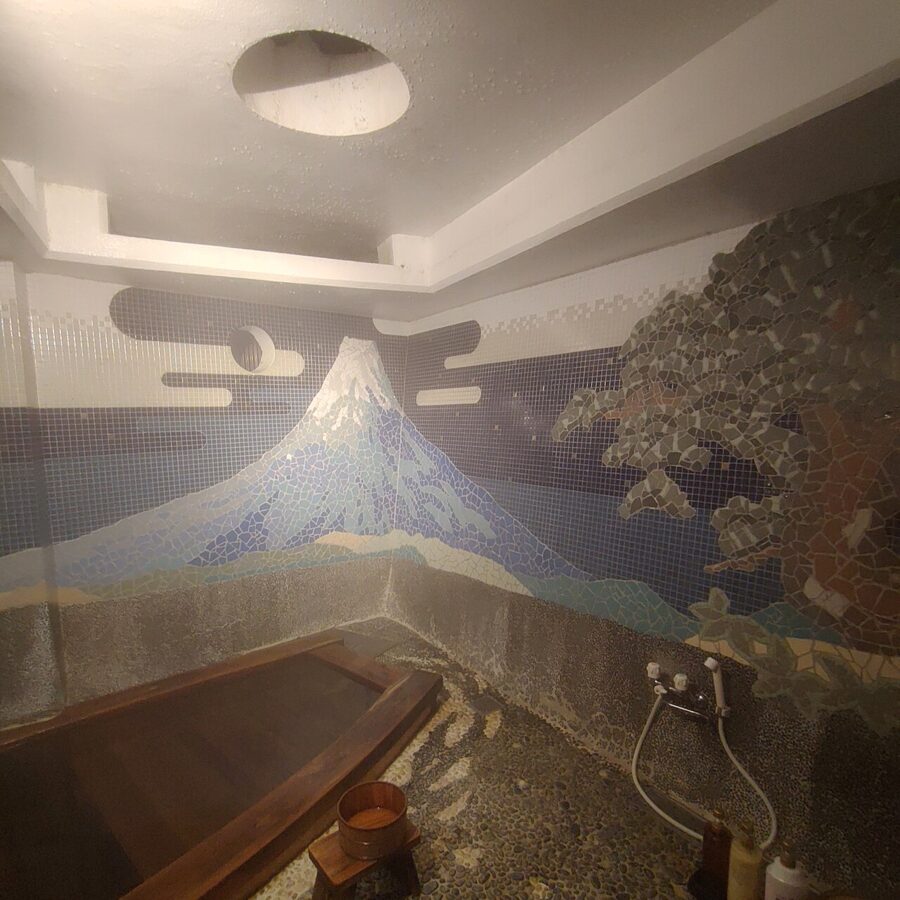
Ryokan and many hotels have a large shared bath, split by sex, and many hot-spring baths still refuse guests with tattoos. Policies vary inn by inn. JNTO’s advice on tattoos and onsen is the practical one: ask the property directly, cover small tattoos with skin-colored patches where that is accepted, or book a room with its own bath.
The other way in is the kashikiri-buro (貸切風呂, private bath), booked by the time slot. Ask how slots are reserved and whether there is a charge.

What a ryokan booking includes, and the time you must arrive
A ryokan booking is a dinner booking with a bed attached, and the dinner sets the clock for your whole afternoon. The kitchen cooks for a fixed hour, so the inn needs you there in time to check in, bathe and sit down. That is why the plan carries an arrival deadline that a city hotel never has.
The deadline is set by each inn, and you will find it in the plan details or the property’s terms. Motoyu Ryuusenkaku, an inn in Arima Onsen near Kobe, is a typical example: its English FAQ asks guests with dinner to check in by 6 p.m. and guests without dinner by 9 p.m., with check-in from 3 p.m. Expect something close to that at most inns, and an earlier time at small ones.

Arrive late without warning and you may lose more than dinner. The national model terms that many Japanese hotels and inns adapt, last revised by the Japan Tourism Agency in December 2023, let a property treat a guest who has not arrived by a stated hour, without contact, as having canceled. Each inn writes in its own hour. If your train is late, phone the inn as soon as you know; most will hold dinner or adjust it, and the booking stays yours.
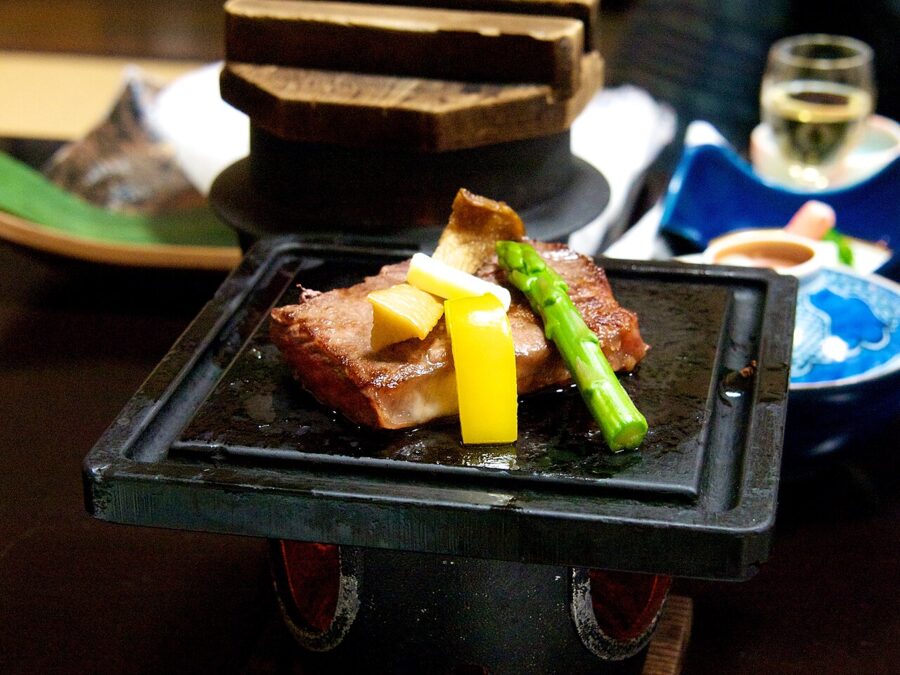
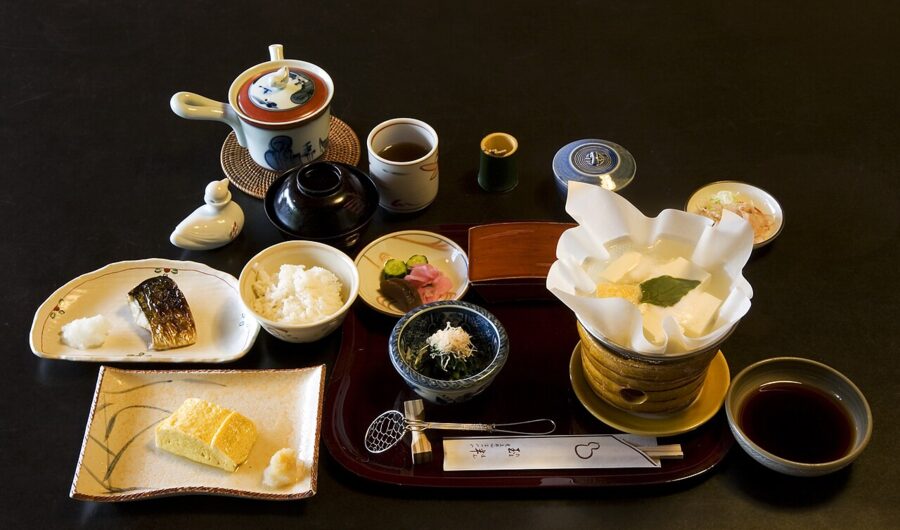
The rest of a standard plan is the room, the yukata, the baths, the futon laid out while you eat, and breakfast at a set time. Drinks at dinner go on a bill you settle at check-out with the bathing tax.

On a second night at the same inn, ask at booking whether there is a different second-night menu. If you want to eat out in the town instead, book a room-only or breakfast plan, and read up on booking restaurants in Japan before you go.
Accommodation taxes by city, as of November 2026
Japan has no national hotel tax, but a growing number of cities and prefectures charge an accommodation tax (shukuhakuzei, 宿泊税) per person per night. Most platforms show it as “excluded” and the hotel collects it on the spot. It is worked out on the room charge; Osaka and Sendai spell out that meals and consumption tax are left out of that charge.
Several of these changed in the last year. At about ¥159 to the US dollar (November 2026), ¥1,000 is about US$6.
| Place | Room charge per person per night | Tax per person per night |
|---|---|---|
| Kyoto city (from March 1, 2026) | Under ¥6,000 / ¥6,000 to ¥19,999 / ¥20,000 to ¥49,999 / ¥50,000 to ¥99,999 / ¥100,000 and up | ¥200 / ¥400 / ¥1,000 / ¥4,000 / ¥10,000 |
| Tokyo (until March 31, 2027) | Under ¥10,000 / ¥10,000 to ¥14,999 / ¥15,000 and up | None / ¥100 / ¥200 |
| Tokyo (from April 1, 2027) | Under ¥13,000 / ¥13,000 and up | None / 3% of the room charge |
| Osaka Prefecture (from September 1, 2025) | Under ¥5,000 / ¥5,000 to ¥14,999 / ¥15,000 to ¥19,999 / ¥20,000 and up | None / ¥200 / ¥400 / ¥500 |
| Fukuoka city | Under ¥20,000 / ¥20,000 and up | ¥200 / ¥500 |
| Sapporo (city and Hokkaido combined, from April 1, 2026) | Under ¥20,000 / ¥20,000 to ¥49,999 / ¥50,000 and up | ¥300 / ¥400 / ¥1,000 |
| Sendai (city and Miyagi combined, from January 13, 2026) | Under ¥6,000 / ¥6,000 and up | None / ¥300 |
Kyoto’s accommodation tax is now the steepest in Japan: a ¥120,000 (about US$755) ryokan night for one person carries ¥10,000 (about US$63) in tax on top. Below ¥20,000 (about US$126) a night it stays at ¥200 (about US$1) or ¥400 (about US$3).

Tokyo’s accommodation tax changes from a flat amount to 3 percent of the room charge on April 1, 2027, with stays under ¥13,000 (about US$82) exempt, and from that date it covers simple lodgings and minpaku as well as hotels and ryokan. If you book a Tokyo stay for spring 2027 now, ask the hotel which rule it will charge.
Osaka Prefecture’s tax rose on September 1, 2025, and applies by date of stay whatever date you booked. Fukuoka’s includes a small prefectural share and covers minpaku too. Sapporo’s started on April 1, 2026, the same day as Hokkaido’s prefectural tax, and Sendai’s on January 13, 2026, measured on the room-only price before consumption tax.
Hot-spring towns add the bathing tax (nyūtōzei, 入湯税), usually ¥150 (about US$1) per person per night. Other towns have their own accommodation taxes, so look for one in the booking terms anywhere not in the table.
Cancellation rules and fees
Japanese cancellation fees are set by each property, and the Japanese platforms usually show them as a small table: no-show, same day, the day before, and so on. The Japan Tourism Agency’s model terms have exactly those columns, from no-show back to 20 days before arrival, with blank percentages for each property to fill in. What you see on the listing is that property’s own row.
Chain business hotels are lenient. Toyoko Inn’s stay terms, revised in September 2026, charge nothing for an individual booking canceled up to noon on the day of arrival, and 100 percent after noon or for a no-show. Ryokan are stricter, because they buy and prepare food for you; charges often start several days before arrival and climb to the full price on the day. Groups pay earlier and more at both.
Two traps sit on top. A non-refundable platform rate overrides the hotel’s own terms, so a cheap prepaid rate may cost everything where the hotel would have let you go free. And the cancellation hour is Japan time, the middle of the night in North America, so put the deadline in your calendar in your own time zone.
Check-in with a passport
Every hotel, ryokan and minpaku in Japan keeps a guest register, and the rule for foreign visitors is firm. The Ministry of Health, Labour and Welfare requires foreign nationals without an address in Japan to give their nationality and passport number at check-in, to show their passport and to let the hotel copy it. Front desks will ask for every foreign guest’s passport, not just the lead guest’s.
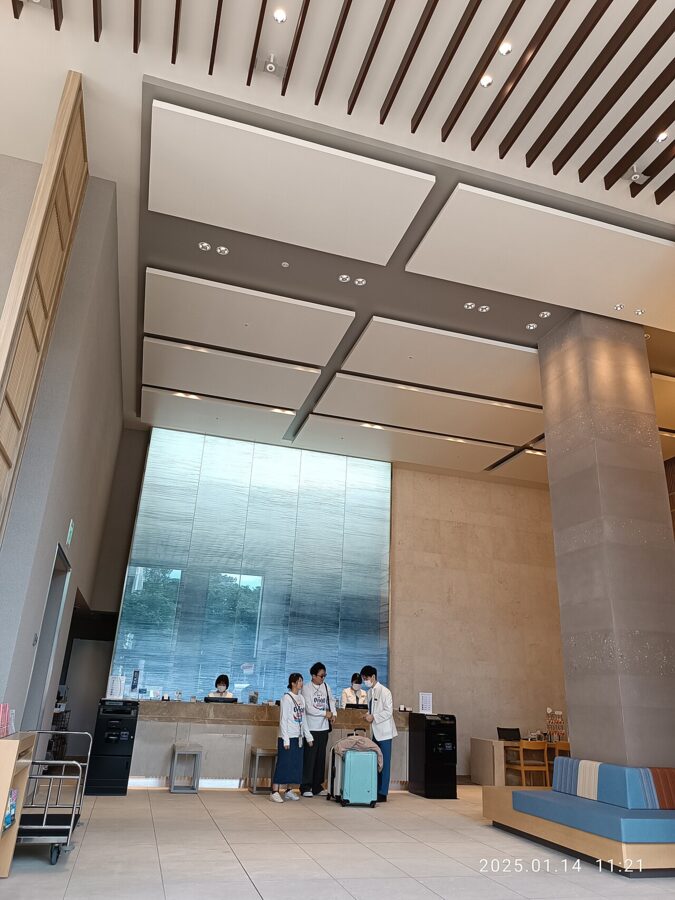
Hand it over without fuss; staff are doing what the rule asks. Many chains now run check-in kiosks that scan the passport for you.
Check-in usually starts at 3 p.m. Almost every hotel will hold your bags before then and after check-out, free.
One direct booking, step by step: Toyoko Inn
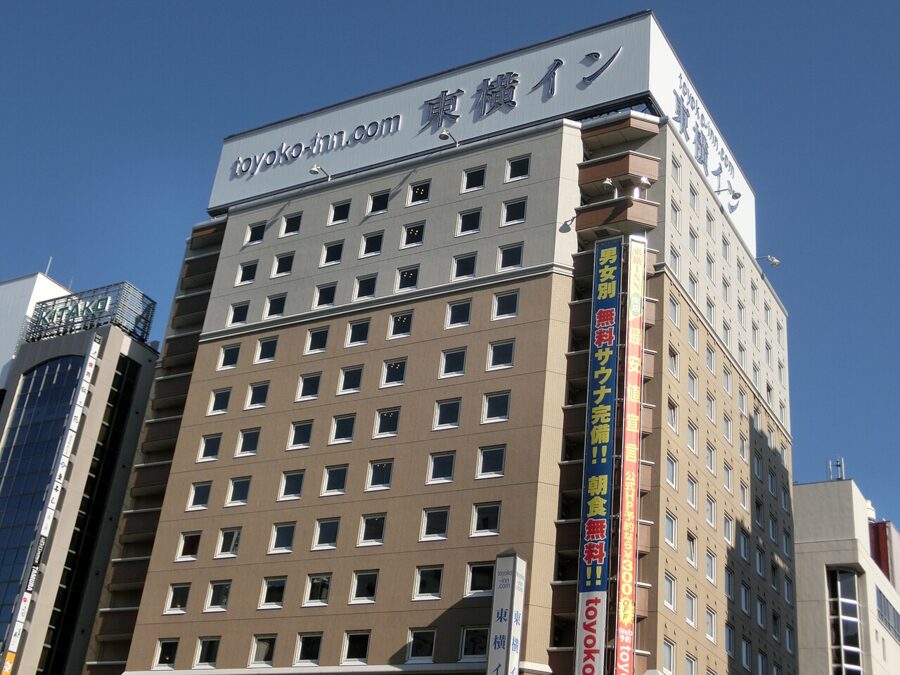
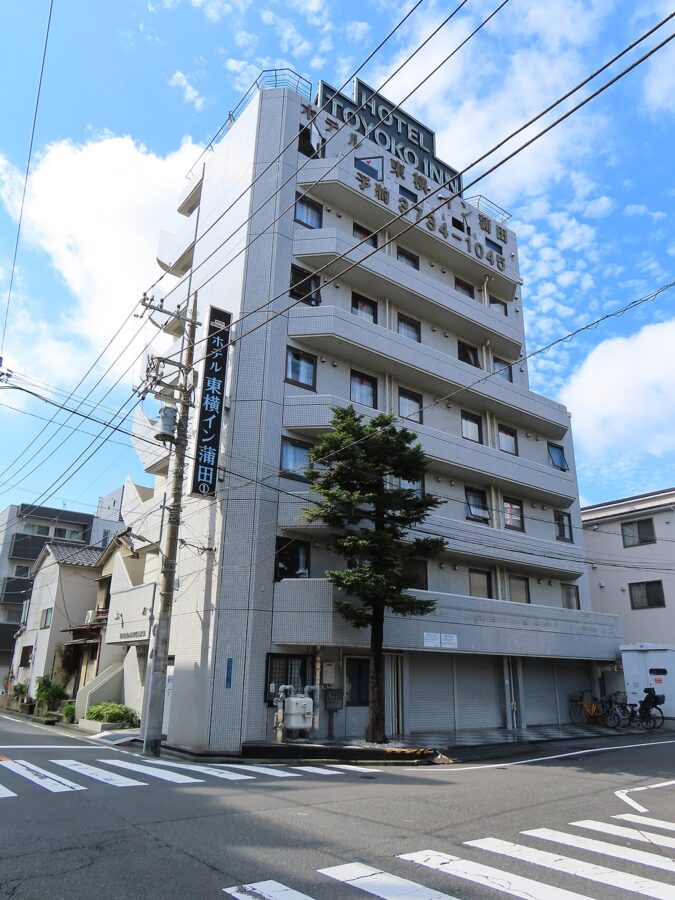
Toyoko Inn is one of the largest business-hotel chains in Japan, with near-identical rooms close to stations across the country, free breakfast and a simple booking system, and the same steps work on most Japanese hotel sites. Terms below are as of November 2026.

- Open Toyoko Inn’s English site on a laptop rather than a phone; the hotel list and room details are easier to compare on a big screen.
- In the search form, enter the city or station, your check-in and check-out dates, the number of guests and rooms, and smoking or non-smoking. Always pick non-smoking.
- Choose a branch by its station name. Toyoko Inn usually names its hotels after the nearest station, often with the exit, so “Ekimae” (駅前) means in front of the station.
- Pick the room type: a single for one, a double or twin for two.
- Decide whether to join the Club Card program. Membership brings member discounts and a ¥500 (about US$3) coupon on registration; read the card terms for the joining fee before you sign up.
- Enter your name in capital roman letters exactly as in your passport, your email and your phone number. Add your expected arrival time; it matters, because Toyoko Inn may cancel a booking if you have not arrived or called by then.
- Confirm. The email that follows carries your reservation number; keep it on your phone.
- Usually nothing is charged now. Toyoko Inn’s terms have you pay at the front desk on arrival, in yen or by an accepted card.
- If plans change, cancel through the site before noon Japan time on your arrival day and it costs nothing.
- On the day, check in from 3 p.m. with every guest’s passport. Breakfast is included; check-out is 10 a.m., and staying later costs ¥1,000 (about US$6) an hour until 2 p.m.
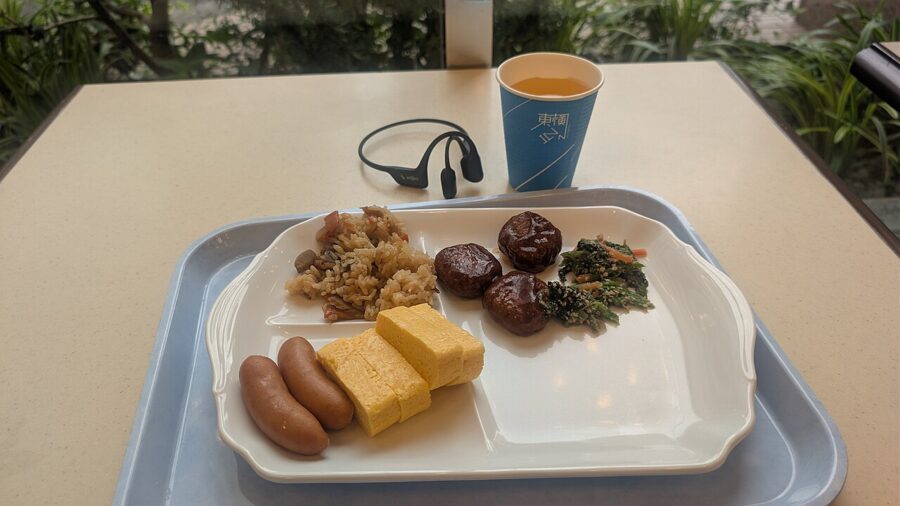

Children of elementary-school age or younger stay free at Toyoko Inn if they share a bed with an adult, one child per bed.
Sending your luggage ahead
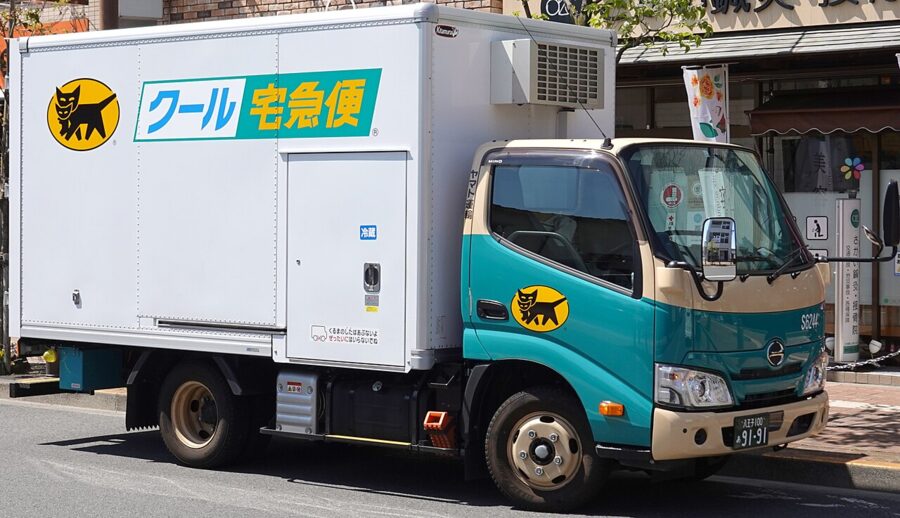
Japan’s luggage-forwarding services let you send a suitcase from one hotel to the next and travel with a day bag, the best thing you can do for a trip that mixes trains, ryokan and small rooms. Yamato Transport’s Ta-Q-Bin is the best known. Under its hands-free travel service you can hand a bag to a hotel front desk, an airport counter, a station counter or a Yamato office, with delivery as early as the next day. A suitcase up to 160 centimeters in total length, width and height sent from Tokyo Station to a Kyoto hotel starts at ¥3,160 (about US$20) for next-day delivery, and anything of 200 centimeters or more is refused.
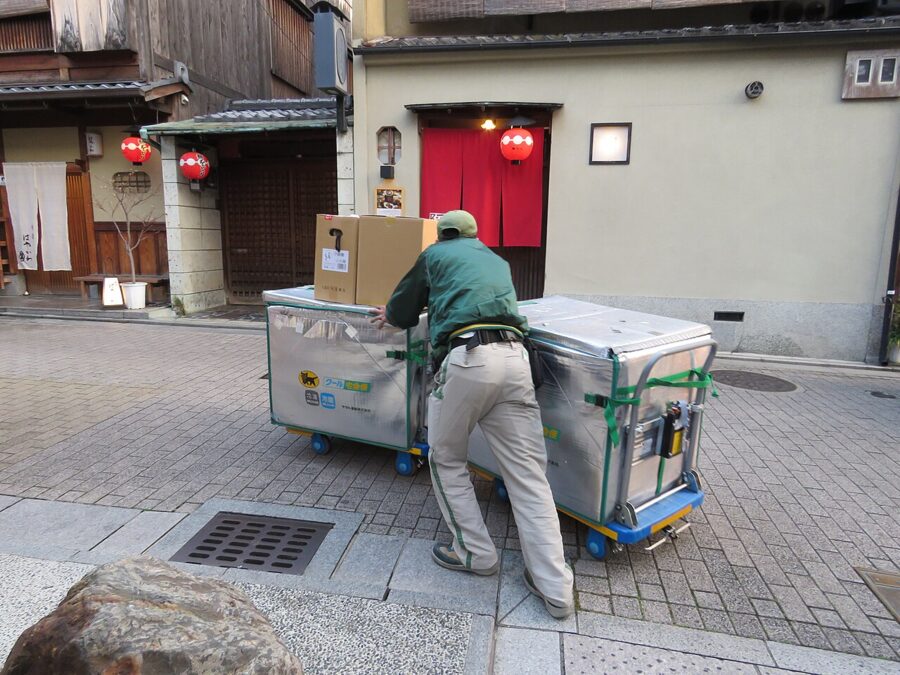

Ask at the front desk the evening before you leave, fill in the slip with the next hotel’s name, address and phone number and your arrival date, and pay there. Send it to a hotel where you will spend at least one night, never one you leave the morning it arrives. Some Shinkansen lines also require a reserved space for large suitcases, set when you book Shinkansen tickets, which is one more reason to send them.
Go back to the four things on the listing: the bed width, the meal code, the cancellation hour and the tax band. Before you press confirm on any room in Japan, find all four on the page, and the room you arrive at will be the room you booked.