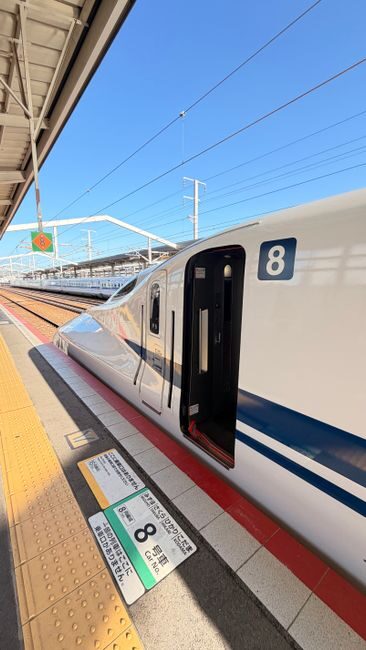
Every Shinkansen seat in Japan goes on sale at the same moment: 10 a.m. Japan time, one month before the train runs. What changes from line to line is the website, because the bullet trains belong to five railway companies and each one sells its own track. Pick the right site, have a credit card and an email address ready, and the booking itself takes a few minutes.
Contents10 parts
- Who sells which line
- Booking on smartEX, step by step
- JR West, JR East and JR Kyushu, in shorter form
- When seats go on sale, and the weeks that sell out
- Reserved, non-reserved, Green and the rest
- Big suitcases on the Tokaido, Sanyo and Kyushu lines
- At the station: machines, counters and what to say
- Changing, refunding and missing the train
- What it costs: Tokyo to Kyoto, worked through
- Where the Japan Rail Pass fits
The order of jobs is always the same: find out whose line you are riding, open an account on that company’s site, book at the right hour, then decide how you will get through the gate. Tokyo to Kyoto is the run most first trips start with, so it is the worked example throughout, and every fare and rule here is as of November 2026.


Who sells which line
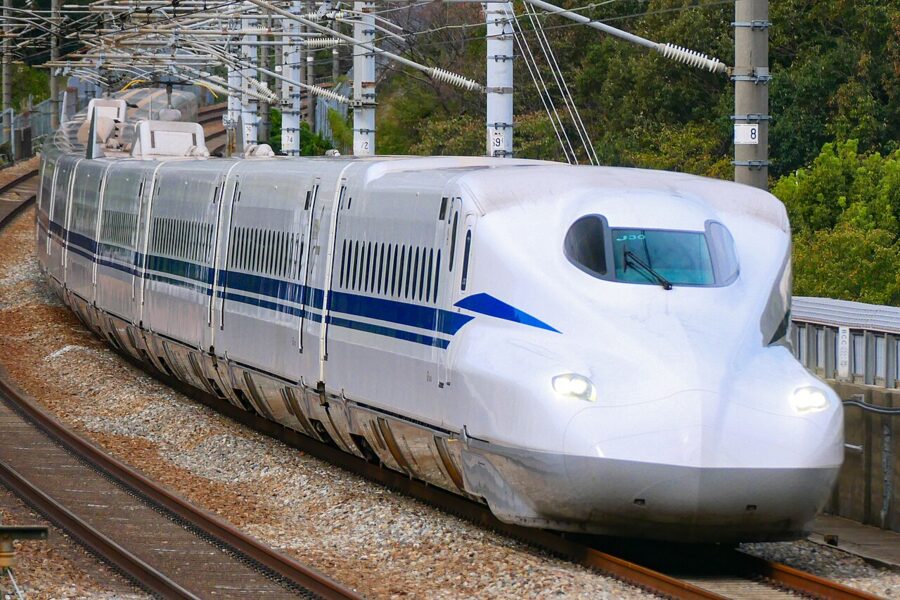
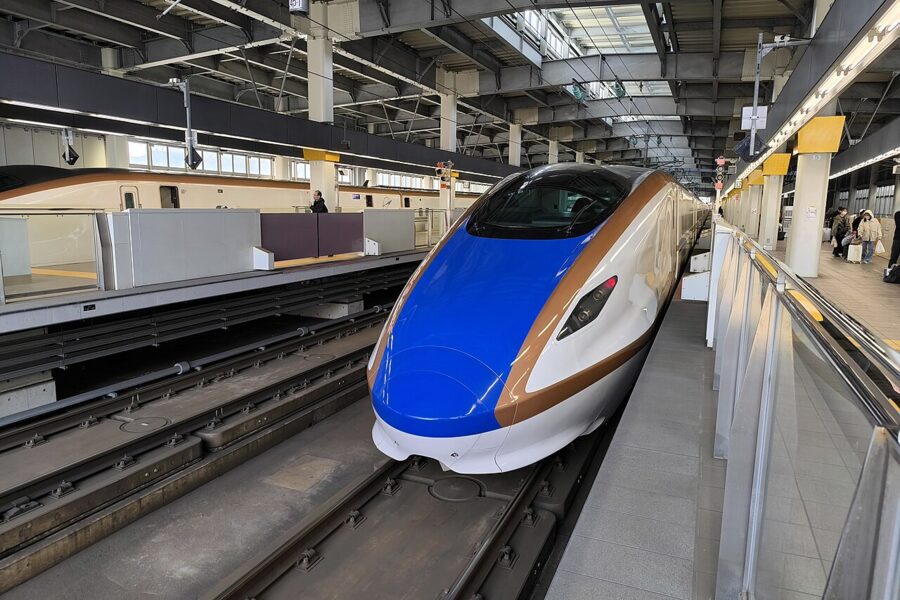
The Shinkansen network is one system to ride and five companies to buy from. JR Central runs the Tokaido Shinkansen from Tokyo to Shin-Osaka, JR West runs the Sanyo line on to Hakata, and JR Kyushu runs the Kyushu and Nishi Kyushu lines. JR East runs everything heading north and northwest out of Tokyo, and JR Hokkaido runs the stretch under the strait to Shin-Hakodate-Hokuto.
| Line | Main stops | Run by | Book online at |
|---|---|---|---|
| Tokaido | Tokyo, Shinagawa, Shin-Yokohama, Nagoya, Kyoto, Shin-Osaka | JR Central | smartEX (JR West’s site also sells it, with fewer extras) |
| Sanyo | Shin-Osaka, Okayama, Hiroshima, Hakata | JR West | smartEX or JR-WEST Online Train Reservation |
| Kyushu | Hakata, Kumamoto, Kagoshima-Chuo | JR Kyushu | smartEX or JR-KYUSHU Train Reservation |
| Nishi Kyushu | Takeo-Onsen to Nagasaki | JR Kyushu | JR-KYUSHU Train Reservation |
| Tohoku, Yamagata, Akita, Joetsu | Tokyo, Sendai, Shin-Aomori, Yamagata, Akita, Niigata | JR East | JR-EAST Train Reservation |
| Hokkaido | Shin-Aomori to Shin-Hakodate-Hokuto | JR Hokkaido | JR-EAST Train Reservation (through trains from Tokyo) |
| Hokuriku | Tokyo, Nagano, Kanazawa, Tsuruga | JR East, then JR West from Joetsumyoko | JR-EAST Train Reservation or JR-WEST Online Train Reservation |
You only need an account on the site that matches your route. A Tokyo, Kyoto, Osaka and Hiroshima trip lives entirely on smartEX. Add a run north to Sendai or west to Kanazawa and you add JR East’s site, or buy that one leg at a machine when you get there.

Booking on smartEX, step by step
smartEX is run by JR Central with JR West and JR Kyushu, and it is the one to learn first. It covers every Tokaido, Sanyo and Kyushu Shinkansen station from Tokyo to Kagoshima-Chuo, works in English on the web and in an app, and costs nothing to join. It sells only those three lines and cannot be combined with a Japan Rail Pass.
What you need before you start
Have a credit card in your own name, an email address, and about five minutes. smartEX accepts Visa, Mastercard, JCB, American Express, Diners Club and Discover, the cardholder must be 18 or older, and the card goes through 3D Secure, so keep your phone handy for your bank’s check. Use an ordinary credit card: virtual cards and some debit cards cause trouble later, and refunds after pick-up need a physical card.
Set your inbox to accept mail from the expy.jp domain, which sends the confirmations and one-time passwords. If you hold a Suica, PASMO or another of the ten nationwide transit IC cards, keep its number nearby.
The booking, one screen at a time
- Open smartEX, tap Register, enter your email address and click the link that arrives.
- Agree to the terms, then enter your name, date of birth, a login password and your card. Pass the 3D Secure check.
- Add your IC card number if you want ticketless boarding, confirm, and wait for the email with your membership ID.
- Log in and search: date, departure or arrival time, stations, and up to six passengers.
- Pick a train, then the fare: ordinary reserved, Green Car, non-reserved, or a Hayatoku discount if one shows.
- Choose seats on the seat map, or let the system pick.
- Press Purchase. The card is charged at that moment, in yen.
- Choose how you will board: QR-Ticket, IC card, or a paper ticket collected at the station.
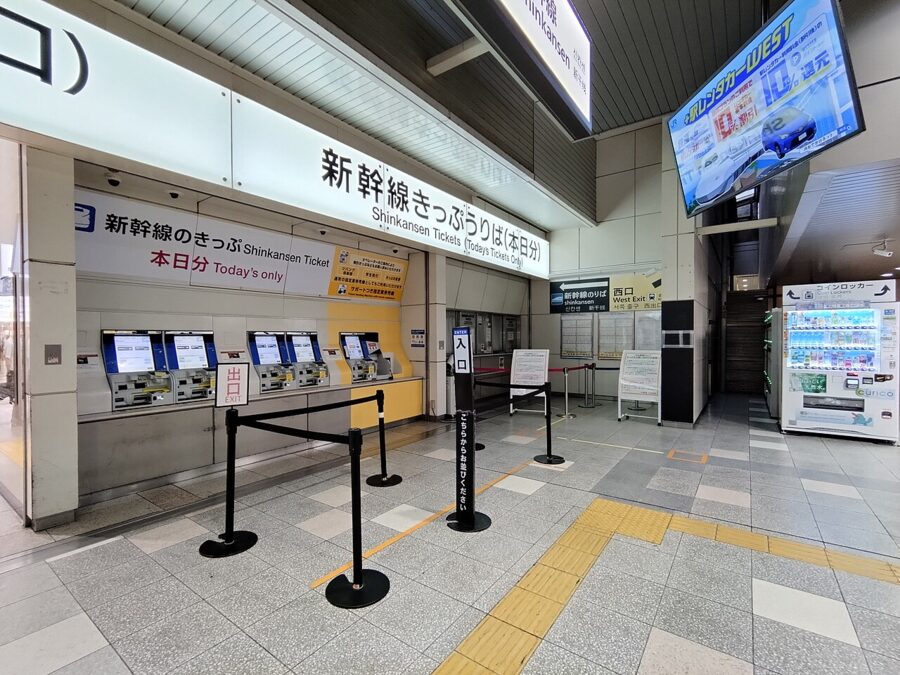
Boarding: QR code, IC card or paper
The QR-Ticket is the simplest. In the app, open the booking under My Trips, tap Display QR-Ticket, and hold the phone over a Shinkansen gate marked with the QR symbol. The gate prints a slip called Seat Information; keep it, because the conductor may ask for it and without it you can be charged the full fare again. You need the QR code again to get out.
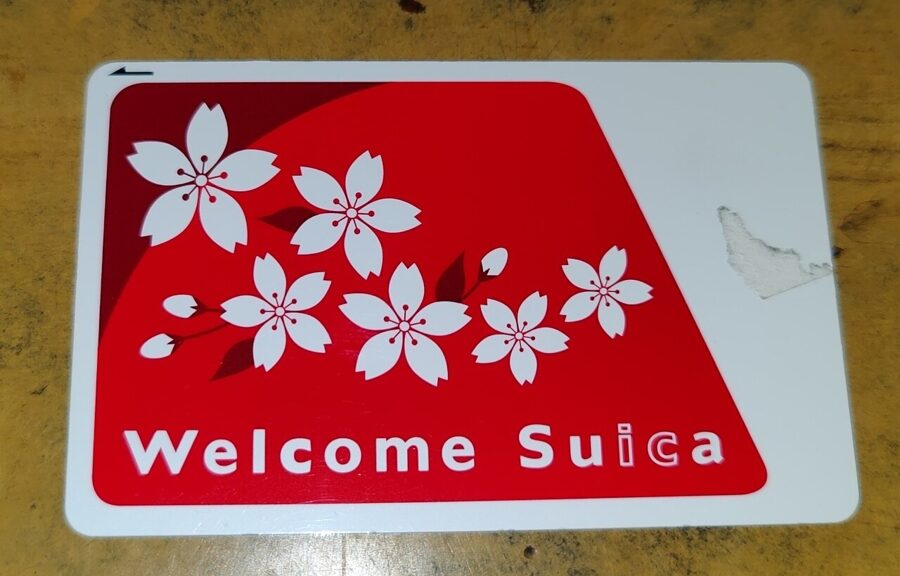
With an IC card linked to the booking, you touch the card at the gate and collect the same slip; the fare comes off your credit card, not the card balance. A Welcome Suica works too, but visitor cards expire 28 days after purchase, and smartEX says a card bought abroad must first be used at a Suica or PASMO area gate before it will open a Shinkansen gate.

Paper is the slow road. You need the pickup code (a QR code or 16 digits) and your login password, and the ticket machines at Tokaido, Sanyo and Kyushu Shinkansen stations will print it from three days before travel; a staffed counter at a main JR Central, JR West or JR Kyushu station will do it from a month ahead. JR East machines in central Tokyo, Yokohama, Kawasaki, Odawara and Atami print smartEX tickets too.
The cheaper fares: Hayatoku
smartEX sells advance-purchase fares called Hayatoku. EX Hayatoku 21 gives a Nozomi seat from Tokyo to Kyoto for ¥12,430 (about US$78) if you buy at least 21 days out, but it cannot be changed after purchase. EX Hayatoku 7, bought at least seven days ahead, gives a Hikari or Kodama seat on the same run for ¥11,940 (about US$75).
Both are limited in number and both skip the busy weeks of Golden Week, Obon and New Year. Check them the moment sales open if your plans are fixed.
JR West, JR East and JR Kyushu, in shorter form
JR-WEST Online Train Reservation
JR West’s English booking site sells the Sanyo, Hokuriku and Kyushu Shinkansen and JR West’s limited expresses. It opens at 10 a.m. Japan time a month ahead and takes bookings for up to six people until six minutes before departure. You pay by card online and collect a paper ticket at a JR West, JR Shikoku, JR Kyushu or JR Central machine with the e5489 mark, or at a JR ticket office, with the physical card you paid with.
Its best feature is for journeys entirely on JR West, JR Kyushu, JR Shikoku or JR East track: until you collect the ticket, you can change it online as often as you like and cancel for ¥340 (about US$2) per booking. Anything that touches JR Central’s Tokaido line loses those extras and can be changed only once, so for Tokyo to Kyoto, smartEX is the better tool.

JR-EAST Train Reservation
JR-EAST Train Reservation is the English face of JR East’s Eki-net system, and it handles the Tohoku, Hokkaido, Yamagata, Akita, Joetsu and Hokuriku lines. Seats go on sale at 10 a.m. a month ahead, and the site takes bookings from 5 a.m. to 1:50 a.m. Japan time, with a break around midnight. When the month before has no matching date, sales start on the 1st, so a train on March 31 goes on sale on March 1.
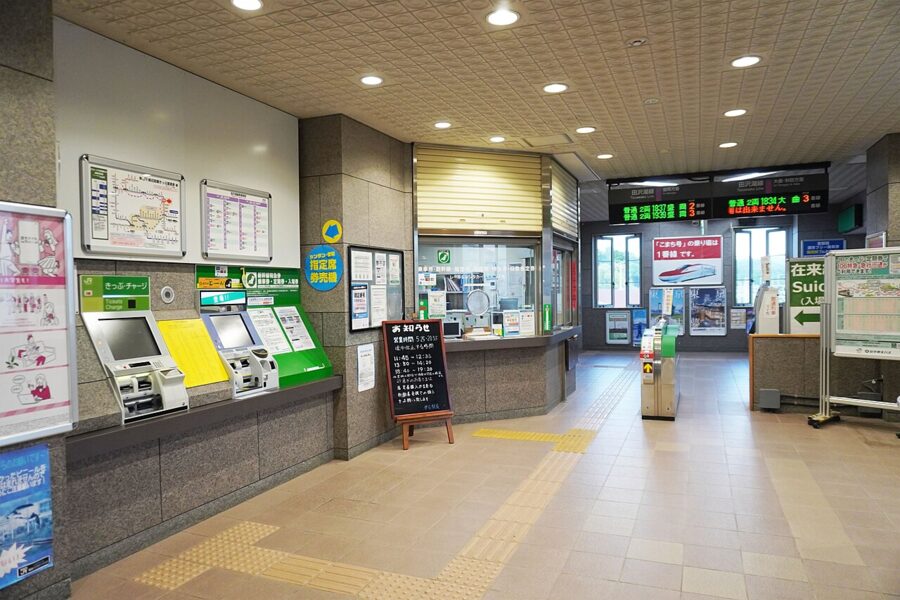
Its ticketless option is the Shinkansen e-ticket: open the reservation, link a transit IC card at least four minutes before departure, and tap that card at the gate. For paper, a reserved-seat ticket machine prints the ticket from your credit card, the QR code on your booking page, or a pickup code of up to 17 digits.

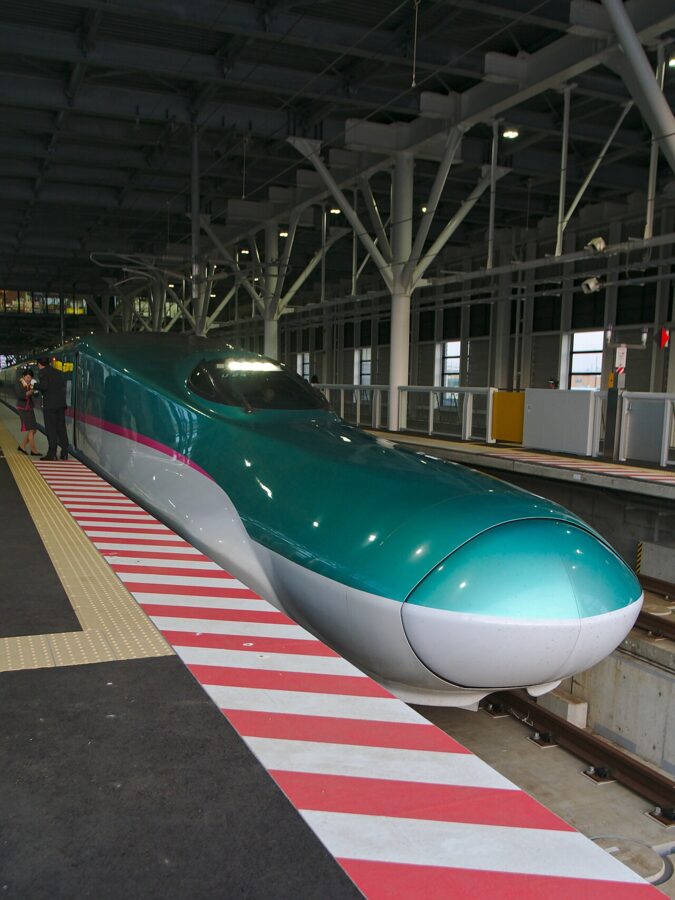
The Hokkaido Shinkansen is the odd one out. JR Hokkaido runs the line beyond Shin-Aomori, but its trains run through from Tokyo as Hayabusa services, and you book them on JR East’s site with the rest of the journey. JR East warns that some tickets cannot be collected at stations in JR Hokkaido’s area, so print the return leg before you head north.

JR-KYUSHU Train Reservation
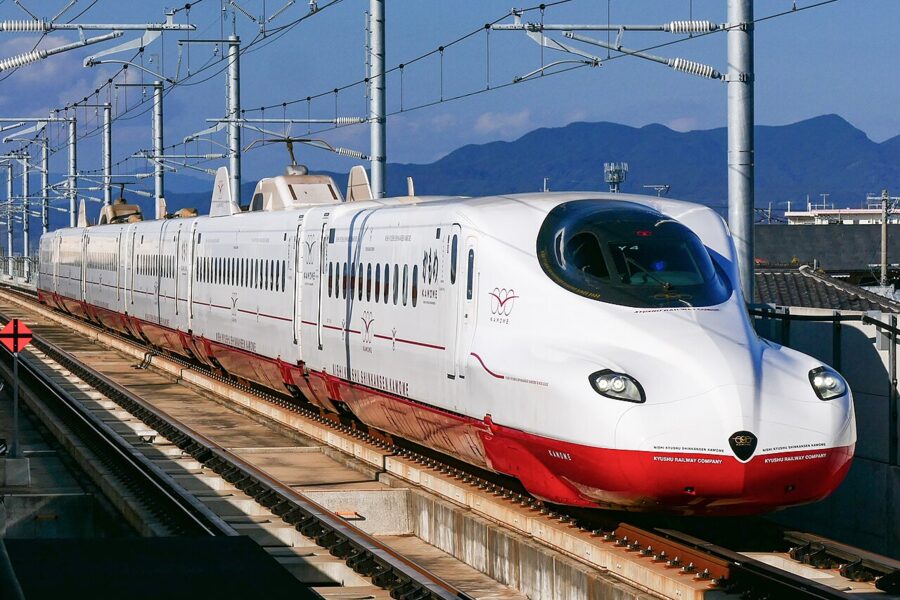
JR Kyushu’s booking site sells JR Kyushu and JR West tickets, which makes it the place for the Nishi Kyushu Shinkansen to Nagasaki and for Kyushu’s limited expresses. It takes bookings from 5:30 a.m. to 11 p.m. Japan time, opens at 10 a.m. a month ahead, and holds up to seven seats at once. You collect tickets at a JR Kyushu office or machine with the card you paid with, a five-digit reservation number starting with 6 and a four-digit ID number.

When seats go on sale, and the weeks that sell out
The rule is the same at every JR company and every channel: reserved seats go on sale at 10 a.m. Japan Standard Time, one month before the travel date. A seat for January 3 goes on sale December 3 at 10 a.m. in Tokyo, which is 8 p.m. on December 2 in New York, 1 a.m. on December 3 in London, and noon in Sydney.
smartEX gives you a head start. It accepts requests up to a year ahead, chosen from a provisional timetable, and JR Central assigns those seats from 8 a.m. on the day sales open, two hours before the public queue. A request is not a guarantee, and Hayatoku fares, S Work seats, wheelchair spaces and seats with oversized baggage areas cannot be requested this way.

The holiday crunch
For most of the year, Tokaido trains have seats on the day. Golden Week, Obon and New Year are different, and the Japan Rail Pass site names May 1 to 6, August 7 to 16, September 18 to 23 and December 29 to January 3 as the hardest weeks to get a seat.
During peak periods every Nozomi seat is reserved, as the usual non-reserved cars 1 and 2 become reserved cars. The dates for the year ending March 2027 are:
- April 24 to May 6, 2026 (Golden Week)
- August 7 to 16, 2026 (Obon)
- September 18 to 23, 2026 (Silver Week)
- October 10 to 12 and November 21 to 23, 2026 (three-day weekends)
- December 25, 2026 to January 5, 2027 (New Year)
- January 9 to 11 and March 20 to 22, 2027 (three-day weekends)
Hikari, Kodama, Mizuho, Sakura and Tsubame trains keep their non-reserved cars on those dates, so you are never stranded, just possibly standing. With a non-reserved ticket you may also stand in the aisle of a Nozomi, though not in the Green cars, 8 to 10. Prices move with the calendar too: a reserved Tokaido seat costs ¥200 (about US$1) less in the off-peak season, ¥200 more in the peak season and ¥400 (about US$3) more in the busiest weeks.
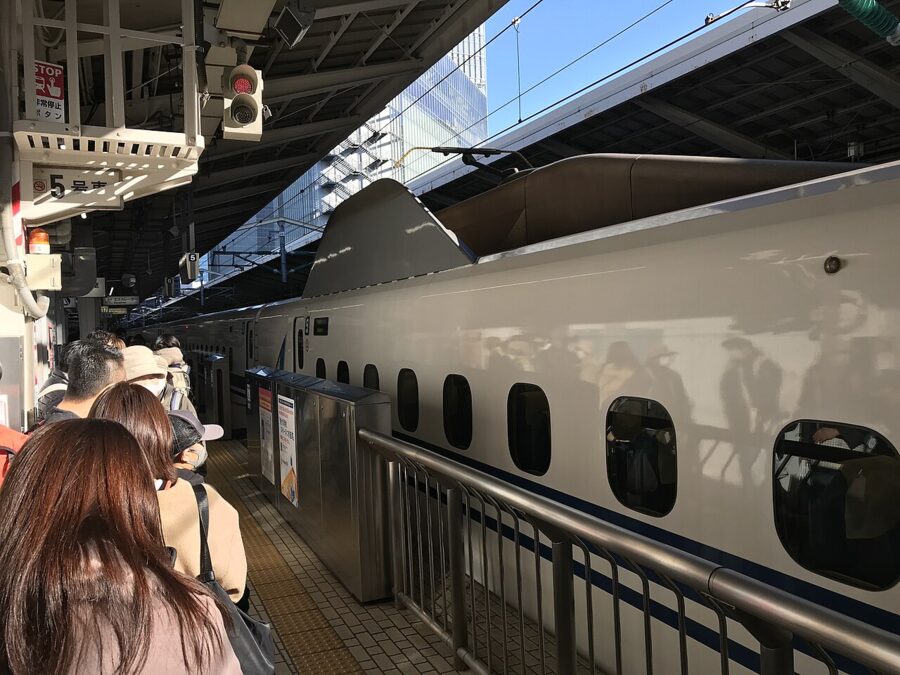

When your train shows full
Try the slower train on the same line first: a Hikari or Kodama often has seats when every Nozomi in the hour is sold. Then try another hour or another day. On smartEX, changes are free and unlimited, so other people’s plans keep moving and seats come back onto the map; check again the next morning. Failing all that, the non-reserved cars of a Hikari or Kodama are your seat of last resort, so be on the platform early.
Reserved, non-reserved, Green and the rest
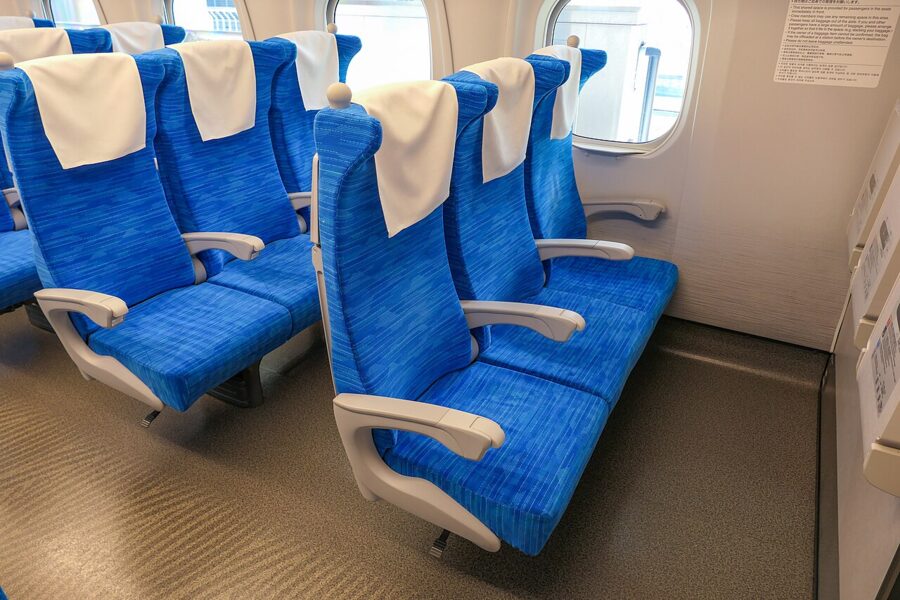
A reserved seat, shiteiseki (指定席), ties you to one train, one car and one seat. A non-reserved seat, jiyūseki (自由席), lets you ride any train of that type on the day in the cars set aside for it, sitting wherever there is room. On a Tokyo to Kyoto Nozomi, booked on smartEX in the regular season, the reserved seat costs ¥13,970 (about US$88) and the non-reserved seat ¥13,320 (about US$84).

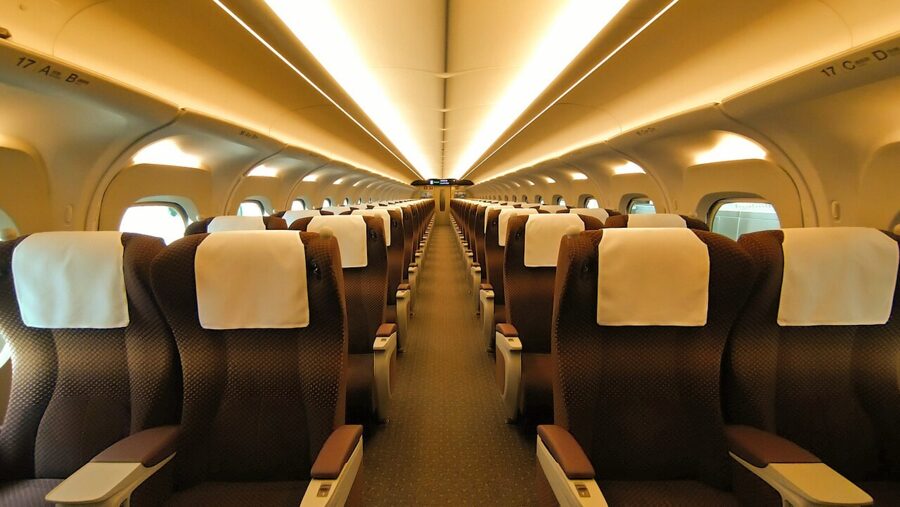
The Green Car (グリーン車, gurīn-sha) is first class: four seats across instead of five, more legroom and a quieter car. On the Tokaido line the Green cars are 8, 9 and 10, and a Tokyo to Kyoto Nozomi Green seat costs ¥18,840 (about US$118) on smartEX. On a run of two hours or more with luggage and a laptop, I think it earns its price; on a 40-minute hop it does not.

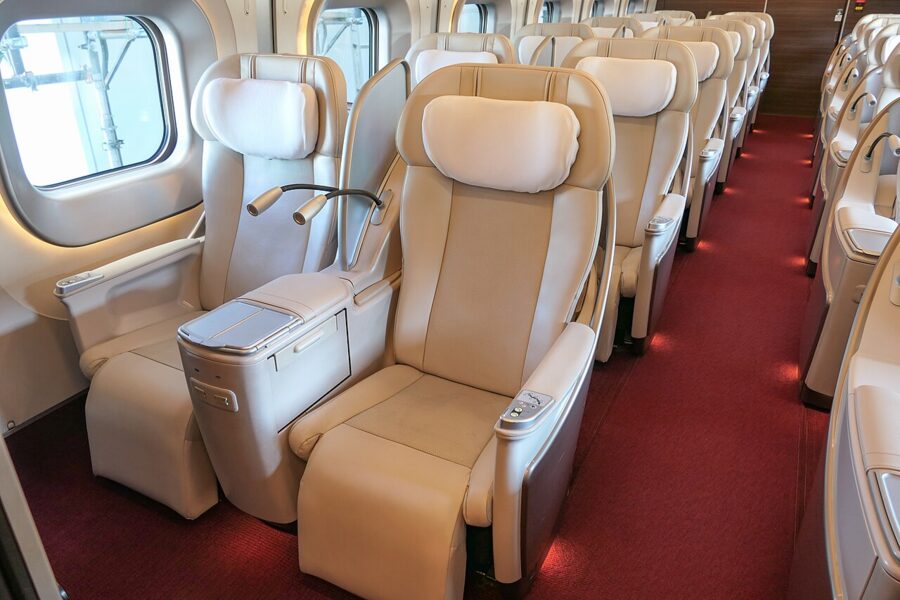
Two classes sit above Green. Gran Class is an 18-seat car on the E5 and H5 trains to Hokkaido and on the E7 and W7 sets of the Hokuriku and Joetsu lines, with an attendant and drinks on trains that offer the full service. On the Tokaido and Sanyo lines, Supreme Class started on October 1, 2026: private cabins in car 7 (for one or two people) and car 10 (for one) on selected Nozomi, Hikari and Kodama trains. It is sold only on smartEX, and you board with an IC card or QR-Ticket because no paper ticket is issued.

Finding your car on the platform
Your ticket shows a car number and a seat. Numbered signs hang above the platform and the car numbers are marked on the platform floor where each door will stop, so stand at your number and the door opens in front of you. That orderly routine, from the painted lanes to the cleaning crews who turn a train around at the terminus, is the kind of habit that Japan Unmasked sets out to explain.
Big suitcases on the Tokaido, Sanyo and Kyushu lines
Measure your bag before you book. Add height, width and depth: up to 160 cm (63 inches) goes in the overhead rack, at your feet or in the luggage areas on the decks between cars, with no reservation. From 161 to 250 cm (64 to 98 inches) counts as oversized, and on the Tokaido, Sanyo, Kyushu and Nishi Kyushu Shinkansen you must reserve a seat with an oversized baggage area. A typical large check-in suitcase is in that band.
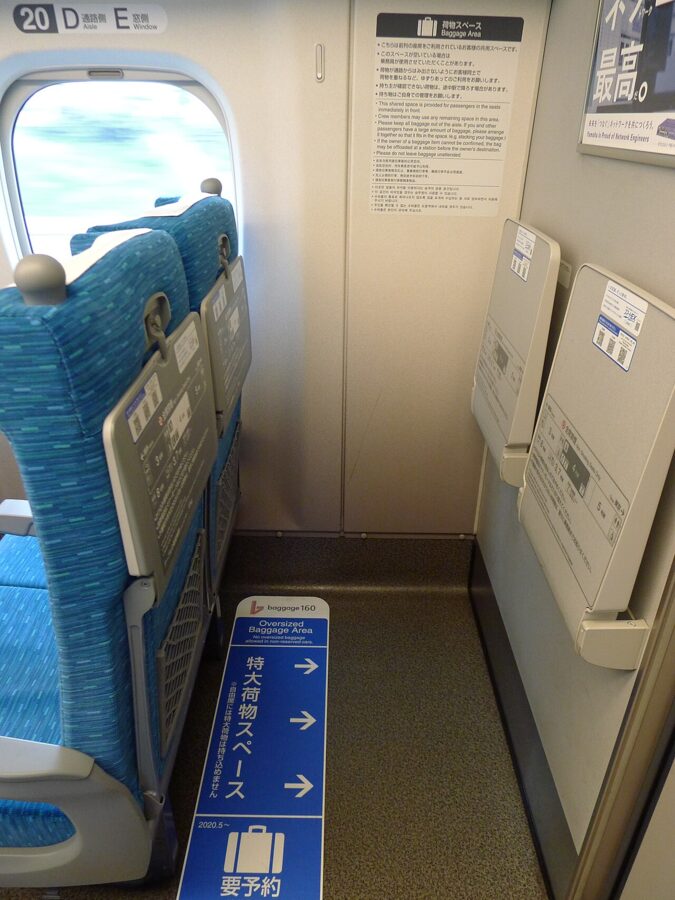

These are the last-row seats of certain cars, and they cost the same as any other reserved or Green seat. Turn up with a big bag and no such seat and staff will charge an oversized baggage fee of ¥1,000 (about US$6); anything over 250 cm cannot come aboard at all. A 16-car Nozomi has 57 of these seats (45 ordinary, 12 Green) plus 10 seats with a separate baggage compartment, so on busy days they go fast.
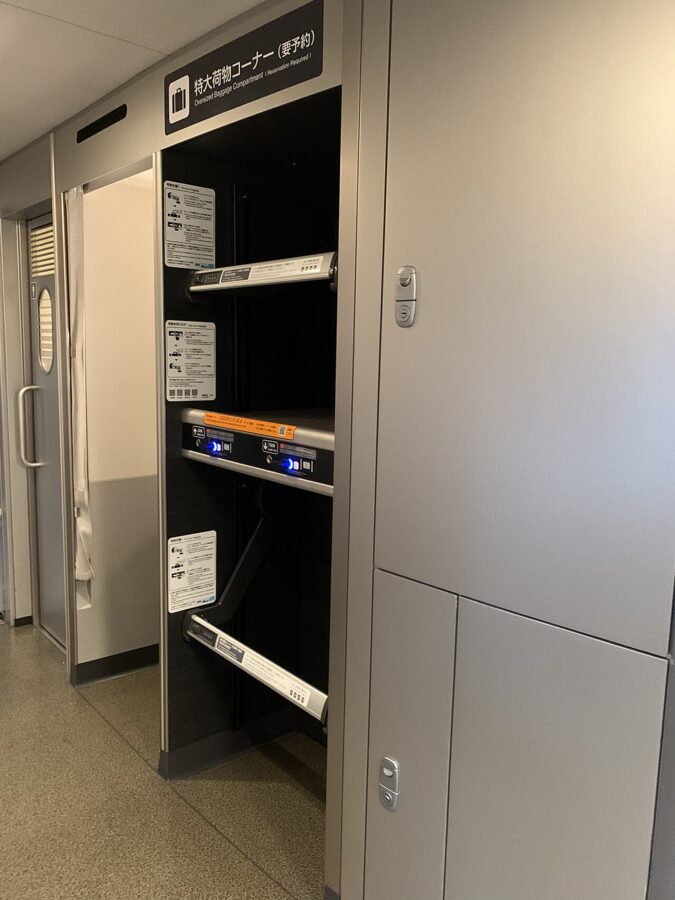

How to book the oversized-baggage seat
- On smartEX, tap Search Train and fill in the date, time and stations.
- Under Seat Type, choose the option with an oversized baggage area.
- Pick a train, then a reserved or Green fare; non-reserved cars have none of these seats.
- Open the seat map to check the baggage seats themselves are free.
- Book up to five people per reservation (four in Green).
These seats cannot be requested a year ahead, so book them when sales open a month out. JR West’s and JR Kyushu’s sites, the Japan Rail Pass reservation site, machines and counters sell them too. The luggage rules do not apply on conventional lines, and strollers, instruments and sports gear are exempt, though they may use the space only with a booking.
At the station: machines, counters and what to say
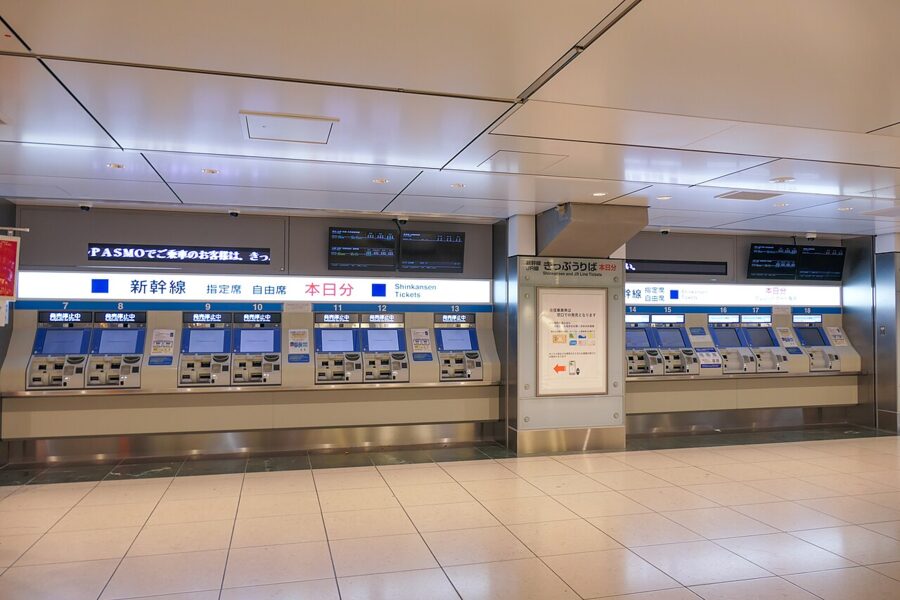
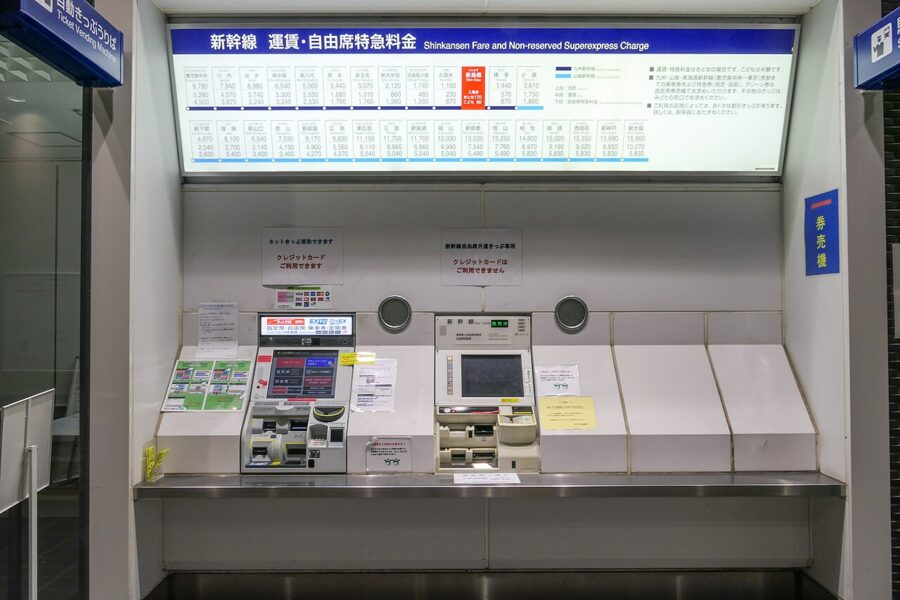
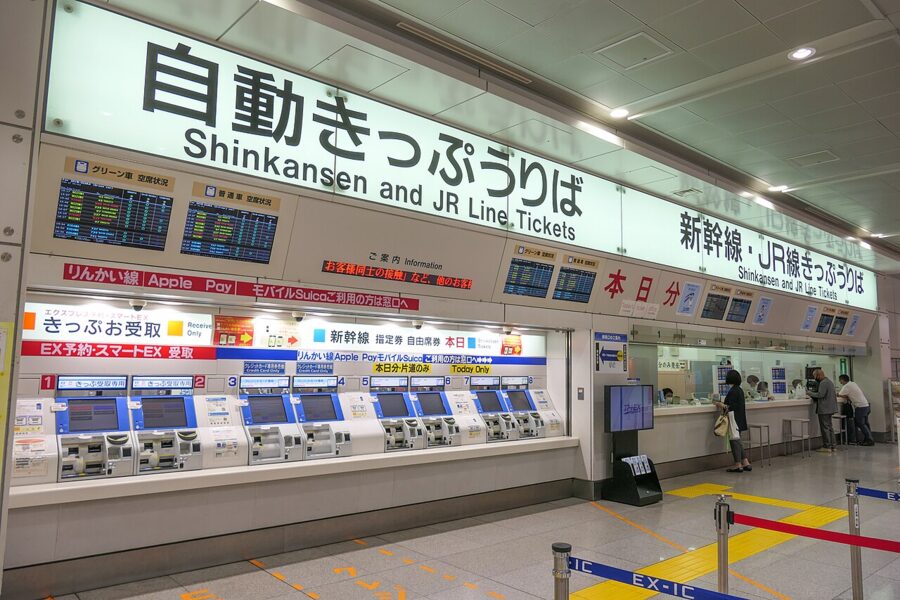
Every ticket machine at a JR Central station has an English menu, and the Shinkansen machines sell reserved seats and print online bookings. Look for the machines under a Shinkansen sign or marked for reserved seats; the plain fare machines for local trains will not do it. The touch screen walks you through date, stations, train, class and seat.
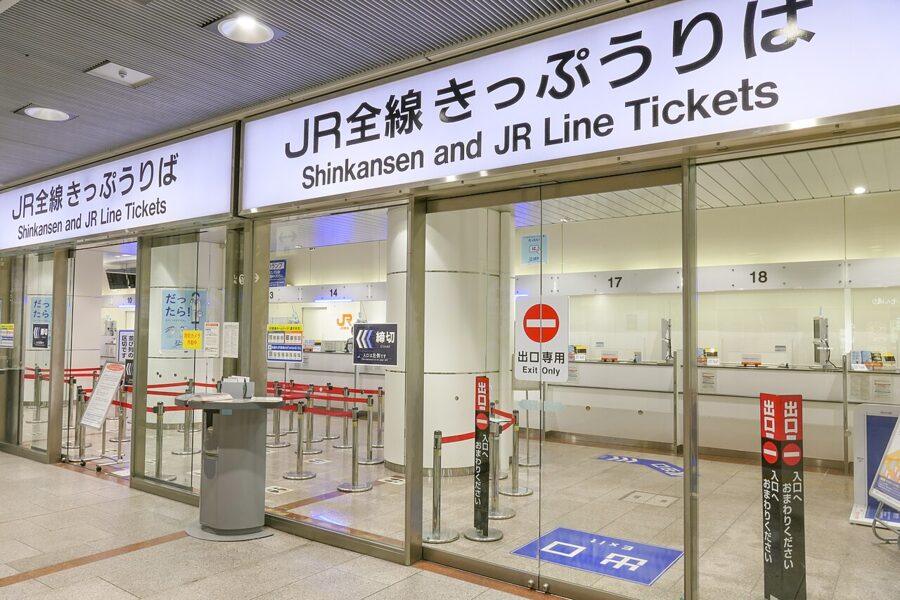

The staffed JR ticket office is the Midori-no-madoguchi (みどりの窓口), the place for awkward journeys, oversized-baggage seats with a rail pass, or anything the machine refuses. JR Central asks for six things: departure station, destination, date and time, train type (Nozomi, Hikari or Kodama), number of adults and children (6 to 11), and seat type. Write them on a card or a phone note, for example:
東京 → 京都 / 12月20日 9:00ごろ / のぞみ / 大人2名 / 指定席 / 窓側
That reads Tokyo to Kyoto, December 20 around 9 a.m., Nozomi, two adults, reserved seats, window side. Add 特大荷物 (oversized baggage) if you have a big case. Boyé Lafayette De Mente made a career of phrasebooks for moments like this, and his life and books make good reading for the ride.
Through the gate
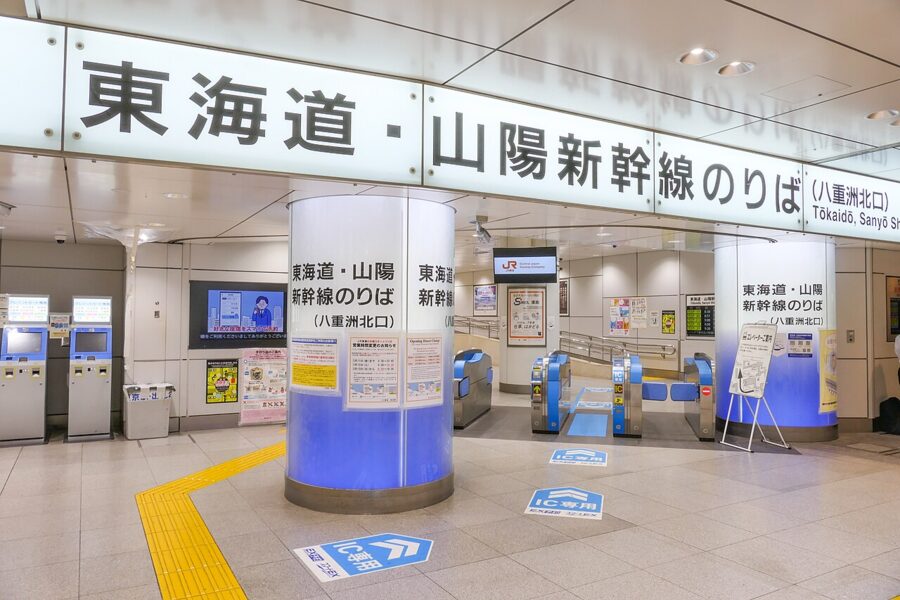

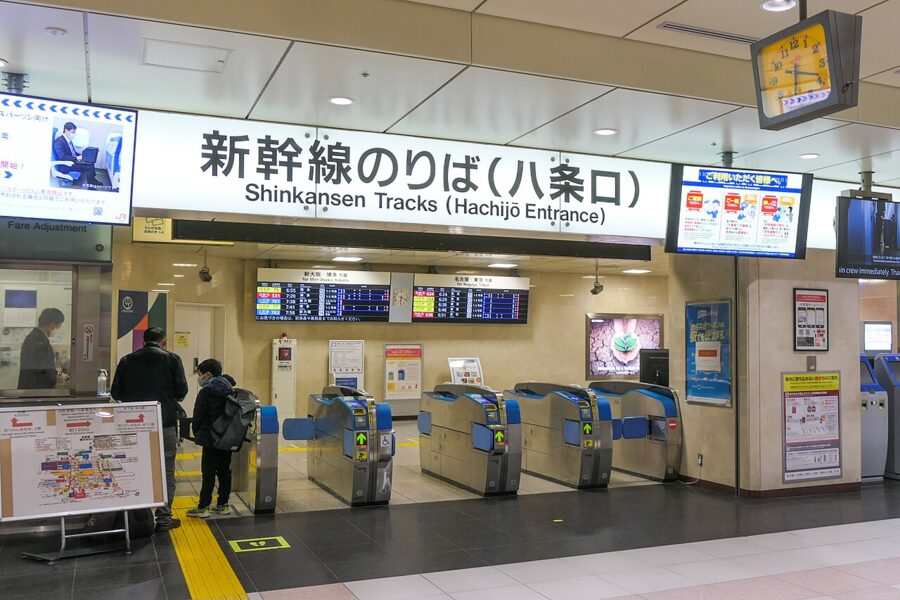
A paper Shinkansen ticket often comes as two slips, the basic fare ticket and the limited express ticket. Feed both into the gate together and take them back on the far side; you need them on board and at the exit. At a transfer gate from a local line, such as Tokyo or Kyoto, insert your local ticket together with your Shinkansen tickets.
Changing, refunding and missing the train
How flexible a ticket is depends on where you bought it. A smartEX booking can be changed as many times as you like, free, as long as you have not collected a paper ticket or gone through the gate. You can switch to any train up to four minutes before it leaves and move the date within three months of the original purchase.
Refunds on smartEX cost ¥320 (about US$2) before departure for reserved, Green and non-reserved fares alike. After the train has left, a fixed amount is kept for each section. Once you have collected a paper ticket, changes and refunds move to a JR Central, JR West or JR Kyushu ticket office, and you need the card you paid with.
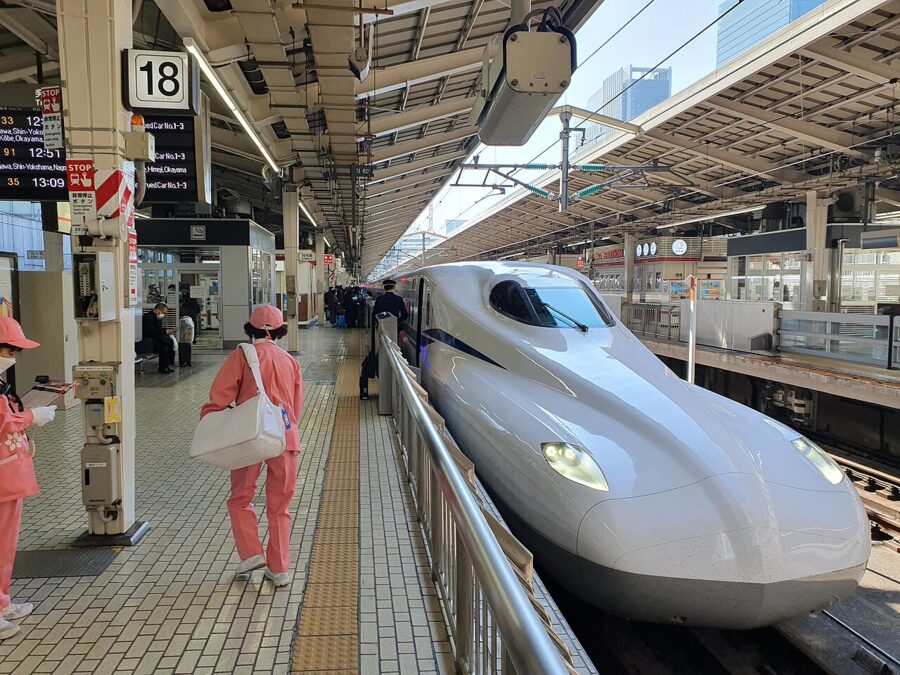
Tickets bought at a station follow the standard JR rules on changes and refunds. You get one free change to a ticket of the same type before the train leaves; after that you must refund and buy again. The refund fee is ¥220 (about US$1) for fare tickets and non-reserved express tickets, ¥340 for reserved seats up to two days before departure, and 30% of the seat charge (at least ¥340) from the day before.
Miss a reserved train and the seat is gone, with no refund, but a reserved express ticket still lets you ride the non-reserved cars of a later train the same day. smartEX applies the same rule, except to Hayatoku fares, which are good only for the train you booked. On JR East’s all-reserved trains such as the Hayabusa and Komachi, the same ticket lets you stand on a later train that day.
What it costs: Tokyo to Kyoto, worked through
A Shinkansen price is two charges combined: the basic fare for the distance and a limited express charge for the train and seat. smartEX shows them as one figure. Here is the one-way adult price from Tokyo to Kyoto on smartEX in the regular season, as of November 2026:
| Ticket | Price |
|---|---|
| Nozomi, ordinary reserved seat | ¥13,970 |
| Hikari or Kodama, ordinary reserved seat | ¥13,650 (about US$86) |
| Any train, non-reserved seat (same price at the station) | ¥13,320 |
| Nozomi, Green Car | ¥18,840 |
| EX Hayatoku 21, Nozomi, booked 21 or more days ahead | ¥12,430 |
| EX Hayatoku 7, Hikari or Kodama, booked 7 or more days ahead | ¥11,940 |
| Japan Rail Pass holder’s ticket for a Nozomi | ¥4,960 (about US$31) on top of the pass |
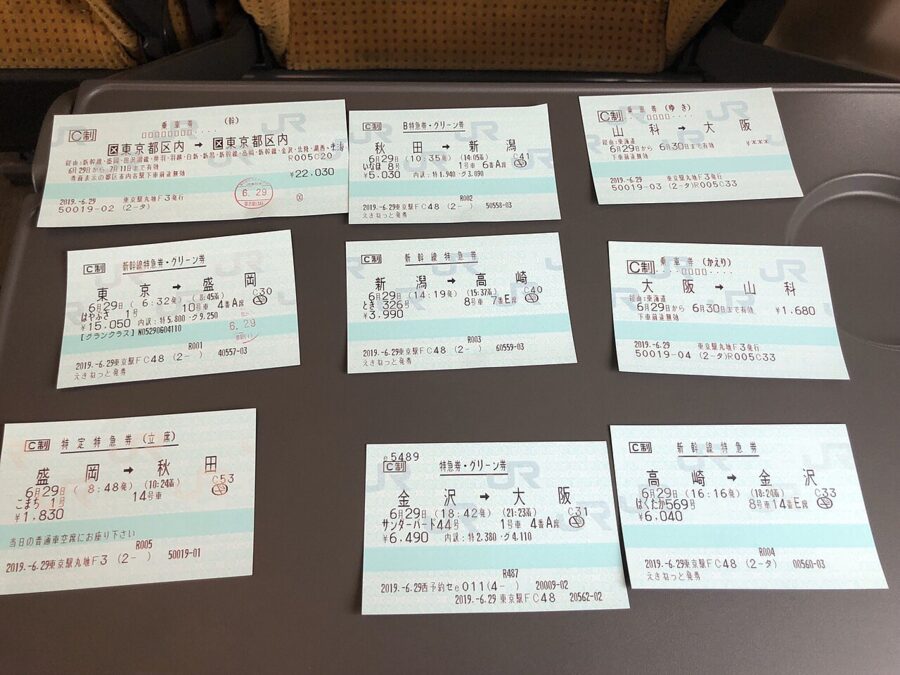

Children aged 6 to 11 pay about half; the Nozomi reserved seat is ¥6,980 (about US$44) for a child. Add or take off the seasonal ¥200 or ¥400 on reserved seats. smartEX’s fare notes say its reserved prices come in below a reserved ticket bought at the station, while non-reserved costs the same either way.
So for two adults going Tokyo to Kyoto on a Nozomi in an ordinary week, a smartEX booking made at 10 a.m. a month ahead is ¥27,940 (about US$176) for the pair. The same pair on EX Hayatoku 21 pays ¥24,860 (about US$156) if they can commit three weeks out, and a Hikari on EX Hayatoku 7 brings it to ¥23,880 (about US$150).

A change is coming. In October 2026 JR Central announced higher prices for Nozomi and Mizuho reserved seats from July 2027, and on smartEX the Tokyo to Shin-Osaka seat goes from ¥14,520 (about US$91) to ¥15,220 (about US$96). If your trip falls after that date, the Hikari is the train to compare.
Where the Japan Rail Pass fits
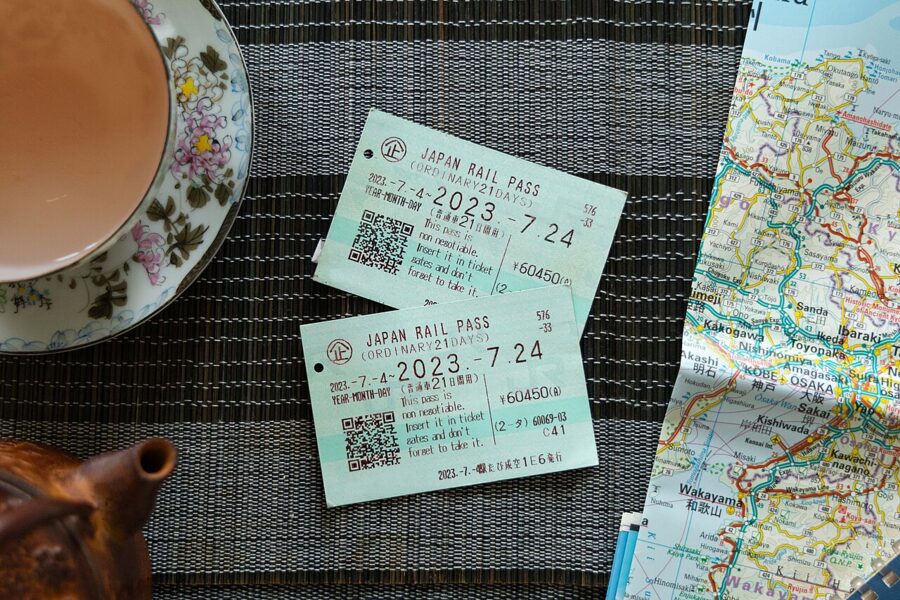

The Japan Rail Pass costs ¥50,000 (about US$314) for seven days in ordinary class when bought on the official site, ¥80,000 (about US$503) for 14 days and ¥100,000 (about US$629) for 21, with Green versions at ¥70,000, ¥110,000 and ¥140,000. Seat reservations with it are free, online through the pass’s own reservation site if you bought it there, or at a machine with the QR code on the pass and your passport number. It does not cover the Nozomi or Mizuho unless you also buy the pass holders’ Nozomi ticket, ¥4,960 from Tokyo to Kyoto. A Tokyo to Kyoto round trip on smartEX is ¥27,940, so the pass pays only when a week holds far more Shinkansen than that, such as Kyoto, Hiroshima and back, then a run north to Sendai.
For everything else, the job is the one in the first paragraph: work out whose line you are riding, open that company’s site, and be there at 10 a.m. Japan time a month before you travel. If your dates fall in a holiday week, set the alarm.