
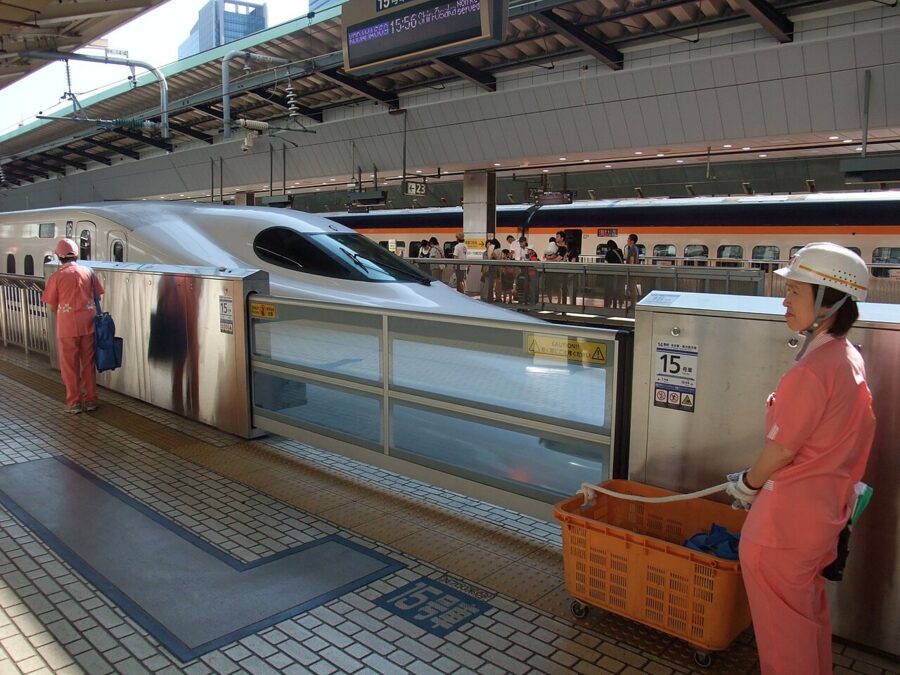
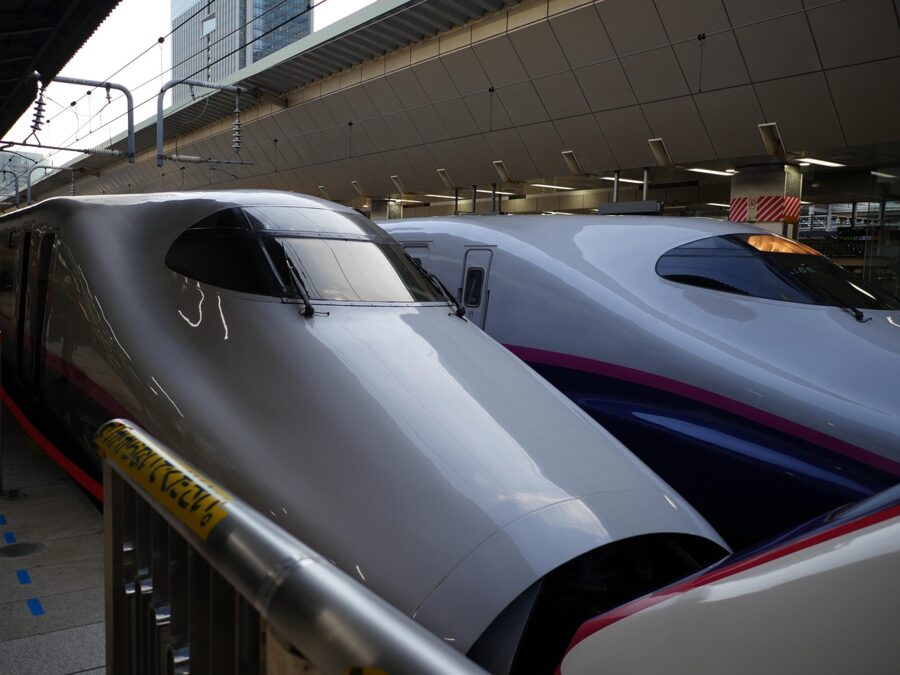
A Shinkansen pulls into Tokyo Station and, before the doors open, a line of cleaners on the platform bows to it. They then have roughly seven minutes to turn a full train around: trash out, seat covers changed, toilets done, lost property checked. Nobody improvises. Every movement has been worked out in advance, practiced, and handed on.
Contents7 parts
Boyé Lafayette De Mente had a word for that, and he built a whole book on it. In Japan Unmasked: The Character and Culture of the Japanese (Tuttle, 2005), he argued that the key to how Japanese people behave is kata (型), the prescribed form for doing a thing. Learn the forms, he said, and Japan stops looking mysterious. The idea is half right, and the half that holds is very useful on a trip.

De Mente was not a scholar, and never claimed to be. He was a journalist who first went to Japan in 1949 with the US Army Security Agency, worked as an editor in Tokyo, and spent a long life explaining Japanese manners to Western businesspeople. He died in Paradise Valley, Arizona, on May 12, 2017, at 88, with more than 100 books behind him.
Four titles for one idea
Japan Unmasked is the third or fourth version of an argument De Mente spent fifteen years refining. The first was Japan’s Secret Weapon: The Kata Factor (Phoenix Books, Phoenix, Arizona, 1990), whose full subtitle promised to explain “the cultural programming that made the Japanese a superior people.” It was a bubble-economy title for American readers who wanted to know why Japanese companies were winning.
Then came Behind the Japanese Bow (Passport Books, Lincolnwood, Illinois, 1993), a slim book of 147 pages subtitled on its cover “An In-Depth Guide to Understanding and Predicting Japanese Behavior.” It set out the cultural “molds” De Mente believed produced Japanese conduct. Japan Unmasked is its sequel in spirit: the same thesis, pushed further and given one word to hang on. The name itself appeared early: around 2000 De Mente gave away a version as a free PDF already titled Japan Unmasked: The Kata Factor in Traditional Japanese Culture.
Tuttle published Kata: The Key to Understanding and Dealing with the Japanese! in 2003 (168 pages), short essays under headings such as “Kata in Business” and “Can Japan Survive without Kata?” Two years later came Japan Unmasked: The Character & Culture of the Japanese (Tuttle, Tokyo and Rutland, Vermont, 2005; x + 214 pages; ISBN 0-8047-3729-5), which some catalogs date to early 2006. An ebook followed in 2011.

The idea outlived its author. In 2018 Tuttle published Japan: A Guide to Traditions, Customs and Etiquette, subtitled “Kata as the Key to Understanding the Japanese,” revised and expanded by Geoff Botting, a translator and business journalist long based in Japan. Its 70 short essays include “The Art of Bowing” and “The Importance of the Apology.” It is the version you will find new today.
The 2005 Japan Unmasked survives as used copies and in library catalogs; the Internet Archive holds a lending copy. I worked from the ebook’s opening chapter, the publisher’s descriptions and reviews of the 2003 Kata, so what I say about the later chapters rests on those.
De Mente’s other books took Japan from other angles: Exotic Japan sold the country as a feast for the senses, and Japanese Secrets of Graceful Living looked at beauty in daily life. Japan Unmasked is the one that tries to explain behavior.
What kata means in Japanese
The everyday meaning of 型 is a mold or template, the thing you press clay into to get the same shape every time. The standard Japanese dictionaries add the sense that matters here: in the martial arts, a codified pattern of attack and defense; on the classical stage, a fixed way of speaking and moving handed down by teachers, sometimes written 形. The fifteenth-century Noh master Zeami spoke of the model a performer learns as a katagi (形木), a carved block you print from.
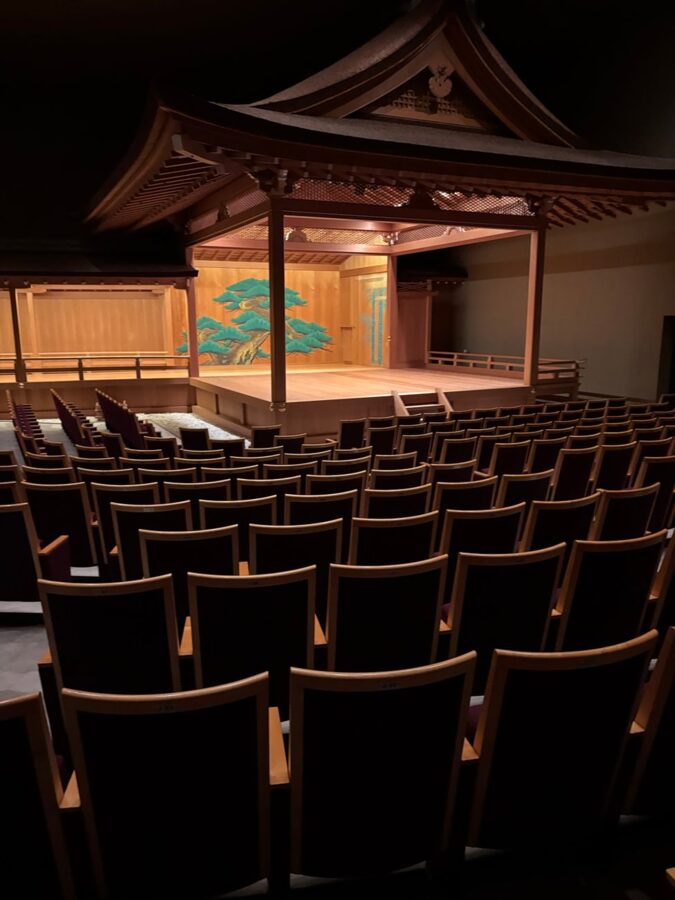
De Mente leaned on a related word, shikata (仕方), “the way of doing,” which you hear every day in the phrase shikata ga nai, “there’s no way to do it,” meaning it can’t be helped. His point was that Japanese has a ready vocabulary for the correct way to do almost anything, and that the correct way carries moral weight.
In the dojo
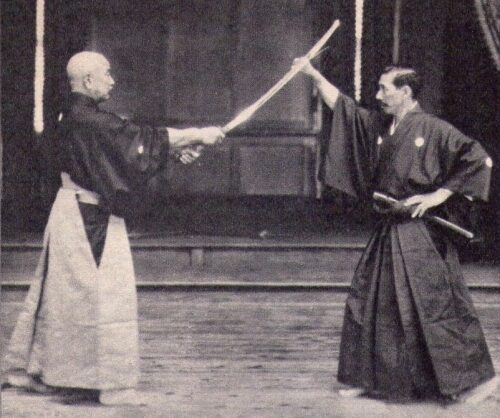
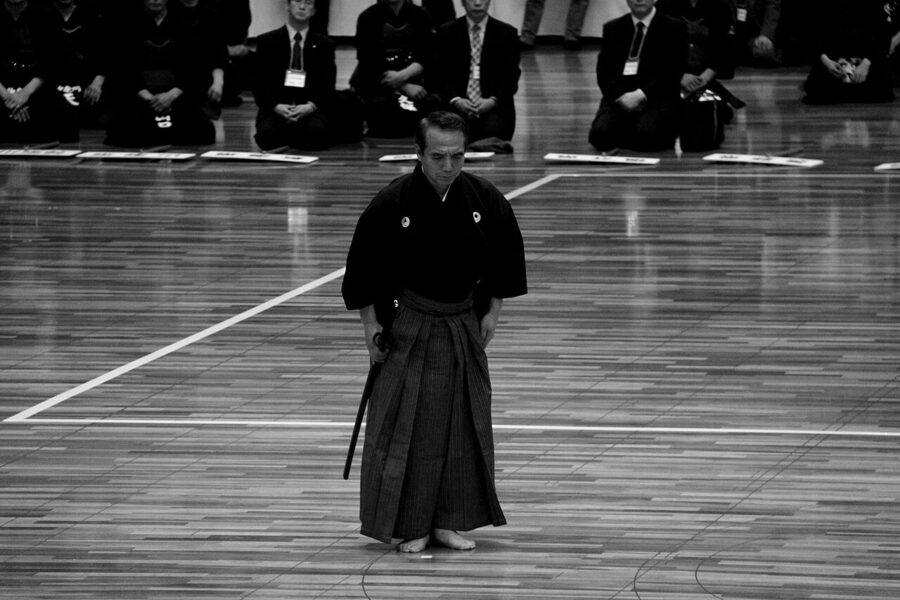
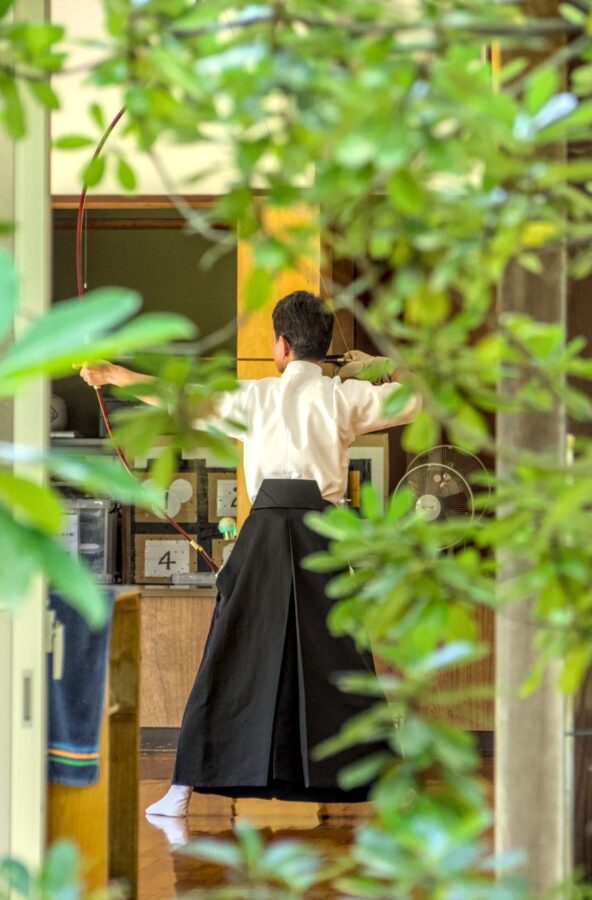
The martial arts show kata at its plainest. In kendo, the ten sword forms now called Nihon Kendo Kata were drawn up by a committee of masters from different schools and announced by the Dai Nippon Butokukai in October 1912, the year after kendo entered the middle-school curriculum. Students still learn all ten, in pairs, with wooden swords.

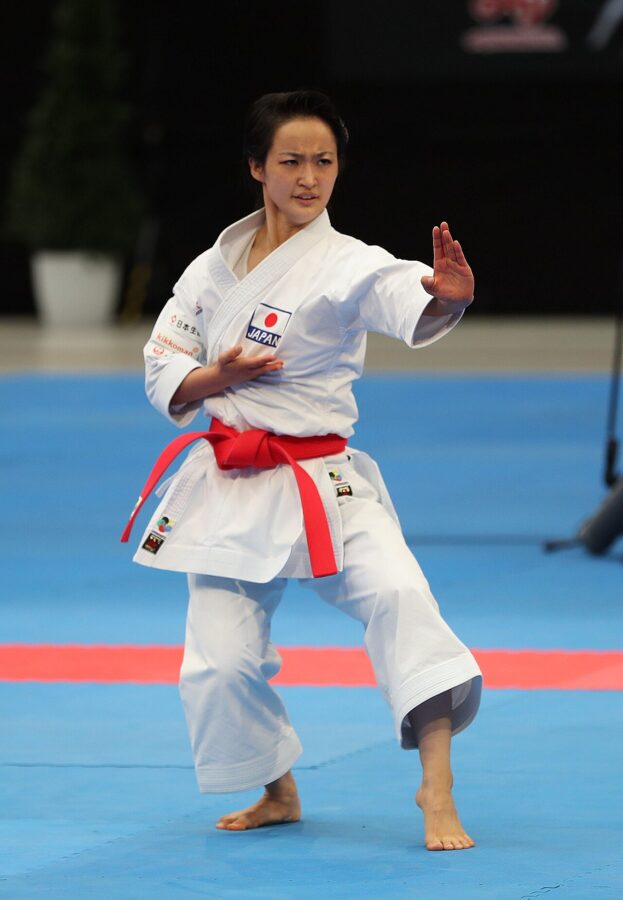
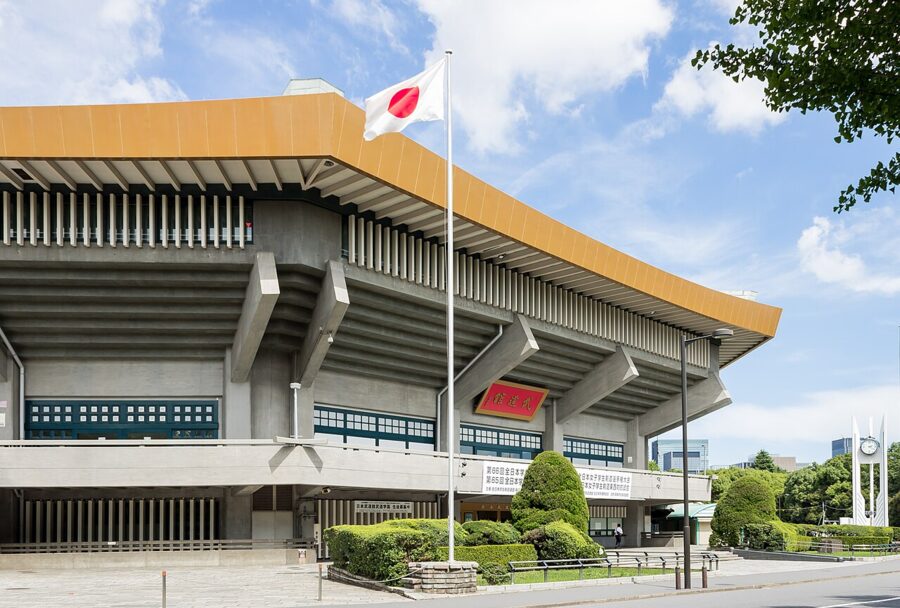
Karate made the point to a world audience at the Tokyo 2020 Olympics, held in 2021. Kiyuna Ryō, from Okinawa, won the first men’s Olympic gold in kata at the Nippon Budokan: a solo performance of a set sequence, judged on precision and power, with no opponent at all.


In the tea room
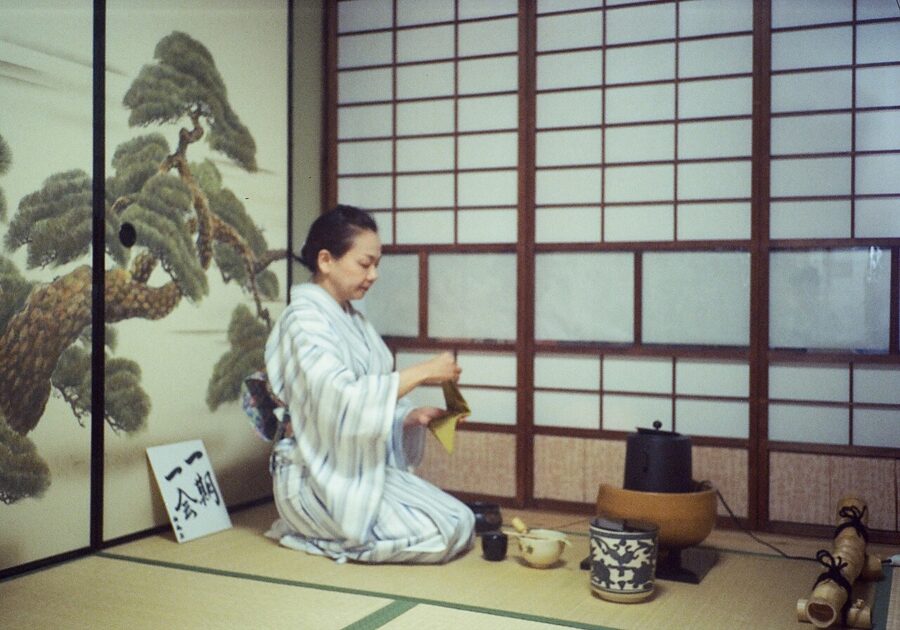
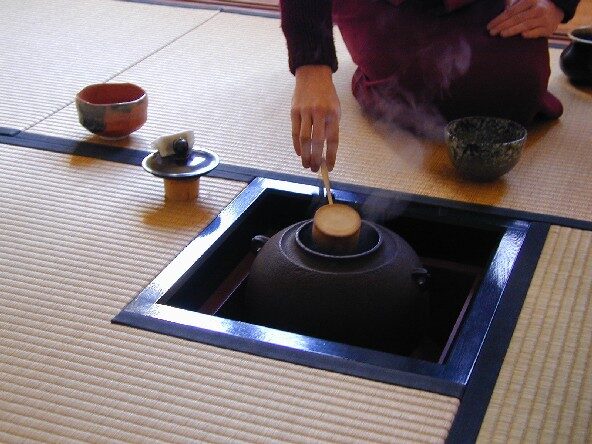
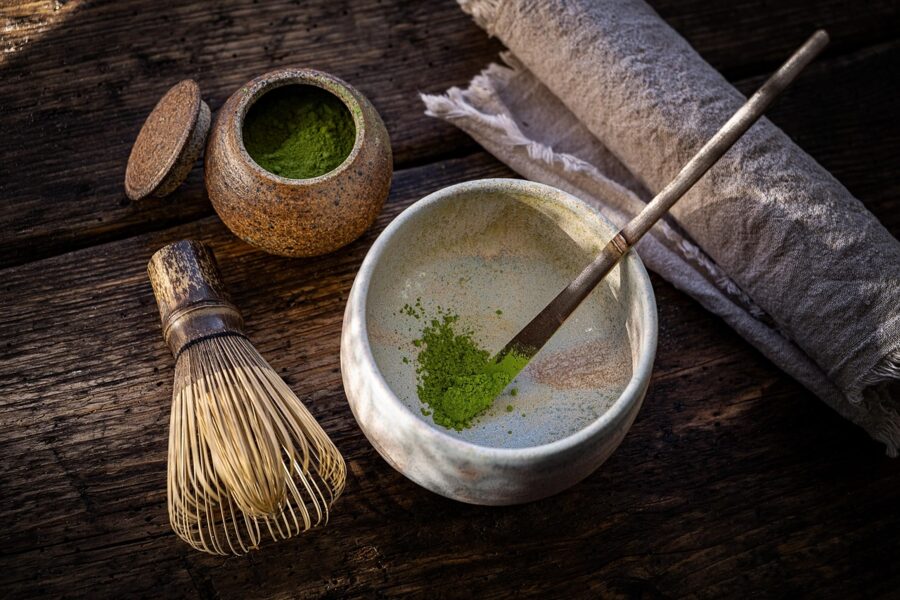
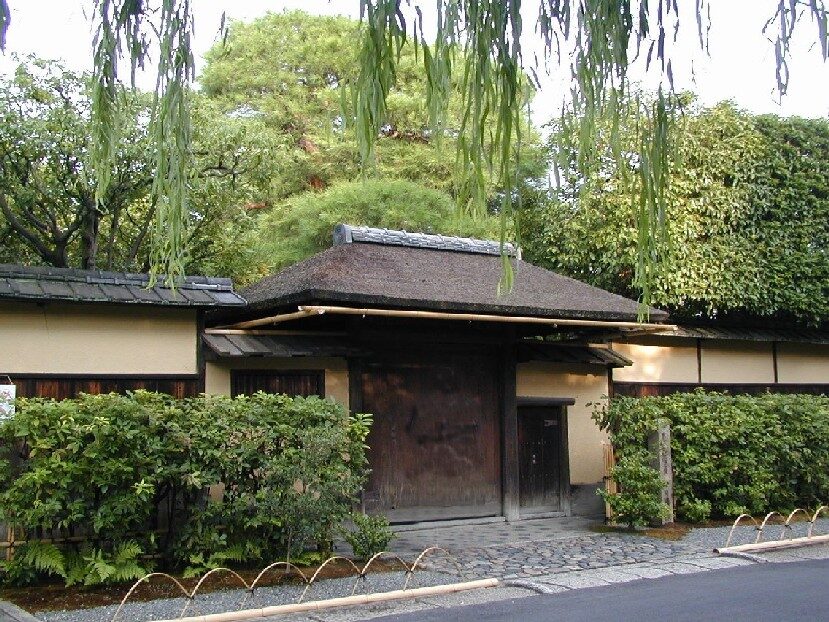
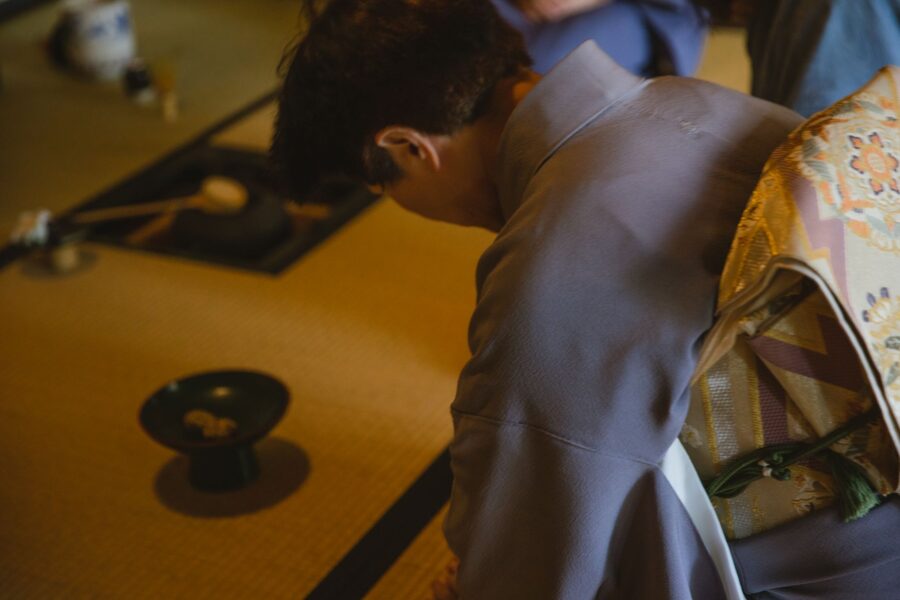
Tea is kata at its most refined. The host’s sequence of movements is called temae (点前): how to carry in the bowl, how to fold the silk cloth, how many times to wipe the scoop, where to set the lid. Each school has its own version, and students practice it for years.

Tea teachers describe progress with the three characters shuhari (守破離): first keep the form, then break it, then leave it. The idea is usually traced to verses attributed to Sen no Rikyū, though one tea dictionary says the term began in military strategy. Either way, you earn the right to break a form by mastering it.

On stage, and in the language
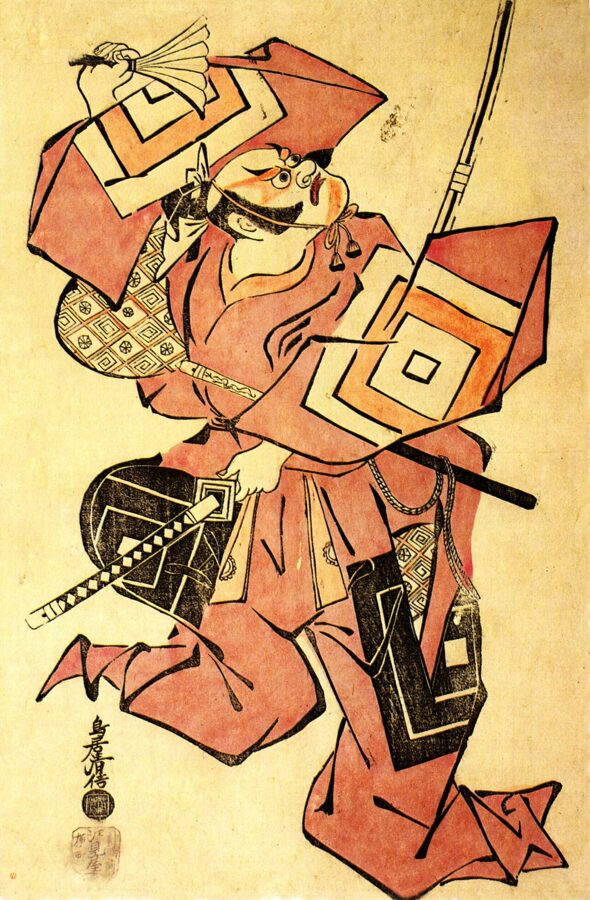
Kabuki actors inherit kata for famous roles: the pose, the glare, the moment to freeze. The language keeps the lesson in a pair of words. Katayaburi (型破り), form-breaking, praises the bold original; katanashi (形無し), formless, means a mess.
A line much repeated in Japan, credited to the educator Muchaku Seikyō answering a child on a radio phone-in, sums it up: break the form once you have it and you are original; break it without having it and you are simply formless.
De Mente’s case, in his terms
Japan Unmasked opens with a chapter called “Dispelling the Enigma,” aimed at the old Western habit of calling Japan inscrutable, which De Mente blamed on Western short-sightedness. His epigraph, from a fellow Japan hand, George H. Lambert, calls the Japanese “the most knowable and predictable people on Earth.” Predictable, the argument runs, because they follow forms you can learn.
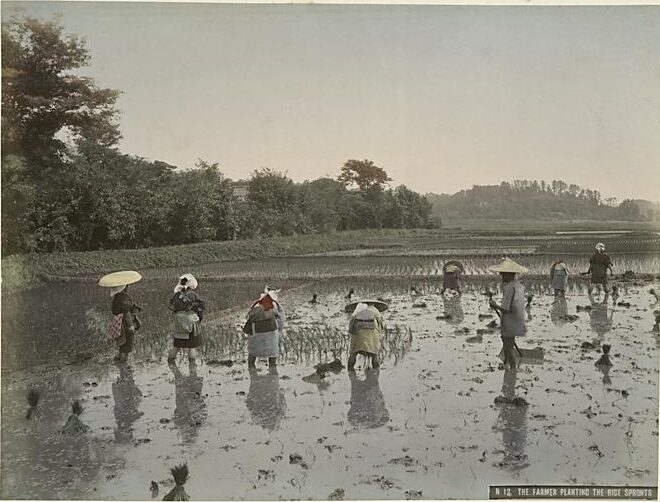
Where did the forms come from? Wet-rice farming, in De Mente’s telling, demanded tight cooperation, so the group came first and whoever broke ranks was shunned. Chinese writing, learned stroke by stroke in a fixed order, Zen training, the warrior codes and the stage arts all reinforced one approved way of doing things. Over time, he writes, correct form came to matter more than the substance it served, and acting outside it became a moral failure.
The process, as he puts it, is that “each skill or profession making up the Japanese way of living was reduced to its basic elements,” and those elements were taught as fixed sequences. The result is what he calls the “kata-ized” society. He adds the art of ambiguity: indirect speech that keeps the peace and keeps outsiders at arm’s length.
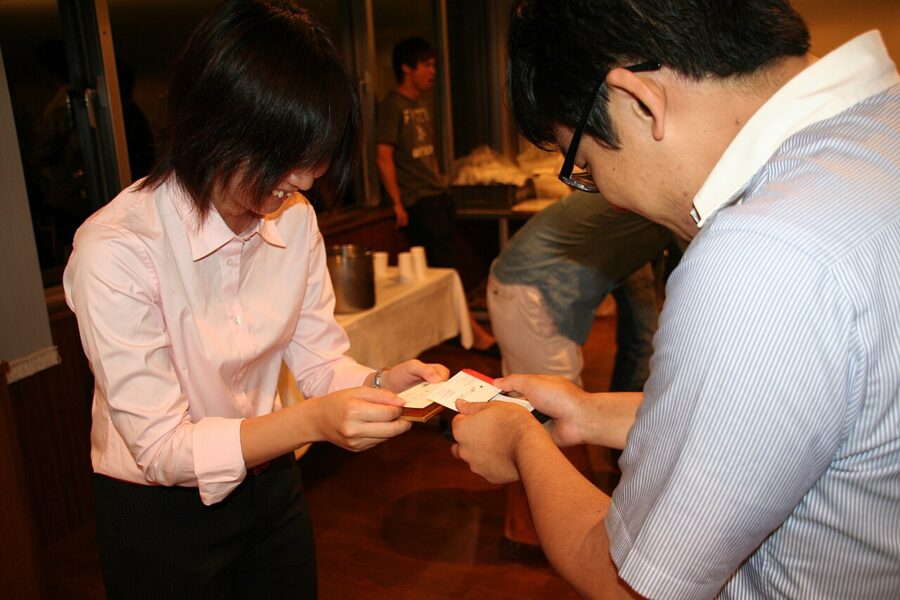
The book then turns practical. Most of its pages, like those of Kata before it, take one situation at a time (the introduction, the meeting, the apology, the gift, the negotiation) and explain the unspoken form behind it. One weakness he flags is familiar to anyone who has worked with a Japanese company: with no precedent, decisions stall, because nobody has a form for the new thing.
Reviewers who knew Japan found the examples true to life. Diane Skoss, reviewing Kata for Koryu Books in 2003, said she had met nearly every situation De Mente describes during her decade in Japan and found the idea clarifying. She also found the prose plain and the treatment of martial-arts kata shallow. That is a fair summary of the whole project: sharp on what happens in the room, loose on why.
The nihonjinron problem
De Mente wrote in a crowded field. From the 1960s on, Japanese and foreign authors produced hundreds of books on Japanese uniqueness, a genre called nihonjinron (日本人論), “theories of the Japanese.” Its best-known titles are serious works: Nakane Chie’s study of vertical social ties, published in English as Japanese Society (1970), and Doi Takeo’s The Anatomy of Dependence (1973), on amae, the wish to be indulged. Behind them stood Ruth Benedict‘s wartime study The Chrysanthemum and the Sword (1946).
The critique came in the 1980s. Peter N. Dale’s The Myth of Japanese Uniqueness (1986) read the genre as ideology, and Ross Mouer and Sugimoto Yoshio’s Images of Japanese Society (1986) argued that the picture of a harmonious, group-minded Japan rested on thin evidence.
Befu Harumi’s Hegemony of Homogeneity (Trans Pacific Press, 2001), Yoshino Kosaku’s Cultural Nationalism in Contemporary Japan (1992) and Oguma Eiji’s history of the “homogeneous nation” myth (1995; English 2002) traced how the picture of one uniform Japan was produced and sold. Oguma also showed how recent it is: the prewar empire had described itself as a nation of mixed origins.

The data side is blunt. In 1999 the psychologists Takano Yōtarō and Osaka Eiko reviewed fifteen studies comparing Japanese and Americans on individualism and collectivism; fourteen failed to support the common view that the Japanese are the more group-minded. A later follow-up adding twenty more studies found no clear difference in most and Japanese respondents more individualistic in several.
Sugimoto’s An Introduction to Japanese Society (Cambridge, fifth edition 2021) is the antidote I would hand any reader of De Mente. It treats Japan the way you would treat Germany or Brazil: divided by class, region, generation, gender and ethnicity, with no single “Japanese” to predict.
The sociologist Chris Burgess added a useful twist in a 2010 essay on the “homogeneous Japan” idea: a national self-image is not simply false, because people who believe it act on it. Books like De Mente’s helped make kata talk part of how Japan explains itself to foreigners, and to itself.
What holds, then? Kata on its home ground holds completely; the intellectual historian Minamoto Ryōen devoted a 1989 book, Kata, to it, built on Zeami and the sword schools. Codified forms also run Japanese service training, at station gates and department store counters. What does not hold is the leap from “Japanese arts and workplaces teach set forms” to “the Japanese are programmed people,” and still less the rice-paddy origin story or the 1990 claim of a superior people.
What you will notice on the ground
Read as a guide to forms rather than to people, Japan Unmasked earns its place in a carry-on.
At the station
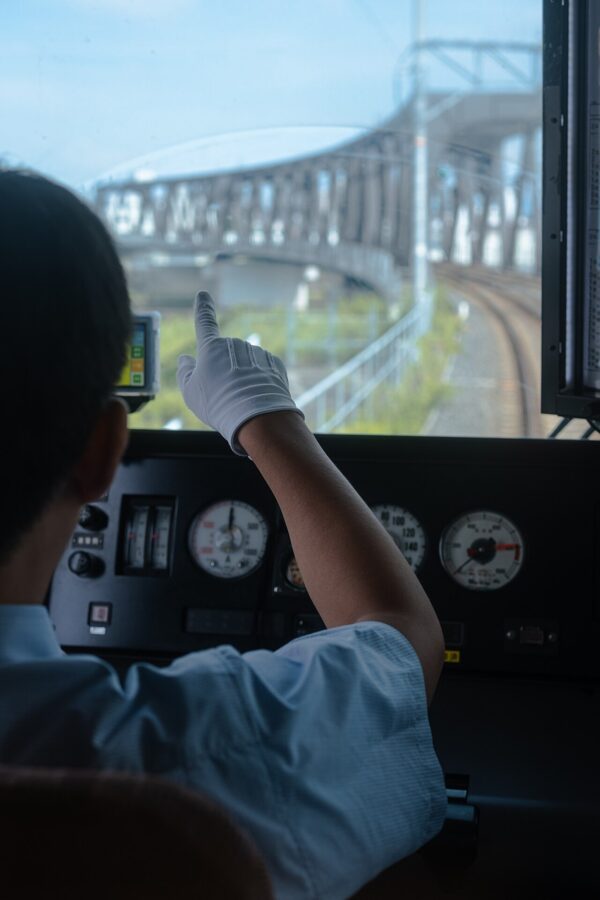
Watch a train driver point at a signal and call out its state. This is shisa kanko (指差喚呼), pointing and calling, begun by steam locomotive drivers on the old national railways. In a 1994 experiment by the Railway Technical Research Institute, workers who neither pointed nor called pressed the wrong button 2.38 percent of the time; those who did both erred 0.38 percent of the time, about a sixth as often.

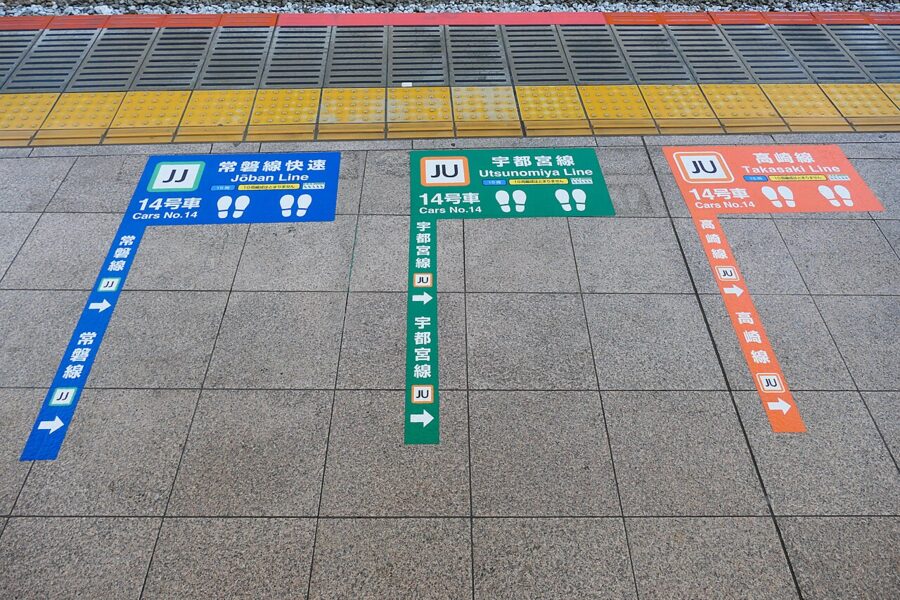
Then look down. Platforms are painted with boarding positions, and riders line up beside the doors in rows, a practice called seiretsu jōsha (整列乗車). On Shinkansen platforms the car numbers are marked too. Reserving the seat is its own small kata (see how to book Shinkansen tickets); once you have one, the platform shows you where to wait.

The cleaners from the opening belong to JR East Techno Heart TESSEI, which cleans JR East’s Shinkansen trains at Tokyo and Ueno stations. A train that turns around at Tokyo has about twelve minutes at the platform; with two for passengers to get off and three to board, the crew gets the seven in between. The drill dates to 1991, when the Tohoku and Joetsu lines reached Tokyo Station.
The bow
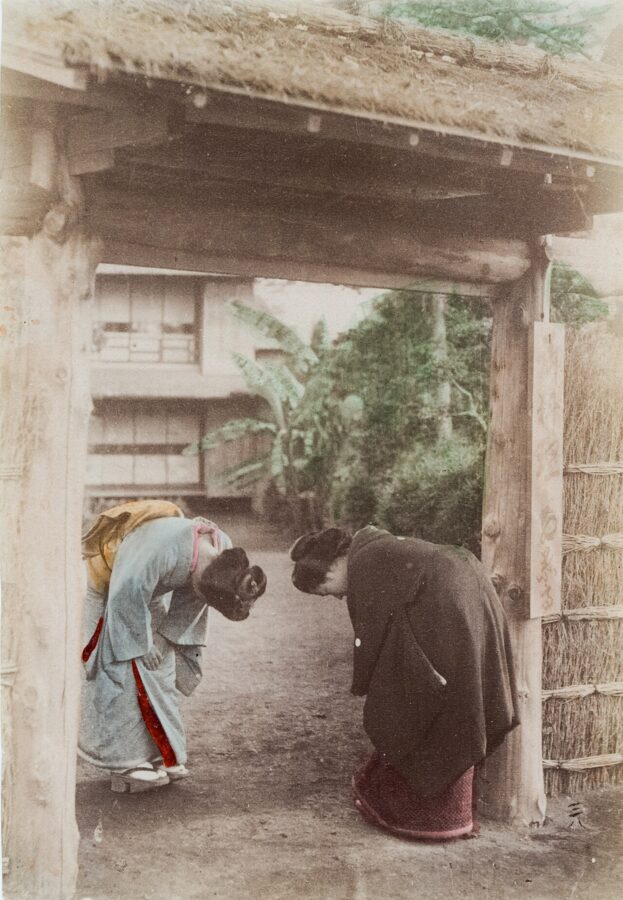
Business manners courses in Japan still teach three bows: a light nod of about 15 degrees, eshaku (会釈), for passing a colleague; about 30 degrees, keirei (敬礼), for greeting a client; and about 45 degrees, saikeirei (最敬礼), for deep thanks or apology. Shop staff will bow to you; a small nod back is the visitor’s form, and nobody expects more.
In the depachika
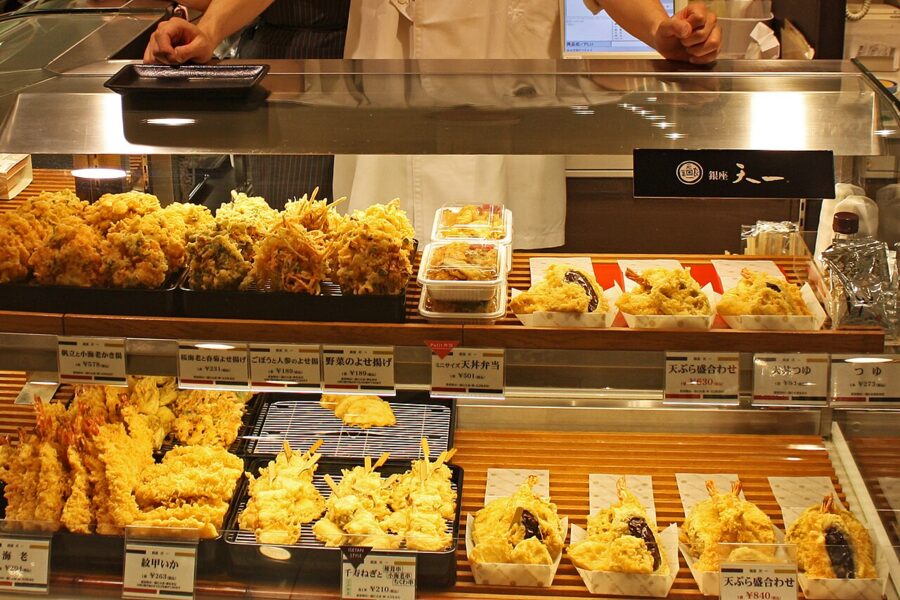
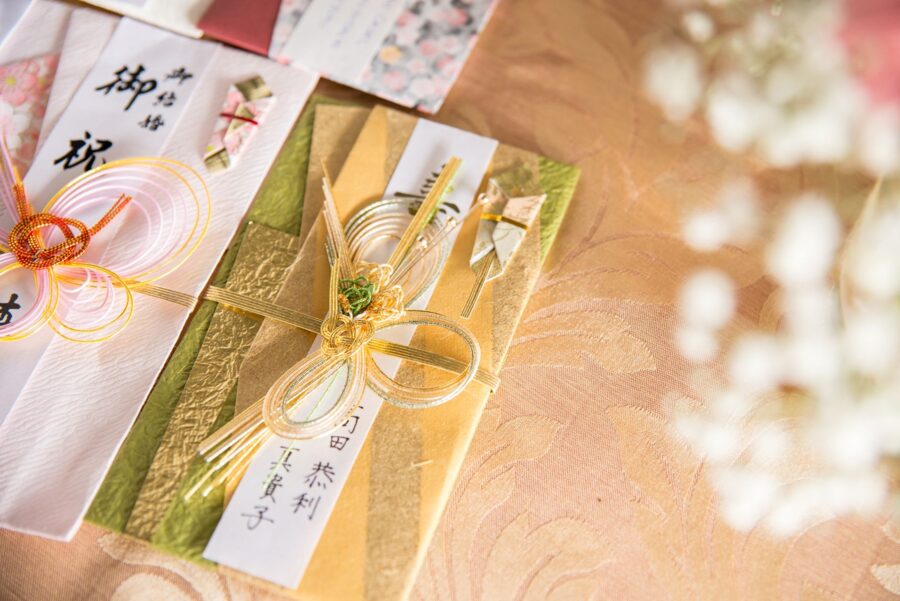
Department store food halls, depachika (デパ地下), are kata in retail. Buy a box of sweets and the clerk will ask whether it is a gift. Say yes and watch: paper folded on the diagonal with no tape showing, perhaps a printed noshi (熨斗) band naming the occasion, a paper bag sized to the box, a spare bag for you to hand over with it.

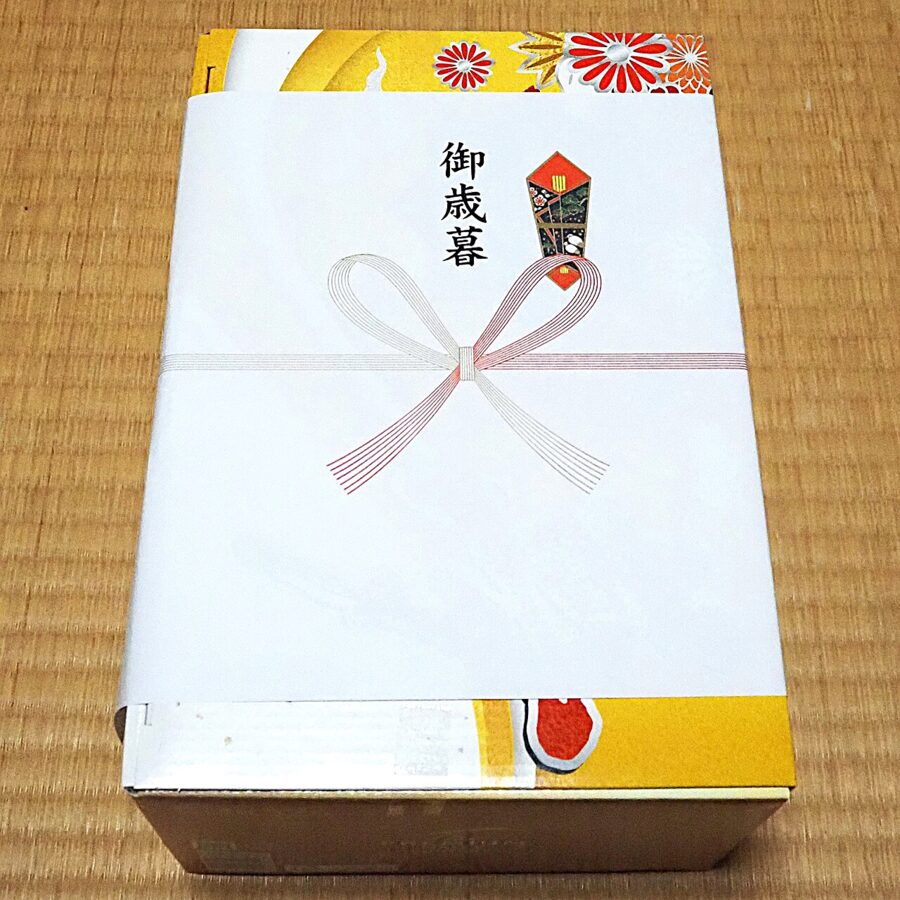
This is also where Japan is visibly rewriting a form. Plastic shopping bags have carried a charge nationwide since July 1, 2020, and the department store association now urges “smart wrapping,” letting customers choose less. In September 2025 Takashimaya, famous for its rose-print paper, began selling reusable organic cotton gift bags in all its stores, an idea from its own staff.


On the train
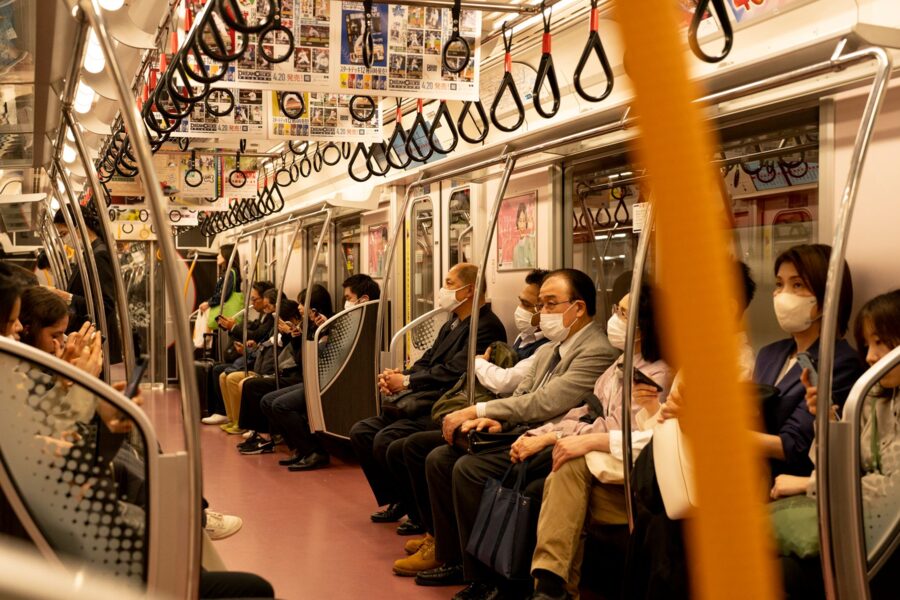
Trains are quiet because the form says phones go on “manner mode” and calls wait until you are off. Priority seats near the car ends are for older, pregnant or disabled riders and people with small children. What visitors most often get wrong is a form of this kind: loud talk, eating on a packed commuter train, blocking the doors.
Where the book overstates, and where Japan moved
Time changed the title first: for three years nearly everyone in Japan wore a mask. Since March 13, 2023, the health ministry has left mask-wearing to individual choice, while its guidance still suggests one on crowded trains and buses and when visiting hospitals. Plenty of people kept theirs, but now by choice.
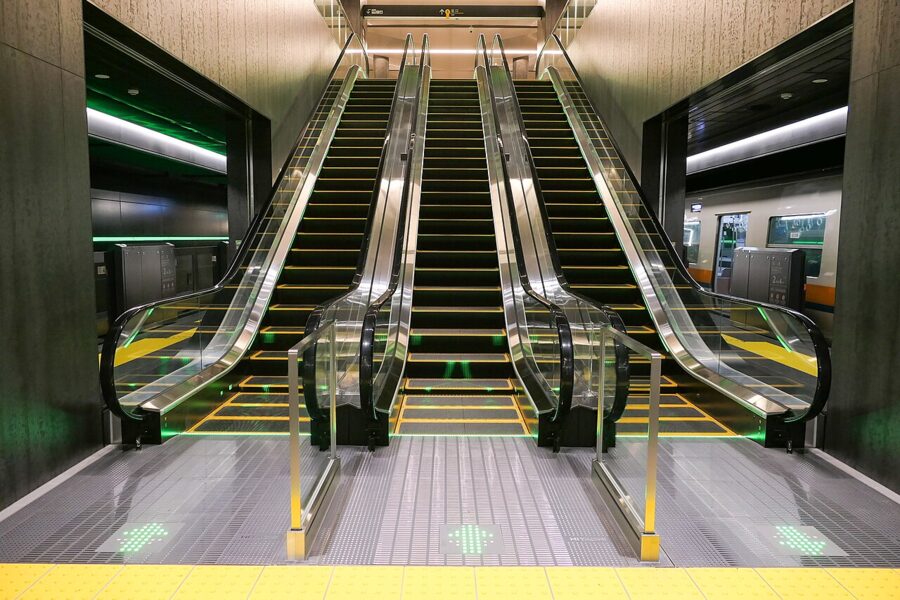
Second, forms change, sometimes by law. Commuters learned to stand on one side of the escalator and walk on the other: left in Tokyo, right in Osaka, so there was never one Japanese form anyway.
Railway operators now ask everyone to stand still. Saitama Prefecture wrote that into an ordinance in force since October 1, 2021, and Nagoya followed on October 1, 2023. Neither carries a penalty, and a 2023 Saitama survey found 39 percent of respondents in their teens and twenties had walked on station escalators. A kata can be voted in and quietly ignored.
Third, the people. De Mente wrote as if all Japanese ran one program, but the Japan you visit includes Okinawans and Ainu, Korean Japanese families four generations deep, students and workers from across Asia, and a majority as varied as any. The station clerk follows a form because it is the job, not because rice farming wired it in. Off the clock, she is as unpredictable as you are.
Last, the confidence. “Predictable” is a strong word for a country that has reinvented itself as often as Japan has and still surprises the people who study it. Forms tell you what is expected in a setting. They do not tell you what a person thinks.
Reading it now
If you read Japan Unmasked, or its 2018 descendant, read it the way a good tea student keeps the form: closely, then with room to step outside it. Trust its descriptions of situations; treat its explanations of national character as one man’s theory from another era. The pages on introductions, gifts and apologies will spare you awkward moments.
And when you are next on a Shinkansen platform at Tokyo Station, get there a few minutes early. Watch the crew line up and bow to an empty train. That is kata, and De Mente was right that you can learn a lot from it, as long as you remember that the people doing it go home at the end of the shift.