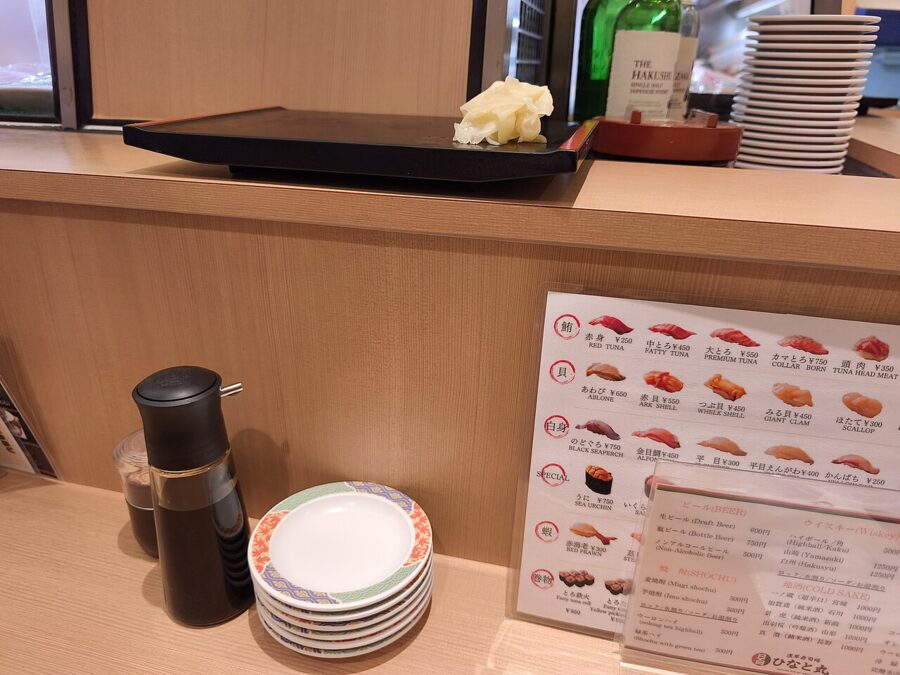

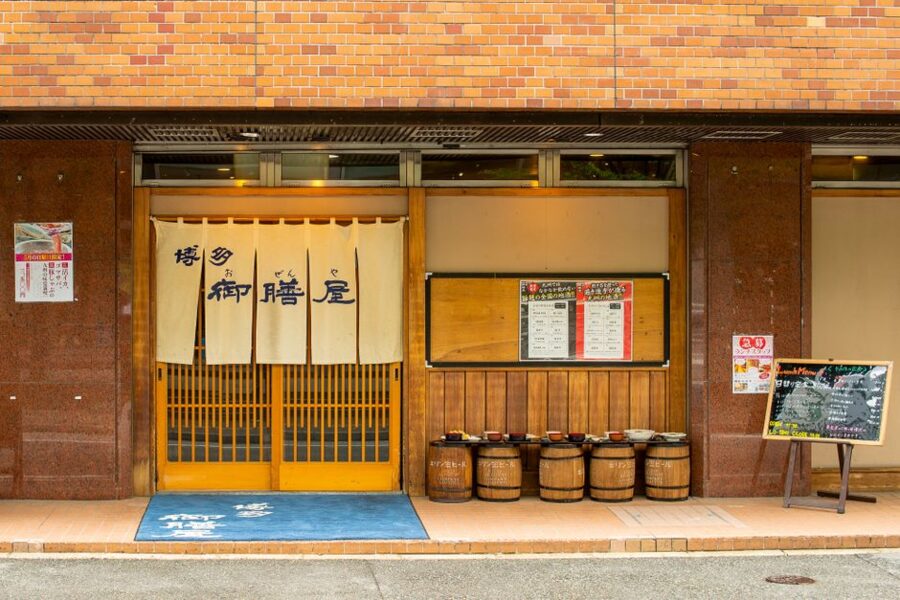
Most meals in Japan need no booking at all. You duck under the noren, hold up fingers for the size of your party, and sit where you are pointed. The meals that do need a booking need it weeks ahead, on a credit card, under a cancellation policy you agree to before the seat is yours.
Contents9 parts
- Which meals need a booking
- The booking sites that take a foreign card
- Booking through your hotel concierge
- The phone call, with the phrases
- Deposits, cancellation fees and no-shows
- On the night: seat times, arriving late and children
- Dietary requirements
- Walk-ins: queues, ticket machines and the best times to try
- When every top place is full
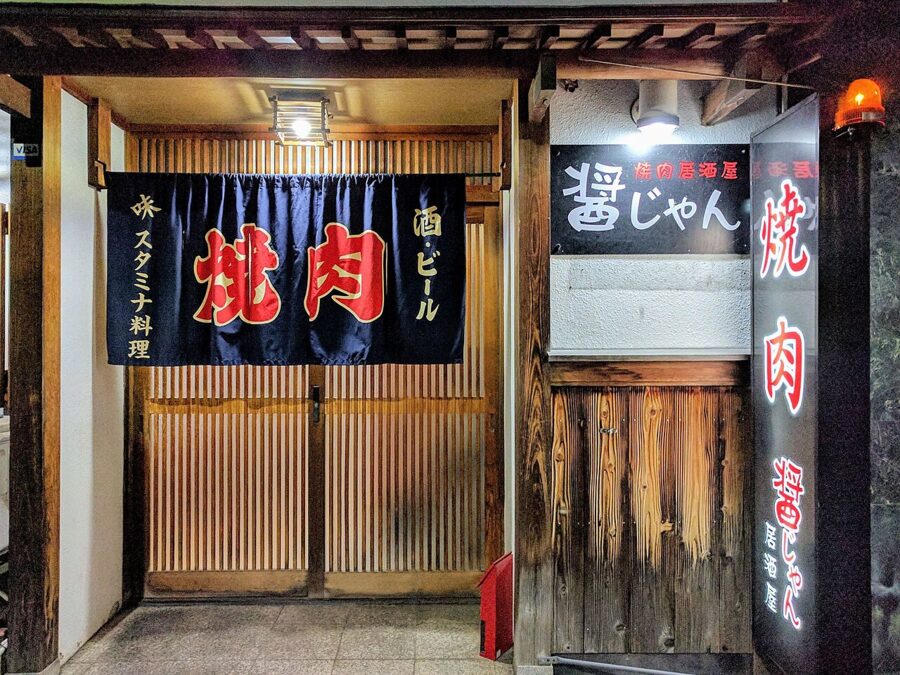

So the first job is sorting your list into the two kinds. The second is getting the bookable ones through a site that takes a foreign card and speaks English, or through someone who can make the call for you. Fees, cards and platform rules are as of November 2026.

Which meals need a booking
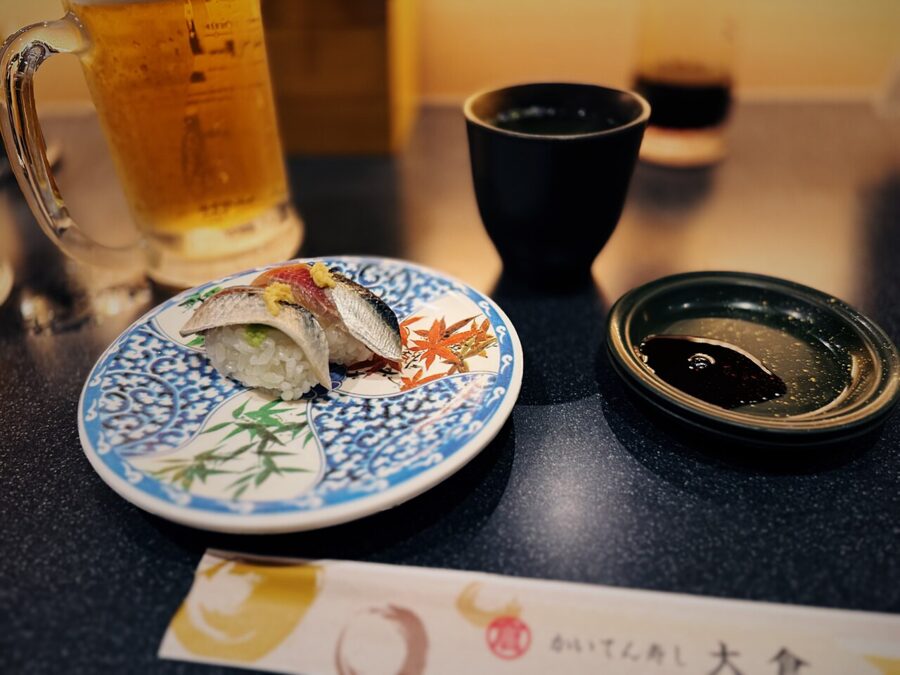
The line runs roughly along price and seat count. A ramen shop with fourteen stools turns its seats every twenty minutes and has no use for your name. A sushi counter with eight seats and one sitting a night has bought the fish for exactly eight people, and an empty stool is money gone.
| Kind of place | Booking? | How it usually works |
|---|---|---|
| Ramen, udon, soba, curry, gyudon | No | Walk in, often buy a ticket from a machine, queue if there is a line |
| Conveyor-belt sushi, family restaurants, food halls | No (some chains run their own apps) | Walk in, take a number from the reception machine or write your name on the list |
| Izakaya and casual yakitori | Only for groups or Friday and Saturday nights | Walk in early in the evening; book for four or more |
| Mid-range sushi, tempura, tonkatsu and kappō counters | Helps at dinner, rarely at lunch | Book a few days ahead online or by phone, or try right at opening |
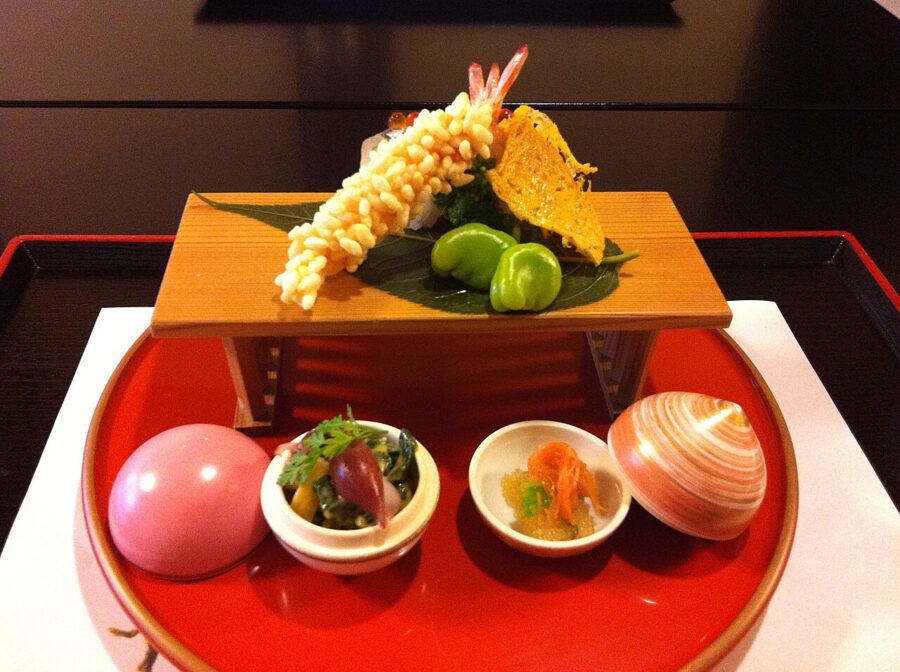
| Kaiseki, high-end sushi and omakase counters | Yes, often weeks or months ahead | Platform booking with a card, or a hotel concierge; fixed start times |
| Ryokan dinner | Booked with the room | Chosen as part of the stay |
Japan’s tourism board says the same in its guidance on making reservations: fast-food chains, family restaurants and ramen shops generally take no bookings, while many sit-down restaurants in the busiest parts of the big cities do. A ryokan dinner is its own case, settled when you book the room, and the guide to booking hotels in Japan covers that choice.

One more category hides inside the top row. Some famous counters run on introductions only, a practice called ichigen-san okotowari (一見さんお断り, no first-timers without an introduction). No website and no phone call opens those; a hotel concierge with a relationship, or a regular who brings you, is the only way in. If a name on your list is one of these, replace it rather than chase it.
The booking sites that take a foreign card
Four platforms carry most English-language bookings for serious restaurants, and a fifth route runs through Google Maps. A given restaurant usually sits on one of them, and the rules you agree to are the restaurant’s own, collected by the platform.
| Platform | Best for | Fee to you | Card |
|---|---|---|---|
| TableCheck | Hotel restaurants, mid-range to high-end city restaurants | None for most bookings; FastPass queue-skip from ¥390 (about US$2) | Visa, Mastercard, Amex, JCB, Diners; 3-D Secure required |
| Tabelog (English site) | The widest spread of ordinary good restaurants with course menus | ¥440 (about US$3) per person, not refunded | Payment method required to book |
| Omakase | Hard-to-book sushi, kaiseki and chef’s counters | ¥390 per seat, not refunded | Credit card only; no debit or prepaid |
| Pocket Concierge | High-end Japanese and French, with English course descriptions | Check at booking | Per restaurant; read the policy box |
| Google Maps “Reserve a table” | Whatever partner the restaurant uses | The partner’s | The partner’s |
TableCheck
TableCheck is the booking engine behind many hotel restaurants and city dining rooms, and often the restaurant’s own “Reserve” button leads to it. Its payment methods page lists several ways a booking can be held: no card at all, pay on the day; a card held as a guarantee, where the amount varies by restaurant and can be the full course price or a token ¥50 (about US$0.30) or ¥200 (about US$1); online prepayment of the course; or a voucher. Your confirmation email says which one applies.
Two things trip up foreign cards. TableCheck now requires 3-D Secure, the one-time-password check your bank runs for online payments, and its help page on failed authentications says a mismatched billing address or an unconfigured card is the usual cause. Debit and prepaid cards work but are not recommended, because the guarantee can come out of your account at once and take weeks to come back.
TableCheck also sells something unusual: FastPass, a paid slot at popular places that otherwise mean hours in line, with a fee that starts at ¥390 and varies by restaurant. It buys you out of a queue, not into a sought-after counter.
Tabelog
Tabelog bills itself as Japan’s number one restaurant listing site, and its English version lets you book many of the same restaurants Japanese diners do. When the parent company Kakaku.com opened it to visitors in June 2024, about 35,000 restaurants took bookings this way at launch, all of them for set courses rather than a bare table. The process, per Tabelog’s English help pages, goes like this:
- Pick the date, time, party size and course on the restaurant’s page.
- Enter your email address and type in the verification code Tabelog sends.
- Register a payment method. Your bank may ask for a password at this point.
- Read the cancellation policy, then confirm.
- Keep the confirmation email: its ten-digit reservation number and the phone number you gave are what you need to change or cancel later.
The card pays Tabelog’s system fee of ¥440 per person, charged when the booking is confirmed and not refunded if you cancel, plus any cancellation fee the restaurant’s policy triggers. It does not pay for dinner; you settle that at the restaurant in whatever way it accepts. Online you can change only the date, time and headcount, and cutting the headcount or arriving late can count against the policy just as a cancellation does.
Omakase
Omakase is where the hardest tables live: sushi counters, kaiseki rooms and chef’s tables that release seats in batches and sell out in minutes. It charges a ¥390 fee per seat when the booking completes, per its reservation fee page, and keeps the fee if you cancel; changing the party size or rebooking charges it again. You need a credit card (Visa, Mastercard, Amex, JCB or Diners), because Omakase refuses debit and prepaid cards outright, and a mobile number that can receive an SMS code.
The release time is everything. Each restaurant page shows when the next batch of seats opens, in 24-hour Japan time, and at the famous ones the seats are often gone within minutes. Some restaurants also run a raffle about a week before release; winners get into the booking page a few hours early. You can enter once every 24 hours, and the help pages are candid that more entries mean better odds.
A worked example shows how much one page tells you. Omino Tsubaki, a seven-seat yakitori counter in Kyobashi, Tokyo, sells a ¥17,300 (about US$109) chef’s course plus a 10% service charge, with dinner starting at 4:30, 4:45, 5:00, 7:30, 7:45 or 8:00 p.m. Its next batch of seats opens on December 1, 2026 at 10 a.m. Japan time, it lets each diner book it twice a month at most, and it accepts no cash at all.
The same page sets out what backing out costs. The cancellation policy charges 30% from seven days out, 50% from three days and the full amount the day before.
Pocket Concierge
Pocket Concierge, now run by American Express in Japan, lists fewer restaurants than Tabelog but writes them up properly in English, with each course, its price per guest and the house rules on one page. Read the policy box before you book. Kappou Matsumoto, a ten-seat counter in Osaka’s Kitashinchi, is typical: courses from ¥16,500 (about US$104) to ¥33,000 (about US$208) per guest, 50% charged from three business days out and 100% from one business day, no children, and a note that an English page does not promise English-speaking staff.
Google Maps
Some restaurant listings on Google Maps show a “Reserve a table” button. In Japan that button is a doorway to a booking partner the restaurant already uses, TableCheck among them, so once you tap it the partner’s card rules and the restaurant’s cancellation policy apply exactly as if you had booked on the partner’s site.
Booking through your hotel concierge
A real concierge desk, the kind at a luxury hotel and a few good mid-range ones, is still the best route to the restaurants that do not trust strangers. The restaurant knows the hotel, the hotel vouches for you, and the concierge can pass on allergies in Japanese that will be understood in the kitchen. Front-desk staff at a business hotel are not concierges, and twenty minutes on the phone for you is a favor, not a service.
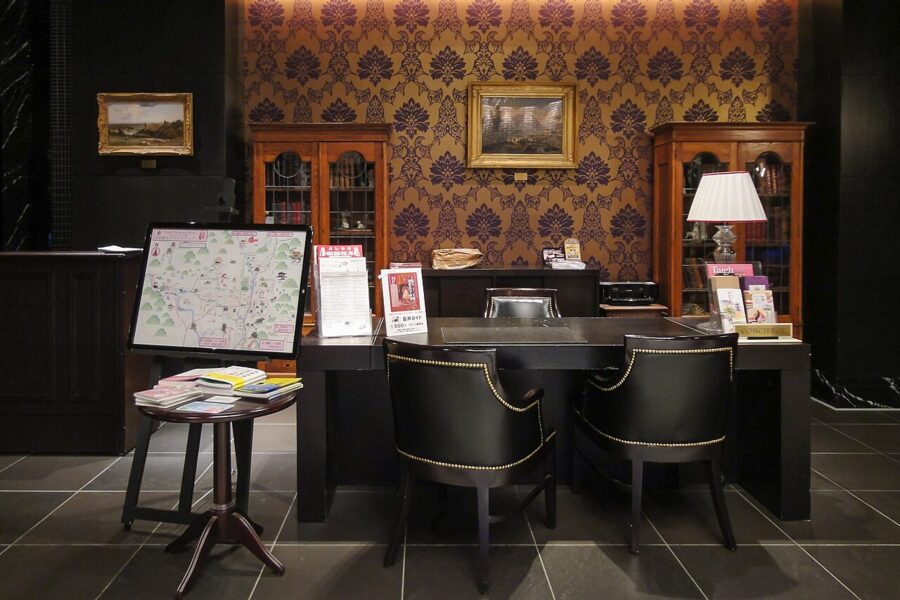

Write to the concierge once your room is confirmed, not the week before. Give them your dates, party size, a budget per person, any allergies or things you do not eat, and two or three restaurants per night in order. Expect them to tell you which names are impossible and to offer something comparable; that judgment is half of what you are getting.
The phone call, with the phrases
Plenty of good restaurants still take bookings only by phone, and many of them are perfectly happy to take one from a visitor who keeps it simple. Call in the quiet hours, mid-afternoon between lunch and dinner service, never at 7 p.m. Have the date, time and headcount written down in front of you, and say them in that order.
| You want to say | Japanese | Romaji |
|---|---|---|
| I would like to make a booking. | 予約をお願いしたいのですが。 | Yoyaku o onegai shitai no desu ga. |
| December 5, 7 p.m., two people. | 十二月五日、夜七時、二名です。 | Jūni-gatsu itsuka, yoru shichi-ji, ni-mei desu. |
| Is there anyone who speaks English? | 英語を話せる方はいらっしゃいますか。 | Eigo o hanaseru kata wa irasshaimasu ka. |
| At the counter, please. | カウンター席でお願いします。 | Kauntā-seki de onegai shimasu. |
| My name is Smith. | 名前はスミスです。 | Namae wa Sumisu desu. |
| I have a shellfish allergy. | 甲殻類のアレルギーがあります。 | Kōkakurui no arerugī ga arimasu. |
| I will be about fifteen minutes late. | 十五分ほど遅れます。 | Jūgo-fun hodo okuremasu. |
| I would like to cancel my booking. | 予約をキャンセルしたいのですが。 | Yoyaku o kyanseru shitai no desu ga. |
The word you most need to recognize coming back is manseki (満席, full). If you hear it, thank them and hang up. They will ask for a phone number; a Japanese mobile number or a hotel number goes over far better than a foreign one, because the restaurant may call to reconfirm the day before.
Deposits, cancellation fees and no-shows
All of the cards, fees and policies above exist because of the empty stool. In November 2018 a study group convened by the Ministry of Economy, Trade and Industry published a report on restaurant no-shows. It estimated that about 1% of all restaurant bookings ended in a no-show, costing restaurants around ¥200 billion (about US$1.3 billion) a year, and that counting cancellations a day or two before pushed the rate past 6%.

The report’s guidance set the pattern restaurants still follow. A restaurant that tells you its policy in advance may charge the full price of a booked course for a no-show, and around 50 to 70% of the usual spend for a table booked without a course. It also urged restaurants to reconfirm bookings, publish their policies and take prepayment or deposits, which is exactly what the card-at-booking platforms now do for them.
Visitors made the problem visible. In January 2023 a couple running a small yakiniku restaurant on the edge of a Japanese city, who took foreign bookings through a simple online form, told a Taiwanese blogger that 10 to 15 foreign groups had booked and not turned up in barely six weeks. Every no-show makes the next visitor’s booking a little harder to get, so cancel the moment your plans change, even when no fee applies.
How the fees work in practice
- The clock is Japan time. Omakase’s help pages say a policy that starts “three days before” kicks in at midnight Japan time on that day, whatever time your dinner is. In New York in winter, that is 10 a.m. the previous morning.
- Bad luck is not an exemption. TableCheck and Omakase both list illness, a delayed Shinkansen, a cancelled flight and booking the wrong date as cases where the policy still applies. Both offer cancellation insurance, but TableCheck’s help page says the policy is in Japanese and meant for people who live in Japan.
- Prepaid means prepaid. On Omakase, a course paid at booking is not refunded even if you cancel outside the fee period.
- Late can count as absent. Omino Tsubaki, for one, may cancel a booking outright if you are more than 30 minutes late.
If a Shinkansen delay is what makes you late, call anyway and say how late. The same goes for Shinkansen booking on the day of a big dinner: take the train before the one you need.
On the night: seat times, arriving late and children
Many high-end sushi and kaiseki counters start everyone at the same moment, a style called issei sutāto (一斉スタート, a simultaneous start), with one or two sittings a night. The chef builds the course for the whole counter at once, piece by piece. Arrive five to ten minutes early, and if you are late, you join the meal wherever it has got to; the pieces you missed are not made again.
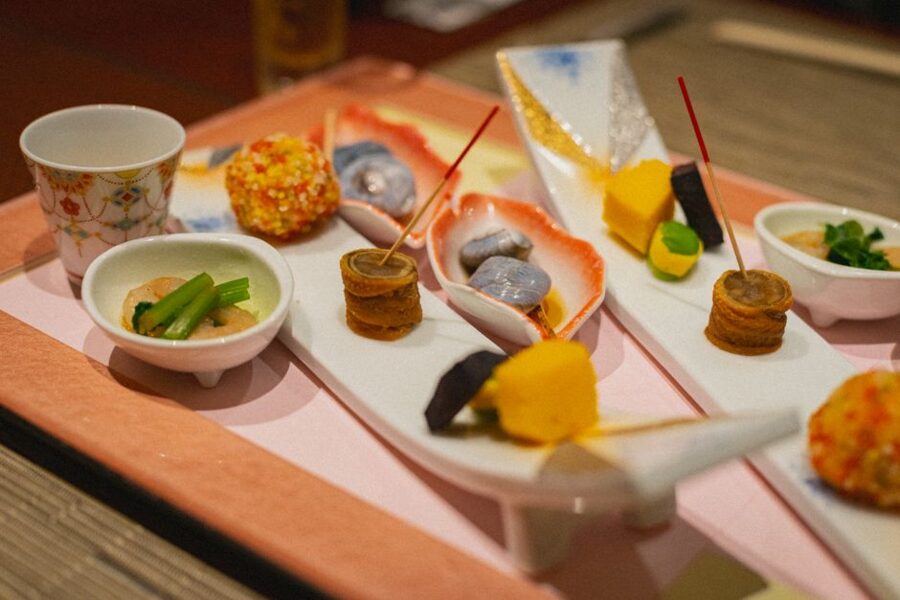
Other places stagger their starts, like Omino Tsubaki’s 7:30, 7:45 and 8:00 p.m. slots, so the grill is never asked to cook for seven people at once. JNTO’s guidance adds that some restaurants set a table time limit, often about two hours, so ask if you are planning a long evening over sake.
Children are the rule that surprises families most. Kappou Matsumoto takes no bookings with children, and Omino Tsubaki sets an age floor of 18. These are not unusual at small counters, where one restless child changes the evening for everyone else at the counter. Check the house rules before you book a family dinner, and book a private room or a ryokan dinner if the children are coming.
Read the rest of the house rules too. Cashless-only counters exist, as do places that refuse UnionPay, ban video recording, or add a 10% charge for a private room. All of it is on the booking page, in English.
Dietary requirements
State them at booking, in writing, and be specific. Omakase asks for allergy information before you can confirm, Kappou Matsumoto asks you to list ingredients you want to avoid in the special-requests box, and a good concierge will translate a long list properly. Write “no shellfish, including shrimp and crab, and no shellfish-based stock” rather than “seafood allergy”.
Be ready for a refusal. A set course at a seven-seat counter is planned around what the chef bought that morning, and Omino Tsubaki’s page says plainly that a wide range of allergies or dislikes may mean the booking is declined.
Vegetarians have it hardest, because dashi (出汁, stock), the base of most soups, simmered dishes and sauces, is usually made with dried bonito. Saying you eat no meat does not cover fish stock unless you say so.
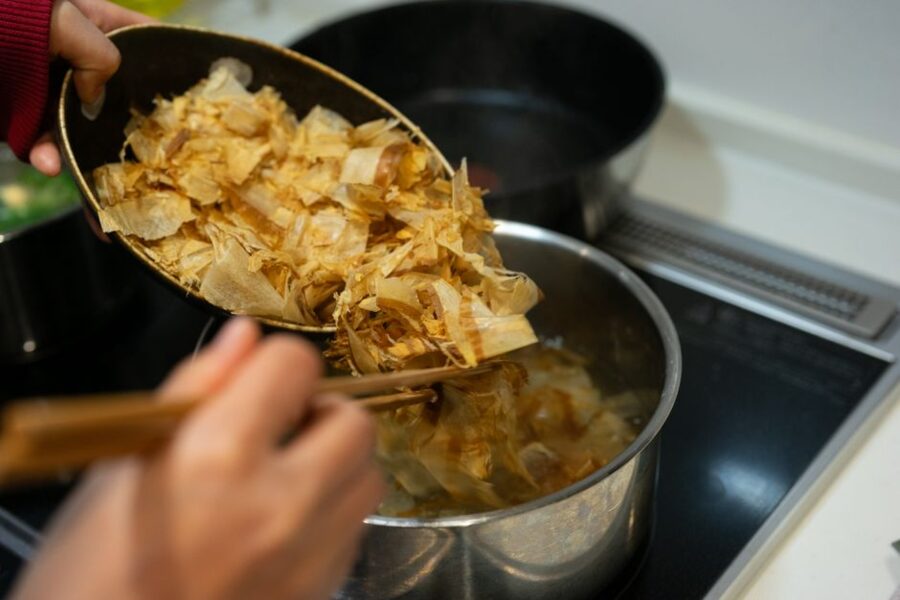
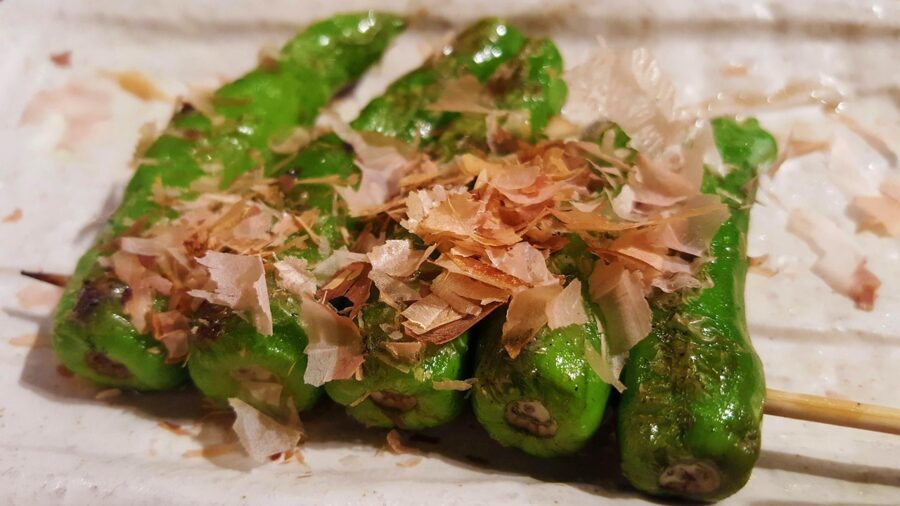
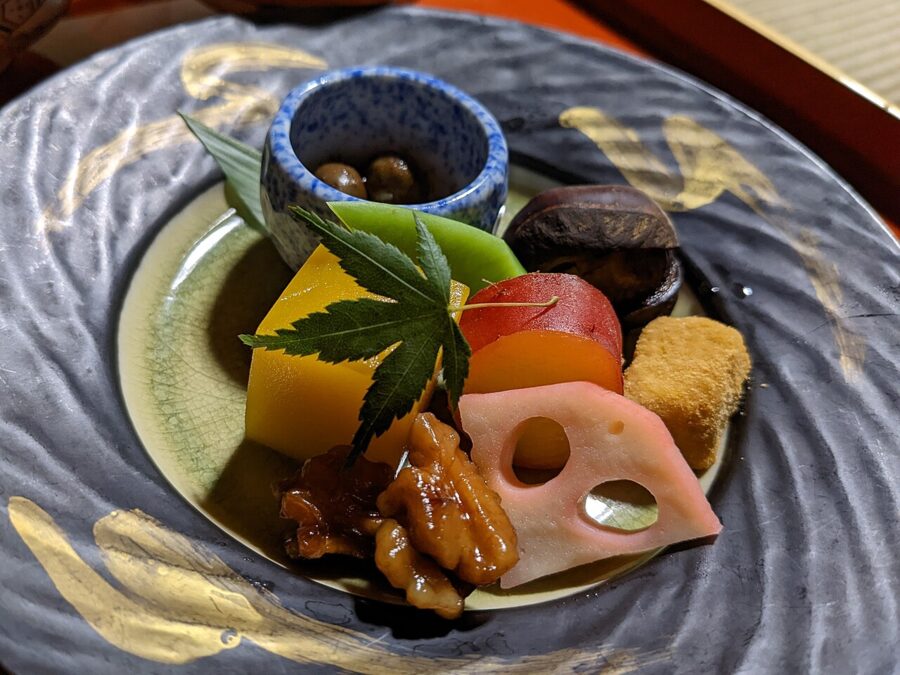
The easiest full vegetarian meal in Japan is shōjin ryōri (精進料理, Buddhist temple cooking), served at temple restaurants and temple lodgings, where the absence of meat and fish is the point rather than an adjustment.

Walk-ins: queues, ticket machines and the best times to try
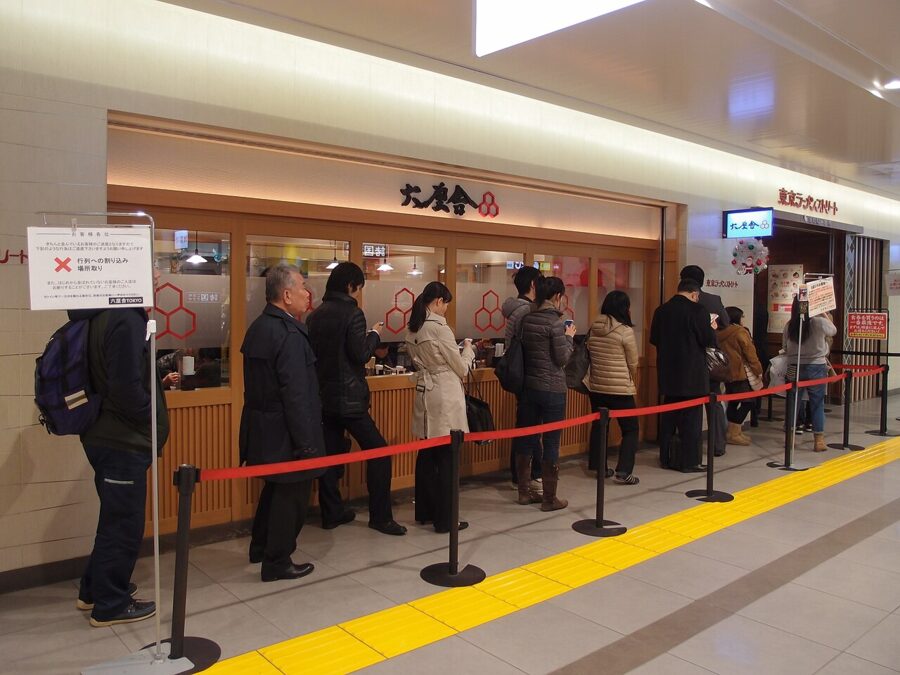
Most of your meals will be walk-ins, and they have their own small rules. Where there is a list by the door, JNTO’s advice is to write your name and party size on it, note counter or table if it asks, and wait to be called. Where there is a line, join the back of it; holding places for friends who are still on their way is frowned upon.

The ticket machine
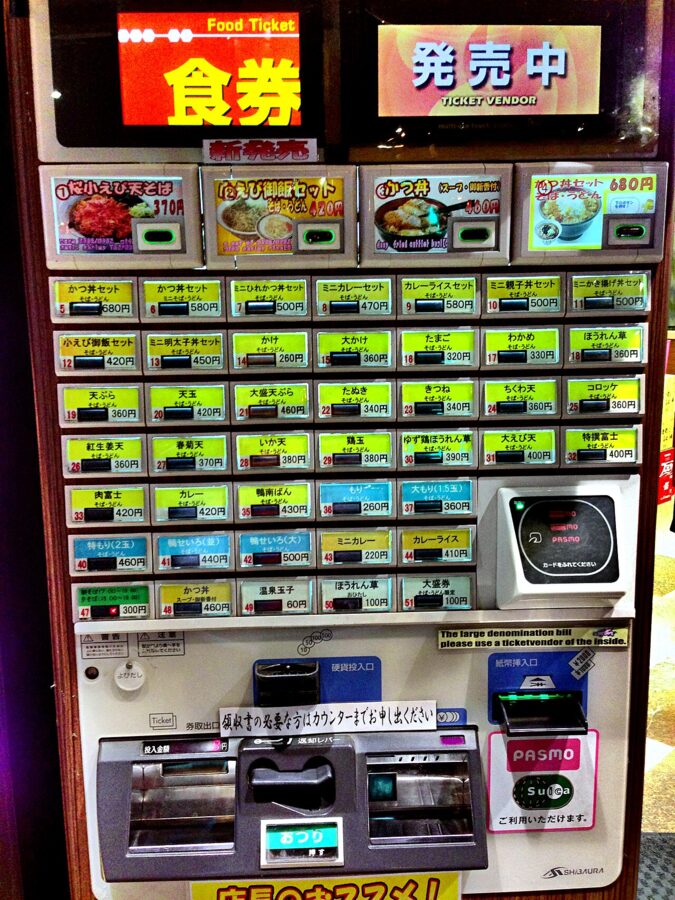
At ramen, soba and curry shops you often order before you sit, at a kenbaiki (券売機, meal ticket machine) by the door. Pay, press the button for your dish, take the ticket and hand it to the staff when you are seated. The top-left button is often the house specialty; if the buttons are all in Japanese, a photo of the machine through a translation app works well.
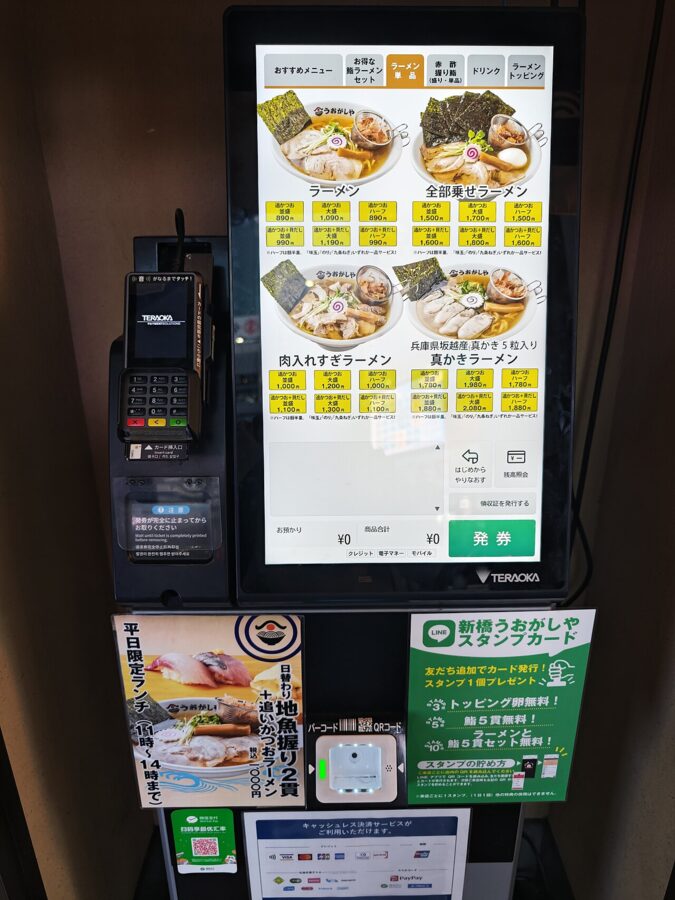

Newer machines have touch screens with an English button and take IC transit cards, credit cards and QR payments. Older ones take only cash, and some will not take a ¥10,000 note. Break a large note at a convenience store before you go looking for lunch.

When to show up
- Fifteen minutes before opening. The first seating at a popular lunch spot is the one you can count on.
- Mid-afternoon. Between about 2 and 5 p.m. many places are quiet, though some close between lunch and dinner, so check the hours.
- Early dinner. Izakaya and casual counters fill from about 7 p.m.; walk in at 5:30 and you will usually get a seat.
- Weekdays over weekends. Friday and Saturday nights are when locals book, and walk-ins lose out.
- Last order. Watch for rasuto ōdā (ラストオーダー, last orders), often 30 minutes before closing; arriving after it means no food, however empty the room.
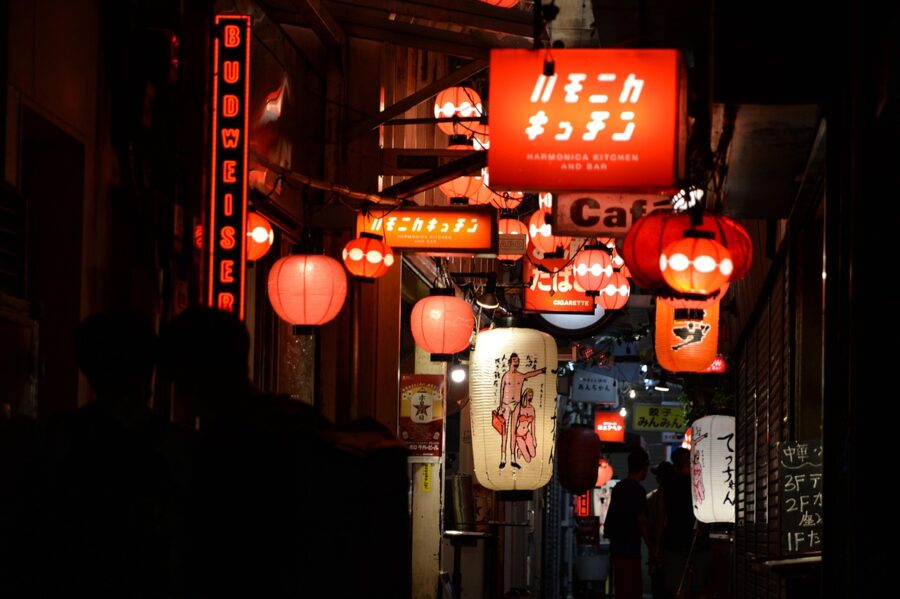
When every top place is full
The seats went in the first minutes of release, the raffle went to someone else, and the concierge said no. Here is what still works, in rough order of payoff.
- Book lunch instead. Many high-end counters serve a shorter, cheaper lunch course that sells out more slowly than dinner.
- Follow the restaurant. Omakase has no waitlist, but adding a restaurant to your favorites gets you its emails, including freed-up seats, first come first served.
- Watch the days before each fee step. People who drop plans tend to cancel just before a cancellation charge starts, so check again two or three days before the policy’s first step.
- Try the other platform. A restaurant that is full on one site sometimes holds seats on another, or by phone.
- Go to the chef’s second shop. Famous chefs often run a more casual sister restaurant, easier to book and cooked by people they trained.
- Change city. The same level of cooking in Kanazawa, Fukuoka or Osaka is far easier to book than in Tokyo or Kyoto on a festival weekend.
- Let the concierge choose. Ask for “somewhere like this” rather than “this”, and you will often eat as well somewhere you had never heard of.
Booking seats at the hardest counters is the same game as Ghibli Museum tickets: know the release hour in Japan time, be logged in with your card saved before it opens, and accept that some days you lose.
Start with the release dates. Pick the two or three meals that matter most on your trip, find each restaurant’s next opening on its booking page, put that hour in your calendar in your own time zone, and leave every other meal to the noren.