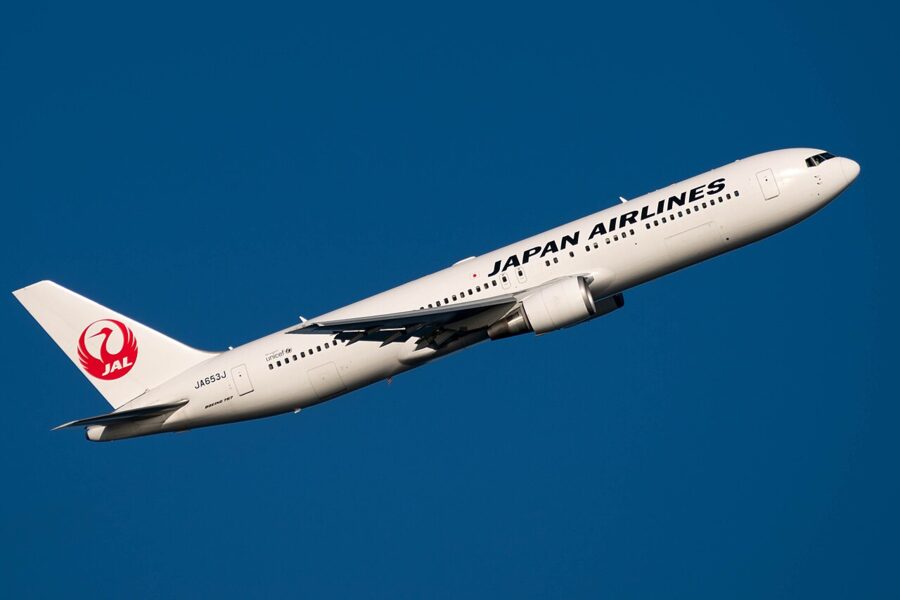

Sapporo is about eight hours from Tokyo by train and about ninety minutes by plane, and that gap is the whole case for flying inside Japan. On most routes a visitor takes, the Shinkansen is faster door to door and simpler to book. On the long ones, the ones that cross water and the ones that end on an island, the plane wins, and the work is choosing the airline, the fare and the airport.
Contents8 parts
- When the plane beats the Shinkansen
- The airlines, and the visitor fares that are left
- Booking a JAL Explorer Pass flight, step by step
- Booking a low-cost carrier without paying twice
- Which Tokyo airport: Haneda or Narita
- Osaka: Itami, Kansai or Kobe
- On the day: check-in, bags and security
- Two worked examples
Two things changed in 2026 that most advice has not caught up with. ANA closed its foreigner-only Discover JAPAN fare on May 18, 2026, and replaced its whole domestic fare list. Then on September 1, 2026, the seven airlines flying domestic routes out of Haneda began closing bag drop a strict 30 minutes before departure. Fares and rules here are as of November 2026.

When the plane beats the Shinkansen
My rule: if the train takes under four hours, take the train. Stations sit in city centers, there is no bag drop or security line, and you board minutes before departure. Tokyo to Kyoto or Osaka is the clearest case, and Shinkansen booking takes minutes once you know whose website sells the line. Past about five hours, the plane wins even after the airport trips.
Tokyo to Sapporo
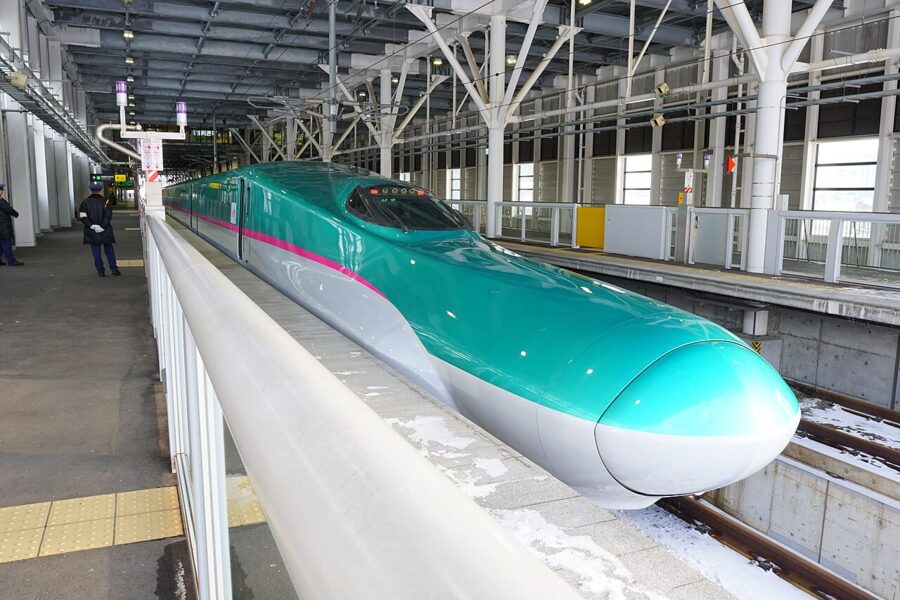
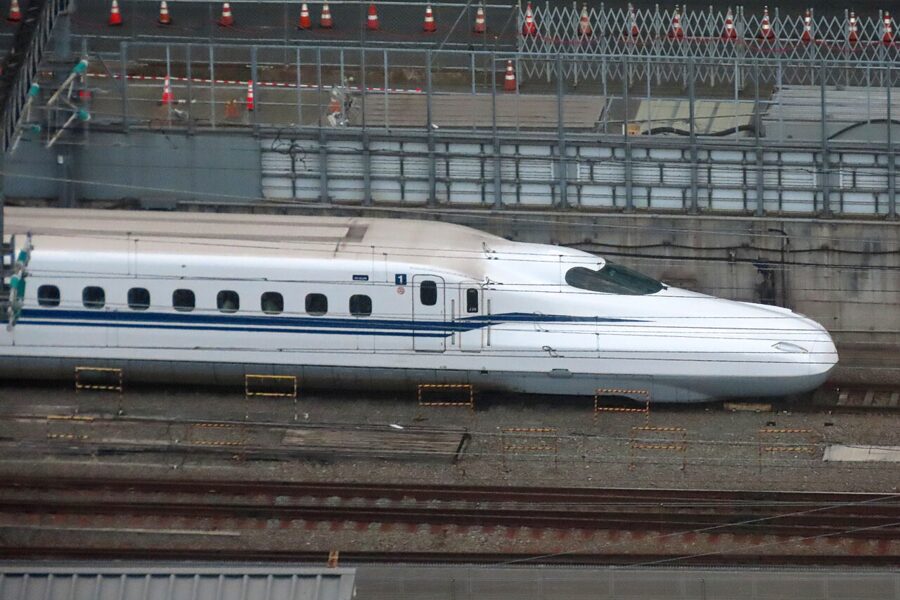
The Hokkaido Shinkansen ends at Shin-Hakodate-Hokuto, near the southern tip of Hokkaido, and the Hokuto limited express covers the rest. As of November 2026 the fastest combination from Sapporo to Ueno takes a little over eight hours and costs ¥29,710 (about US$190) one way with reserved seats. The line to Sapporo has slipped badly: a government panel in March 2025 put its opening at around the end of fiscal 2038, so spring 2039 at the earliest.
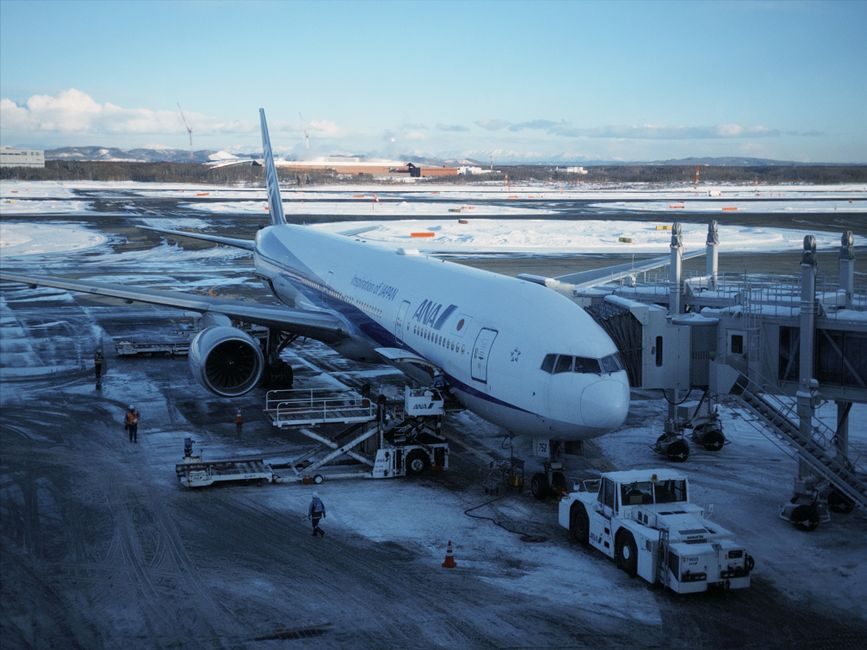
The flight from Haneda to New Chitose takes about an hour and a half, and the airport train into Sapporo roughly forty minutes. The train still makes sense with a Japan Rail Pass and a night in Hakodate on the way.

Fukuoka to Okinawa
There is no train to Okinawa, and the ferries from the mainland are overnight voyages. Fukuoka to Naha is a short hop flown by JAL, ANA and Peach among others, the natural way to add a beach week to a trip that ends in Kyushu. Ishigaki, Miyako and Amami are, for a visitor with a week, plane trips too.
Tokyo to Fukuoka, the borderline
A Nozomi runs Tokyo to Hakata in just under five hours, and a reserved seat costs ¥23,810 (about US$153) at the regular-season price as of November 2026. The flight takes about two hours, and Fukuoka Airport is two subway stops from Hakata Station. Going straight there, fly; stopping in Hiroshima or Okayama, take the train.

The airlines, and the visitor fares that are left
Japan has two full-service groups, a few independent and partner airlines, and three low-cost carriers that matter for domestic travel. Fares and rules are as of November 2026.
| Airline | Kind | Tokyo terminal | Checked bags included | Visitor-only fare |
|---|---|---|---|---|
| JAL (with J-Air, Japan Transocean Air, Japan Air Commuter) | Full service | Haneda T1 | 20 kg on ordinary fares | Yes: Japan Explorer Pass, two bags of 23 kg |
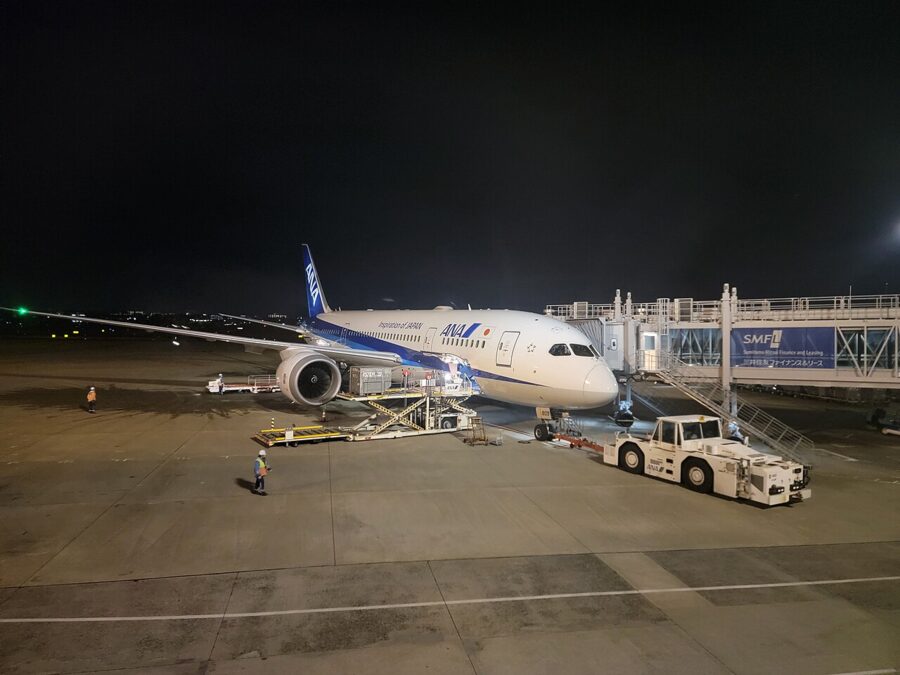
| ANA (with ANA Wings) | Full service | Haneda T2 | 1 x 23 kg on Simple, 2 x 23 kg on Standard and Flex | No: Discover JAPAN ended May 18, 2026 |
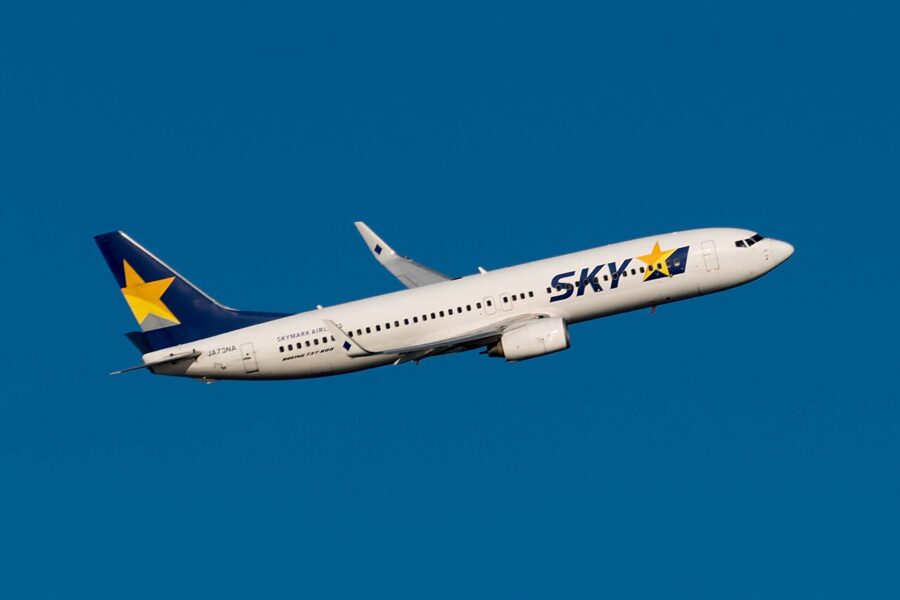
| Skymark | Independent | Haneda T1 | 20 kg total | No |
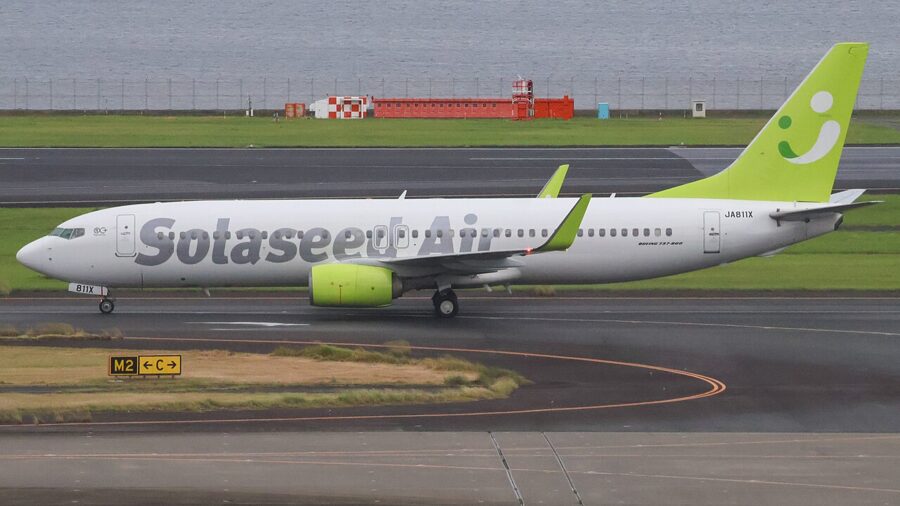
| Air Do, Solaseed Air | ANA partners | Haneda T2 | Check when booking | None found after May 18, 2026 |
| StarFlyer | Independent, ANA codeshare | Haneda T1 | Check when booking | No |
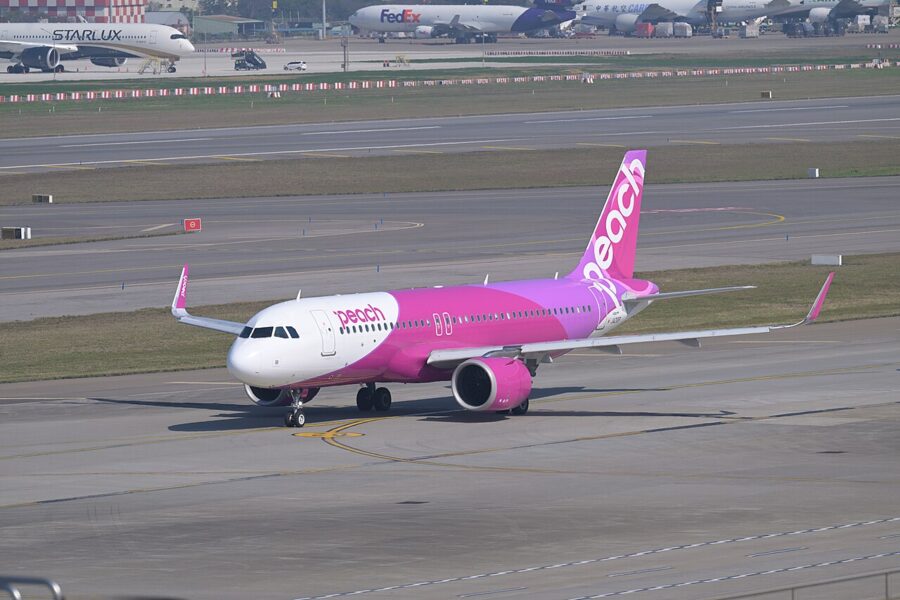
| Peach | Low cost (ANA group) | Narita T1 | None on Minimum; one bag up to 20 kg on Standard and Standard Plus | No |
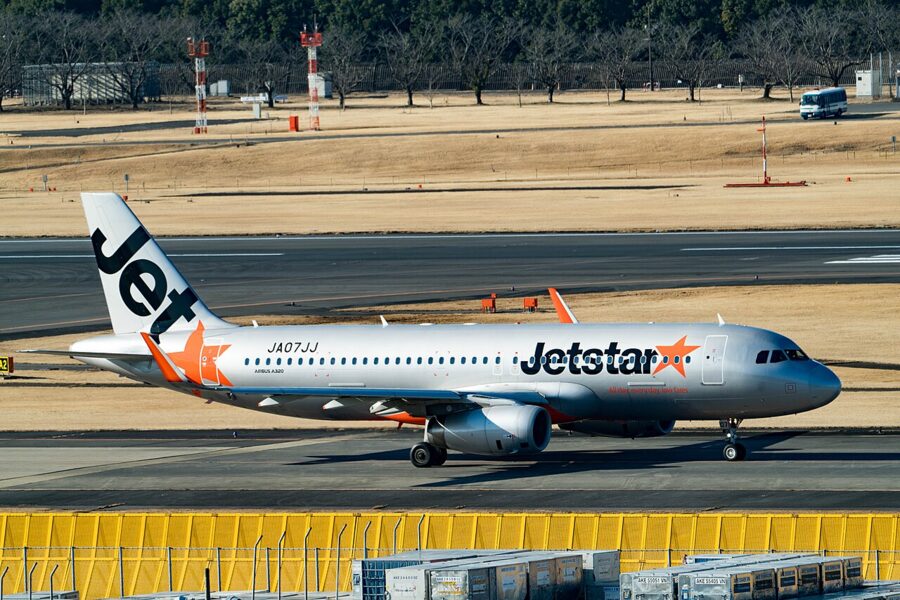
| Jetstar Japan | Low cost (JAL partner) | Narita T3 | Add-on to the basic fare | No |
| Spring Japan | Low cost (JAL group) | Narita T3 | Check when booking | No |
Zipair, the JAL-owned low-cost airline that turns up in searches, flies only international routes, so it can bring you to Narita but not on to Sapporo.

JAL Japan Explorer Pass
The JAL Japan Explorer Pass is the last visitor fare standing among the big airlines. It is not a pass you carry but a fare, booked flight by flight, sold only to people who live outside Japan and already hold an international ticket to and from Japan. That ticket need not be on JAL; JAL says any airline, a ship or even a military flight qualifies.
The price moves with demand and is charged in the currency of the country where you buy. On JAL’s US page in late November 2026, one-way winter fares started at US$75 for Haneda to Osaka Itami, US$80 to US$88 for Tokyo to Sapporo, US$88 for Haneda to Okinawa and US$94 for Haneda to Fukuoka, taxes and airport charges included. It covers JAL, J-Air and Japan Air Commuter flights, not Ryukyu Air Commuter, Fuji Dream, Amakusa, Oriental Air Bridge or Jetstar Japan.
Its strength is bags: two of up to 23 kg each, against 20 kg on JAL’s normal domestic tickets, plus free strollers and child seats. Its weakness is rigidity: no changes, no refunds, economy only, though Class J or First can be bought on standby at check-in. JAL also lists an Explorer Pass Plus that adds advance seat reservations.
ANA after May 2026
ANA’s Discover JAPAN fare closed for new bookings and travel on May 18, 2026, and the older Experience JAPAN fare was already gone. In their place is a three-tier list, Simple, Standard and Flex, that anyone can buy on ANA’s overseas websites from 355 days before departure, starting at 9 a.m. Japan time.
The good news is in the baggage line. Under the new ANA fares, Simple includes one 23 kg bag and Standard and Flex include two, which was the main reason to hunt for the visitor fare. Simple cannot be changed and assigns seats only at online check-in, 24 hours ahead; Standard changes for a fee; Flex changes free and sells until departure.
The free flight that usually isn’t
Headlines about JAL giving away domestic flights come from time-limited offers in some countries that added one to an international JAL booking. JAL’s own Explorer Pass page is blunt: it does not generally offer free domestic flights. Check JAL’s site for your country if you are flying JAL to Japan anyway, and otherwise plan on paying.
One related trick works. An international JAL or ANA ticket written through to a domestic city, say home to Sapporo via Haneda, can cost less than a separate domestic ticket, and ANA applies international baggage rules to the domestic leg. Price it both ways.
Two smaller visitor fares have gone quiet. Air Do’s Welcome to HOKKAIDO fare table stops at May 18, 2026, the day the ANA-group fares changed, and I found no later dates. Solaseed Air’s ENJOY JAPAN fare has not been sold since the pandemic.


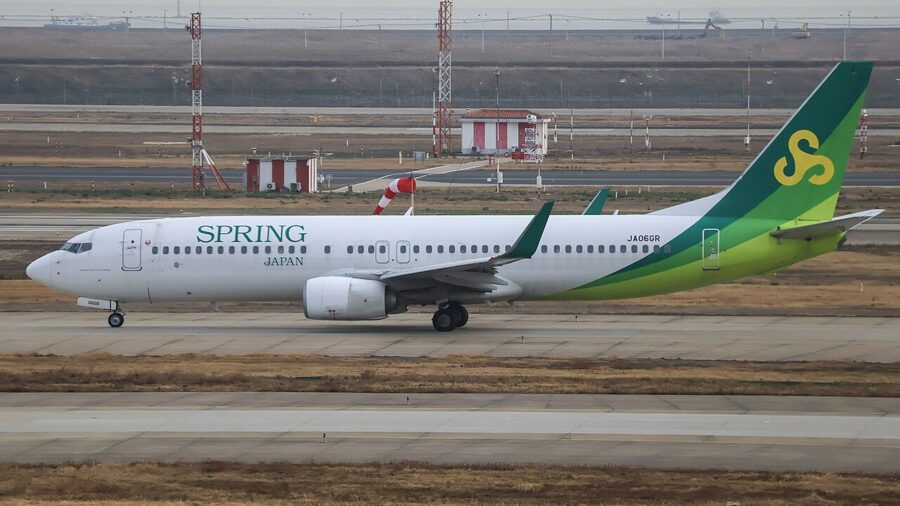

Booking a JAL Explorer Pass flight, step by step
The Explorer Pass is the booking with paperwork, so it is the one worth walking through. Have your passport, your international flight confirmation and a credit card ready, and book at least 24 hours before departure.
- Open JAL’s Explorer Pass page for the country you live in; the US page charges dollars, the UK page pounds.
- In the search box, choose One-way or Round-trip and the number of passengers, then the From and To cities. Tokyo appears as TYO for any Tokyo airport and HND for Haneda alone.
- Pick your dates and press Book now. If a busy date shows nothing, the fare has sold out, not the flight.
- Choose the flight, checking which airport it leaves from if you searched all of Tokyo.
- Enter each traveler’s name exactly as in the passport, then the passport details, which JAL requires at purchase.
- Enter your international flight details. JAL warns that anyone not meeting the conditions may be told to buy a new ticket at check-in.
- Read the conditions screen: no changes, no refunds, economy only.
- Pay in full by card. There is no hold.
- Save the e-ticket email and booking reference, and bring the same passport on the day.
If you are not eligible or the fare has sold out, JAL’s ordinary fares are open to anyone. The cheapest, Special Saver, opens at midnight 360 days before departure, closes 28 days ahead or earlier, cannot be changed, and charges a higher cancellation fee from 54 days out. For holiday dates booked far ahead, it is worth a look.
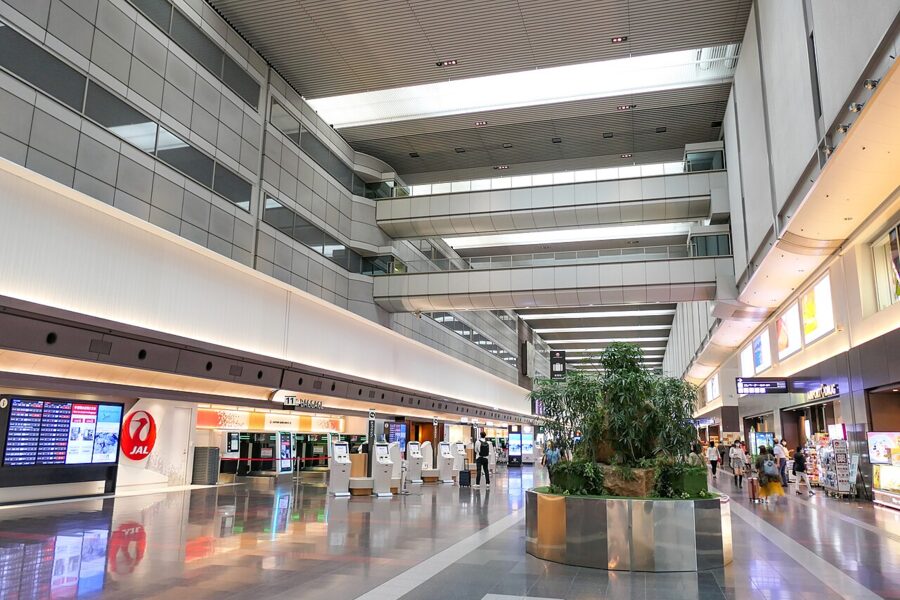

Booking a low-cost carrier without paying twice
Peach, Jetstar Japan and Spring Japan sell astonishing fares built to be topped up. The traps below are Peach’s, because its fee table is the most complete one in English, but the pattern holds for all three.
Pick the fare type before the flight
Peach has three fare types. Minimum is the bare seat. Standard adds one checked bag, a free seat choice and no ticketing fee. Standard Plus adds flight changes and a refund, minus a ¥500 (about US$3) fee, if you cancel.
Minimum alone carries a ¥640 (about US$4) ticketing fee per person per flight. Its checked bag costs ¥2,000 (about US$13) online, and a seat choice ¥800 to ¥1,800 (about US$5 to US$12). Bag plus ticketing fee is ¥2,640 (about US$17): if Standard costs less than that above Minimum, Standard is the cheaper ticket.
The 7 kg rule is weighed
Peach lets you carry on two bags weighing 7 kg together, and Jetstar Japan has the same 7 kg limit across two items. A wheeled carry-on can weigh over 2 kg empty, so this is a day-bag allowance. Buy the checked bag when you book: at Peach’s airport counter it costs ¥3,100 (about US$20).
Deadlines and cancellations
Minimum fares stop selling at 11:59 p.m. two days before the flight; Standard and Standard Plus sell until an hour before. Cancel a Minimum ticket and you lose everything, taxes included. On Standard, the fee table takes ¥1,000 (about US$6) up to 30 days out and ¥3,000 (about US$19) after, refunding the rest as Peach Points.
Peach will hold a fare for 24 hours for ¥300 (about US$2) per person per flight on Minimum and Standard, but not within 72 hours of departure or on sale fares.
Know the terminal before you leave
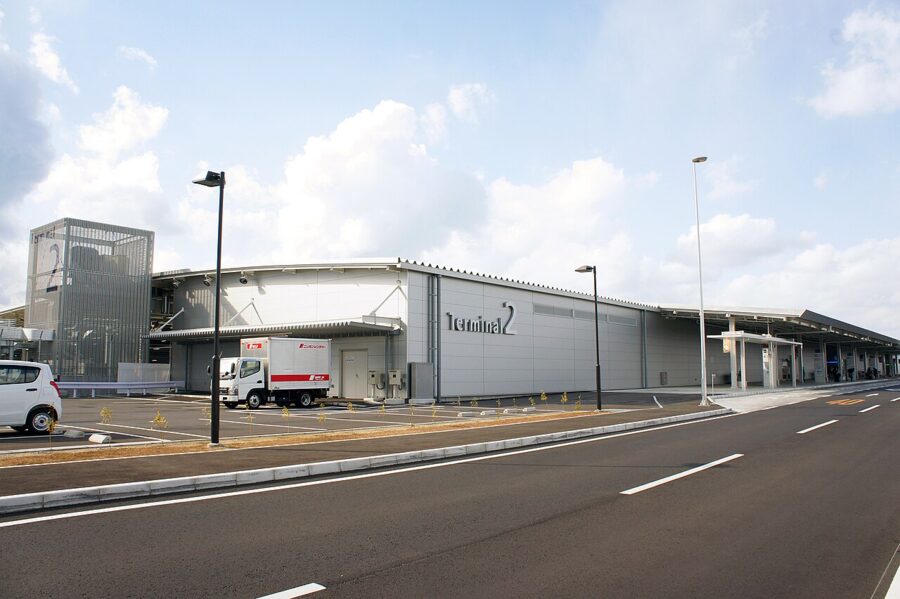
At Narita, Peach uses Terminal 1, while Jetstar Japan and Spring Japan use Terminal 3, a walk or short shuttle from Terminal 2. At Kansai, Peach uses Terminal 2, a free shuttle bus from the station. Miss the flight on a Minimum fare and the ticket is simply gone.

Which Tokyo airport: Haneda or Narita
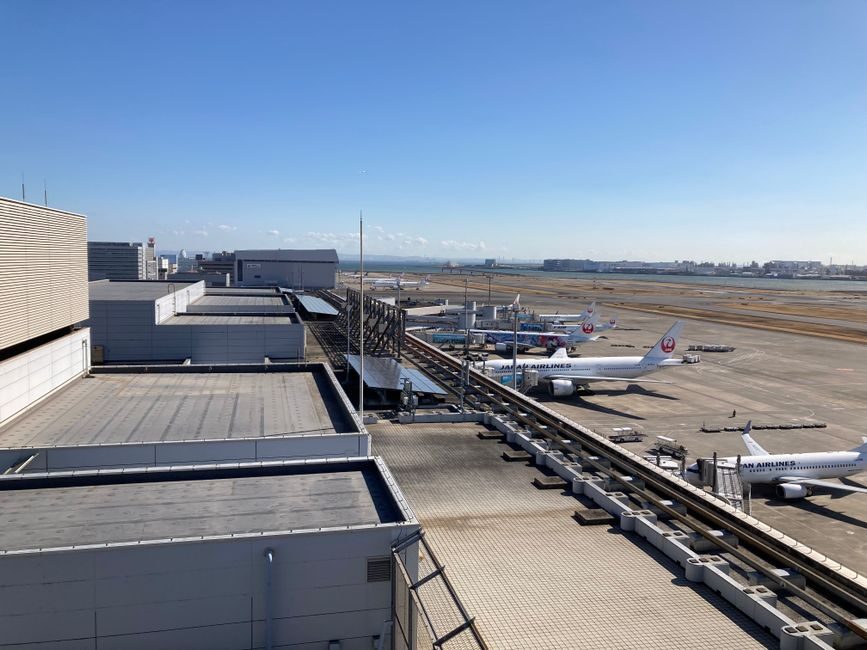
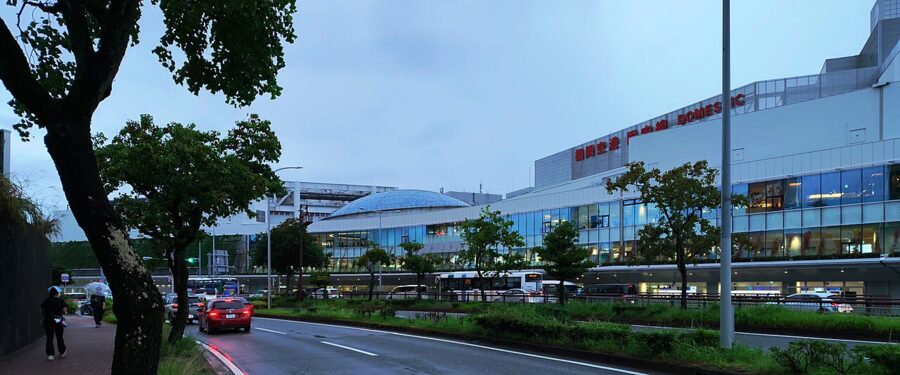
For domestic flights, Haneda is the default and Narita is the price of a cheap ticket. Haneda sits on Tokyo Bay between central Tokyo and Yokohama, and JAL and ANA run most of their domestic flights there. Narita is in Chiba, about forty minutes from Ueno on the fastest train.
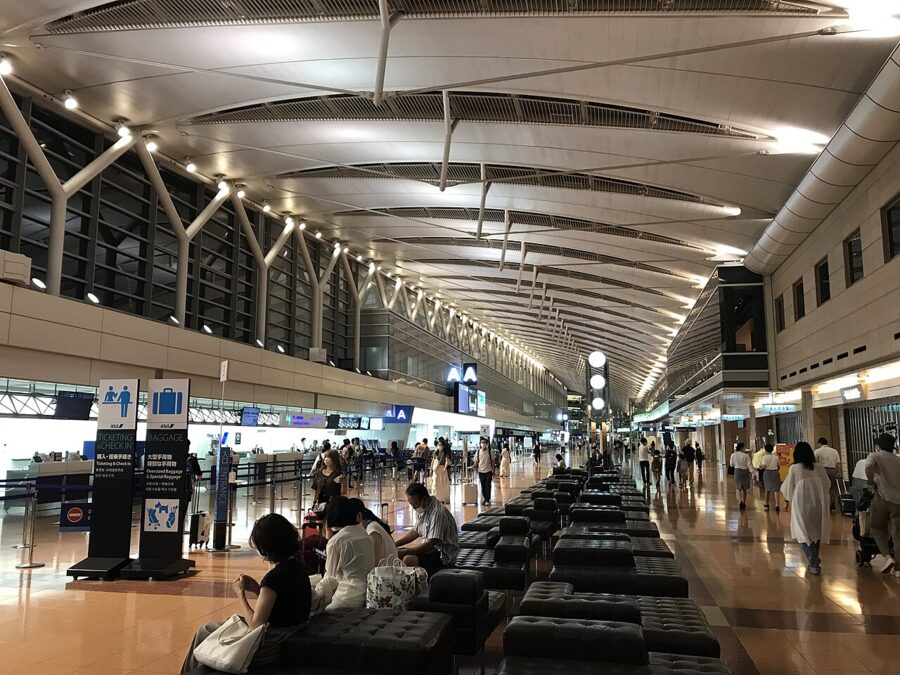
Haneda: two domestic terminals and a new satellite
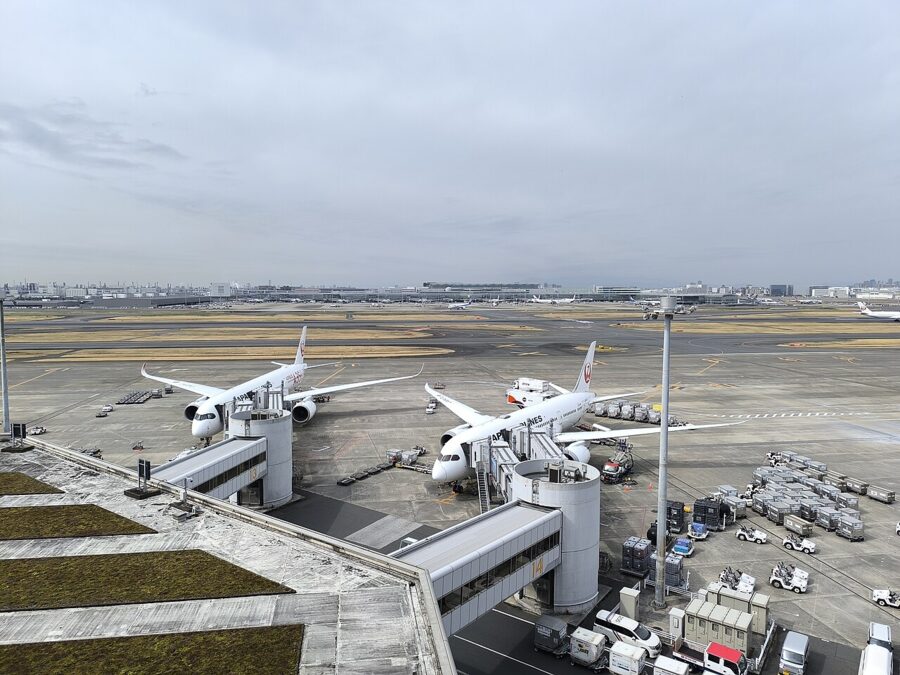
Terminal 1 is JAL and its group airlines, Skymark and StarFlyer. Terminal 2 is ANA, Air Do and Solaseed Air. Terminal 3 is international only; arriving from abroad, take the free shuttle bus or a train to the domestic side.
JAL splits Terminal 1 by destination: the North Wing for Hokkaido, Tohoku, Hokuriku, Tokai and Kinki, the South Wing for Chugoku, Shikoku, Kyushu and Okinawa. Since September 1, 2026, JAL group and Skymark flights also board at the new North Satellite, a longer walk from security than the old gates.


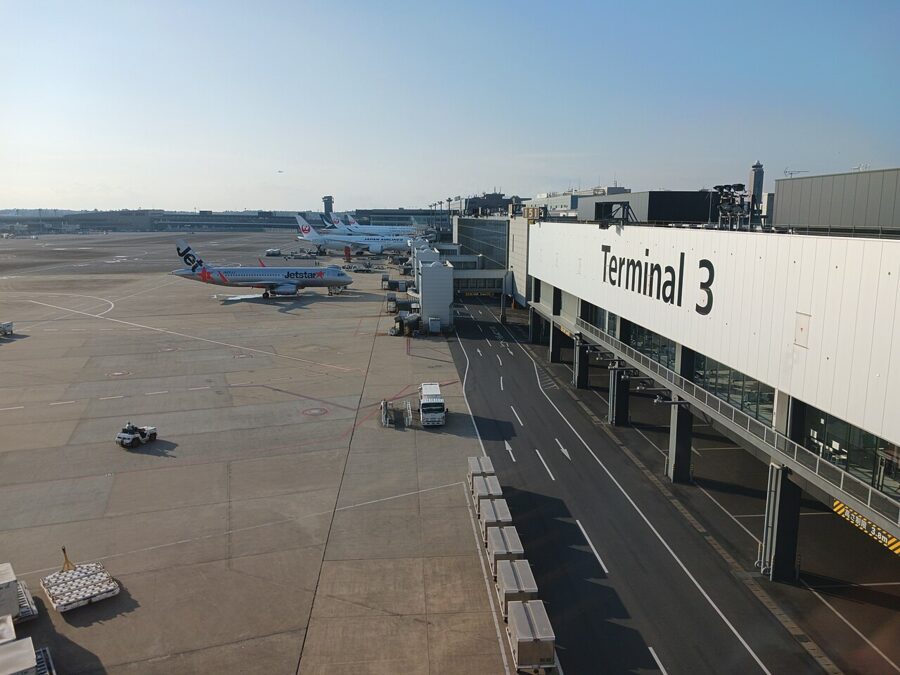
Narita: three terminals and a long ride
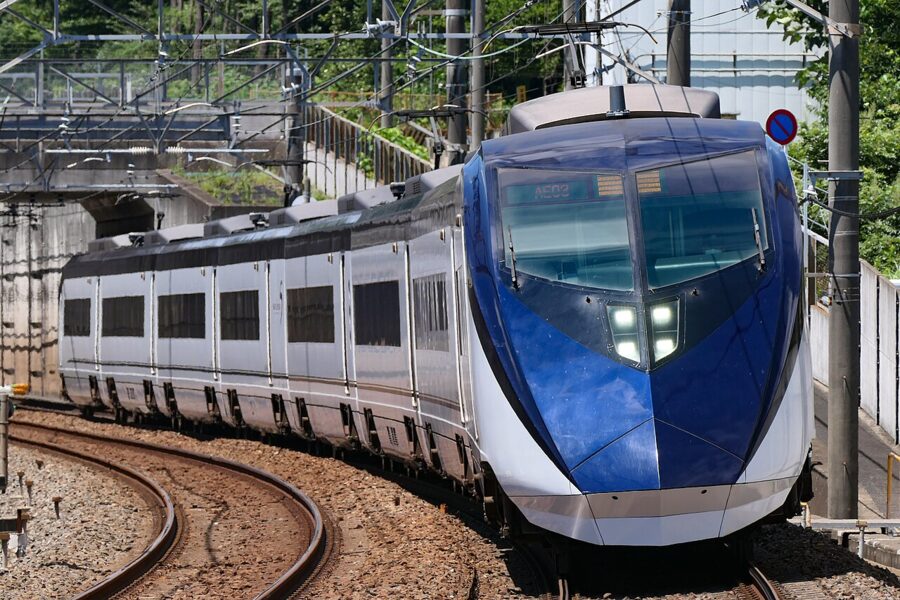
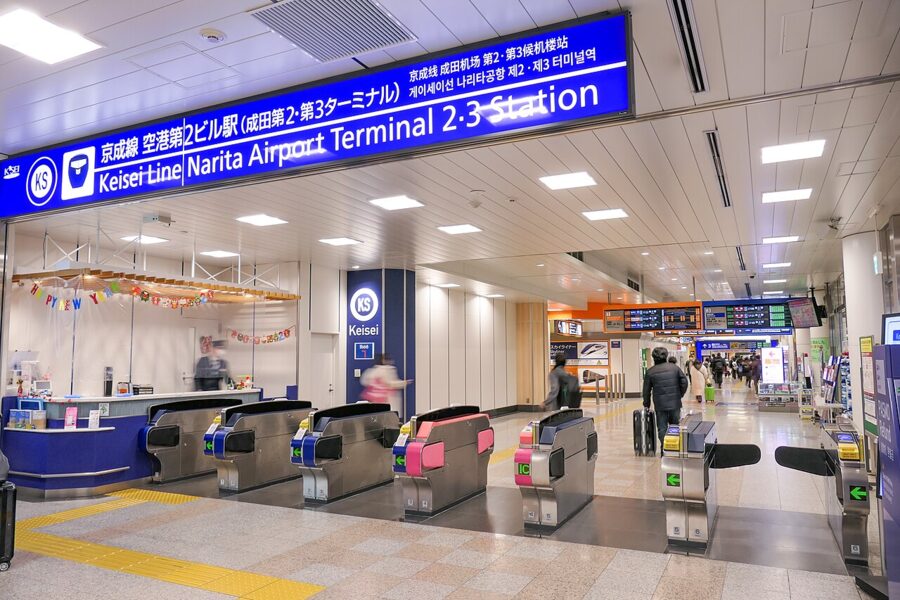
Peach leaves from Terminal 1, Jetstar Japan and Spring Japan from Terminal 3, a separate low-cost building. JAL and ANA keep a few domestic flights here, mostly to feed their international ones. The Keisei Skyliner from Ueno costs ¥2,580 (about US$17) as of November 2026; add it whenever you compare a Narita flight with a Haneda one.



Osaka: Itami, Kansai or Kobe
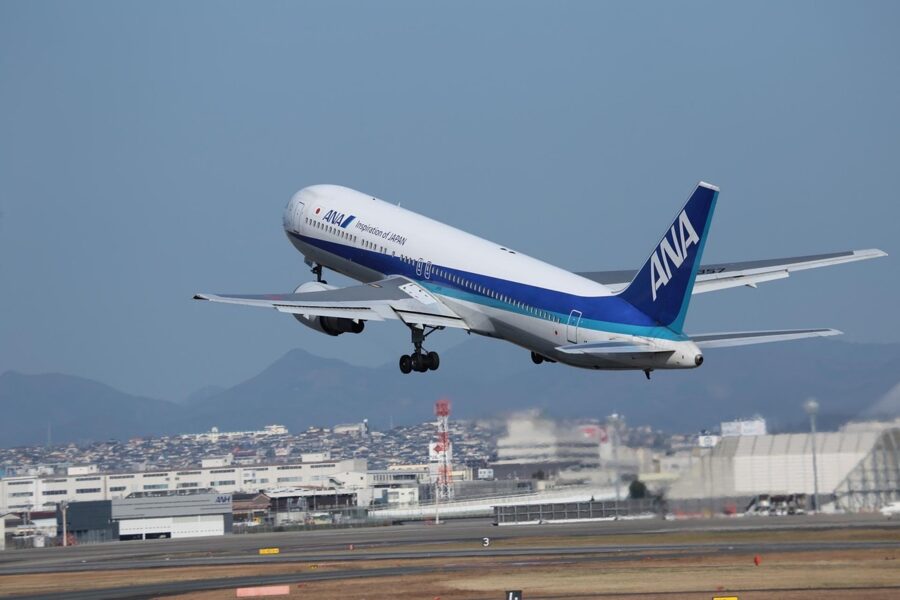
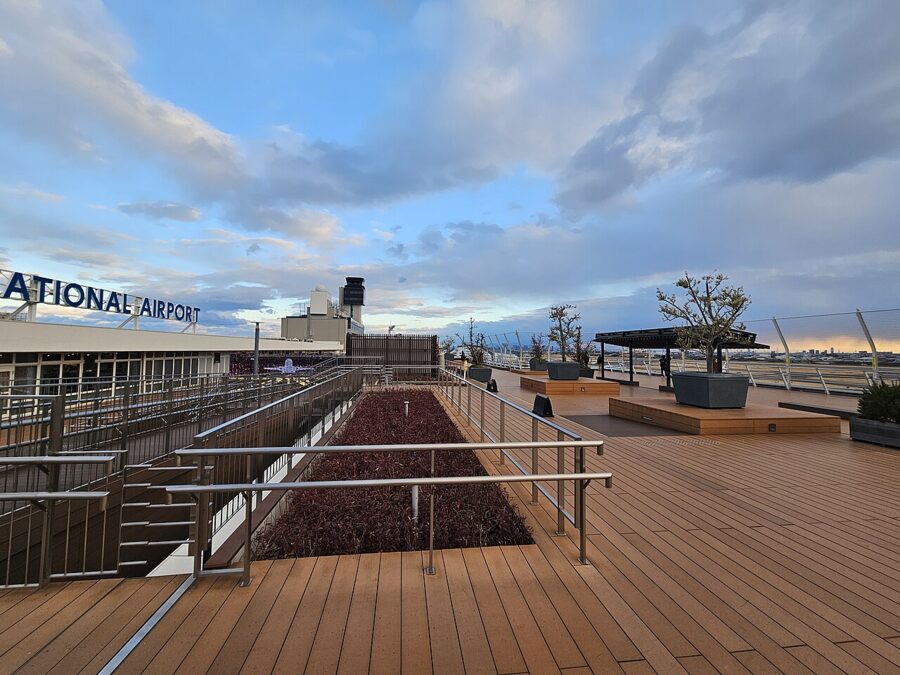
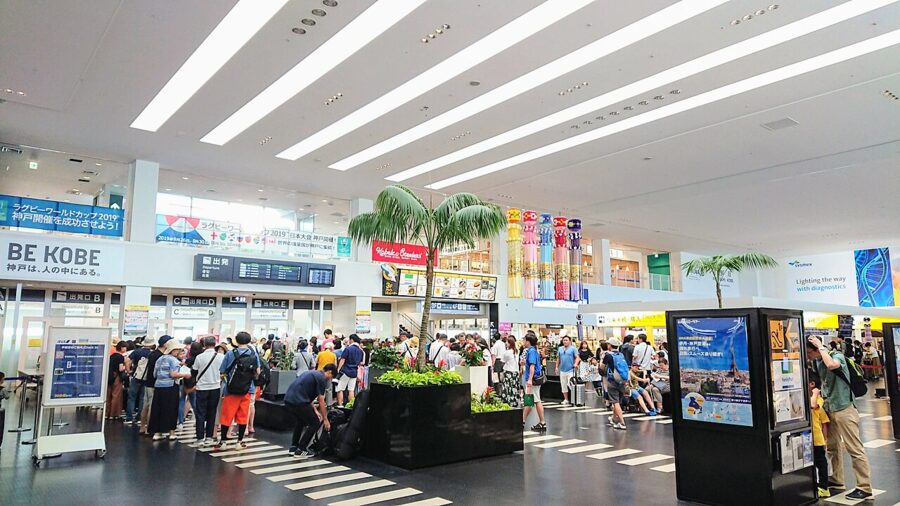
Itami, officially Osaka International Airport though it has no international flights, is the city airport: JAL and ANA use it for Tokyo, Sapporo, Okinawa and dozens of regional cities. Kansai, on its island in the bay, is the international gateway and Peach’s home, with Peach in Terminal 2. Kobe Airport, on reclaimed land off Kobe’s port, is Skymark’s western base and also takes ANA, Air Do and Solaseed Air.
From Osaka or Kyoto, I check Itami first, Kansai if Peach is much cheaper, and Kobe if Skymark has the route.



On the day: check-in, bags and security
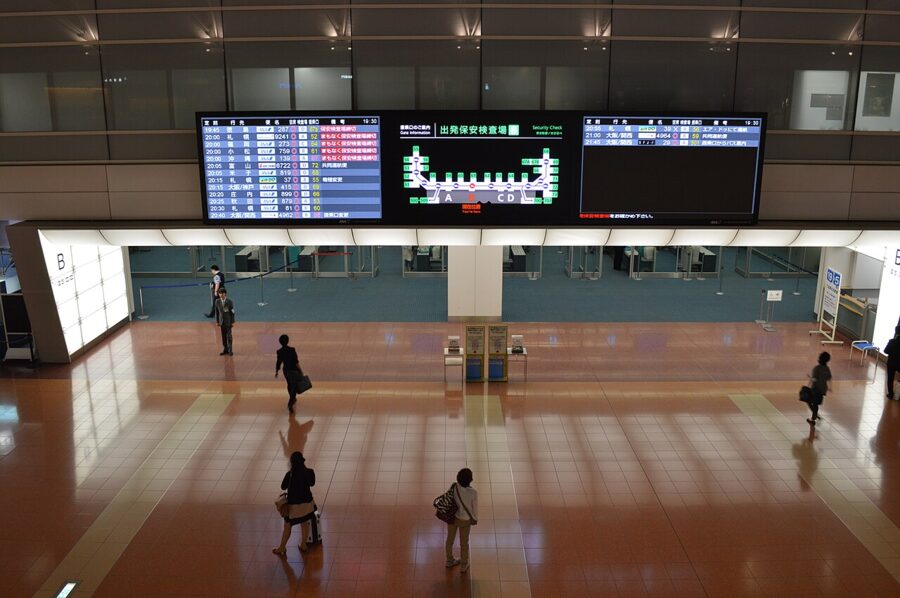
Japanese domestic deadlines are short and enforced to the minute, and departure time means when the aircraft starts to move. The signs to follow are kokunaisen (国内線, domestic flights), hoan kensajō (保安検査場, security checkpoint) and tōjōguchi (搭乗口, boarding gate).
| Airline | Check-in and bag drop close | Through security by | At the gate by |
|---|---|---|---|
| JAL, at Haneda | 30 minutes before departure (bags) | 20 minutes before | 10 minutes before |
| ANA, at Haneda | 30 minutes before departure (bags) | Allow plenty of time | 10 minutes before |
| Skymark, at Haneda | 30 minutes before departure | Checkpoint G | 15 minutes before |
| Peach | 30 minutes before departure | 25 minutes before | 20 minutes before |
| Jetstar Japan | 30 minutes before departure | Not published | Not published |
The Haneda bag rule is new from September 1, 2026, set jointly by the seven airlines there, as JAL’s Haneda notice and ANA’s check-in guide spell out. Skymark moved from 20 to 30 minutes at Haneda the same day and keeps 20 minutes at its other airports.
JAL advises arriving at least 30 minutes ahead without bags and about an hour ahead with them; I give every domestic flight that hour. Peach’s check-in rules shut the gate at 20 minutes, a tighter margin than JAL or ANA. Its app checks you in from two hours ahead, which skips the kiosk but not the bag drop.
At security, laptops come out, coats and boots go through the scanner, and you scan your boarding pass at the entrance. Carry your passport: JAL can ask for it on an Explorer Pass ticket, and foreign visitors must carry it in Japan anyway.

Two worked examples
Both use fares on the airlines’ own pages in late November 2026. Prices move daily, so read these as a way to do the sums.
Tokyo to Sapporo in late January, one suitcase
By train. Ueno to Sapporo with reserved seats on the Hayabusa and the Hokuto: ¥29,710, a little over eight hours, one change. Free with a Japan Rail Pass, but it costs a day.
On Peach from Narita. Peach’s sale for bookings from November 25 to 29, 2026 lists Narita to New Chitose from ¥4,000 (about US$26) on Minimum, for flights from December 13 to February 28 outside holiday blackouts. Add the ¥640 ticketing fee, airport charges of ¥450 (about US$3) at Narita and ¥530 (about US$3) at New Chitose, and ¥2,000 for the bag: ¥7,620 (about US$49). With the Skyliner it is ¥10,200 (about US$65), with a 7 kg carry-on and no changes.
On JAL from Haneda. The Explorer Pass showed Tokyo to Sapporo from US$80 to US$88 for late January and early February 2027, all charges included. That buys Haneda, two 23 kg bags and JAL’s normal carry-on rules. For roughly US$15 to US$25 more, I would take JAL unless the sale lines up exactly with your dates and you pack light.
Fukuoka to Naha in January, one bag
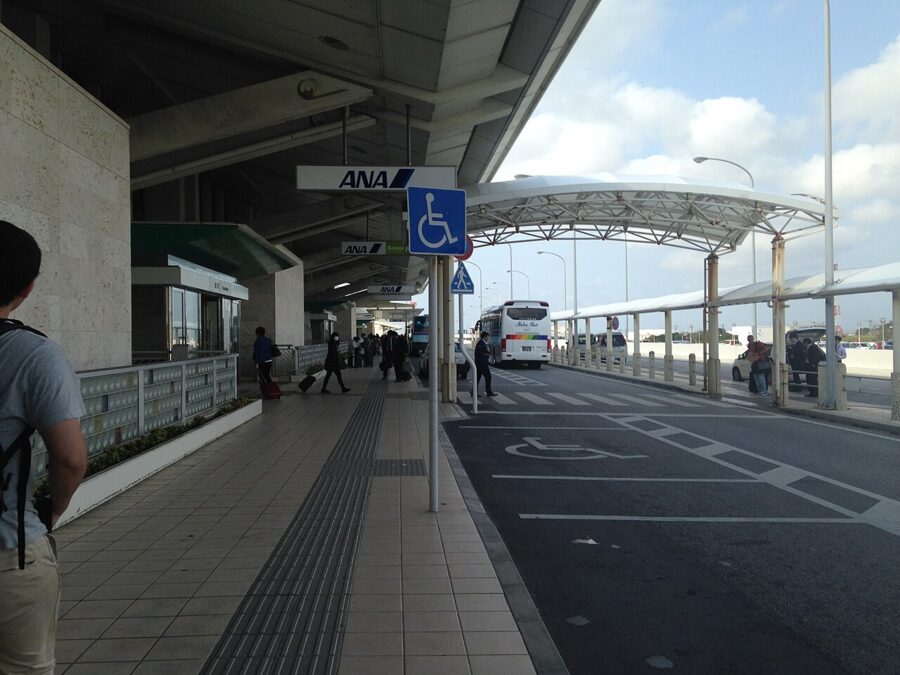
The same sale lists Fukuoka to Naha from ¥4,000 on flights MM285, MM287 and MM291, December 13, 2026 to February 4, 2027, except December 24 to January 5. On Minimum, add ¥640, airport charges of ¥110 (about US$1) at Fukuoka and ¥240 (about US$2) at Naha, and ¥2,000 for the bag: ¥6,990 (about US$45). A seat choice at the back adds ¥800.
Then price Standard on the same flight. It includes the bag and seat and drops the ticketing fee, so if it costs less than ¥2,640 above Minimum, it wins, with a later booking deadline too. For JAL, run the Explorer Pass search for your date; the fare shows only while seats remain.



Book the rooms at each end once the flight is fixed, since a low-cost fare cannot follow a hotel change; booking hotels in Japan is easier with the travel days settled. For Tokyo to Osaka, skip the airport entirely: the train is faster, and a night highway bus is cheaper.
For anything longer, go back to the eight-hour question. Look up the train time first, and if it runs past five hours, open the Explorer Pass search and Peach’s fares side by side before the cheap seats on your date are gone.