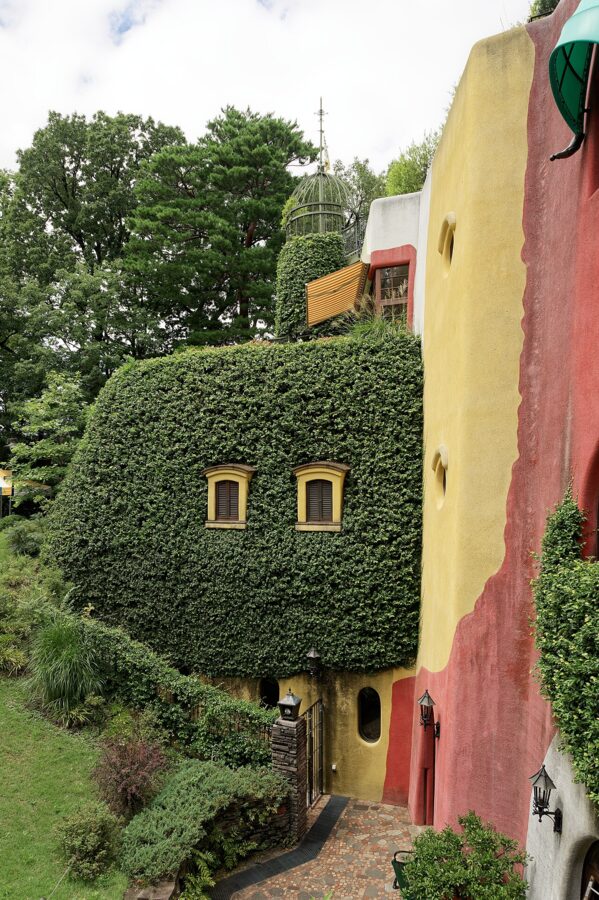

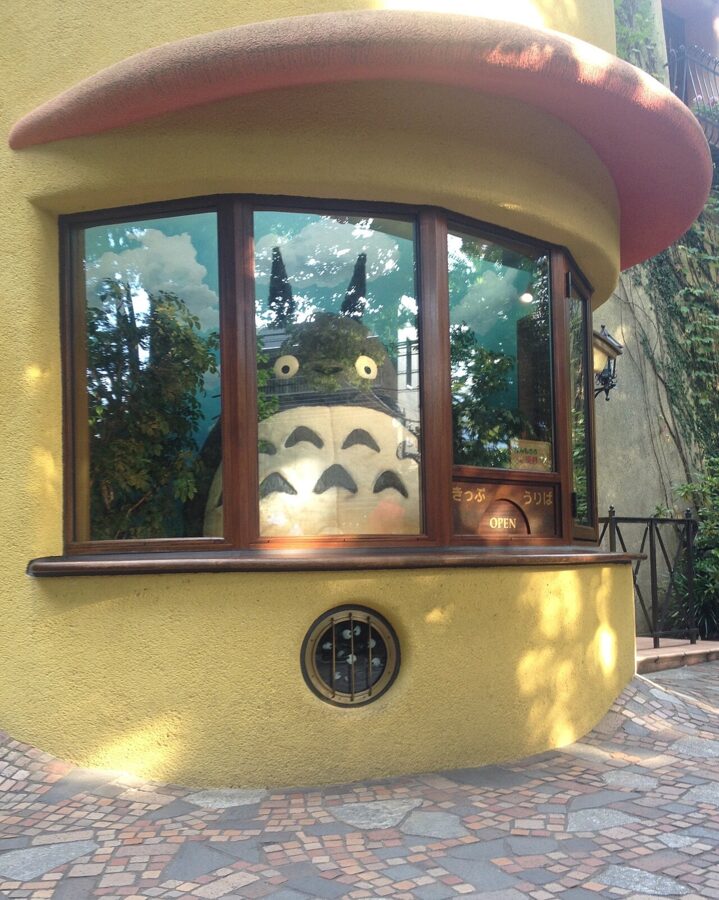
The Ghibli Museum has a ticket booth at its gate, and Totoro is sitting in it. It is a fake. The museum in Mitaka sells nothing at the door, so your visit is decided weeks earlier, at 10 a.m. Japan time on the 10th of the month before you go, on a Lawson Ticket web page.
Contents6 parts
The system is fair and cheap: an adult ticket costs ¥1,000 (about US$6), and every sale opens at a published hour. But the best days go fast, and the name and ID rules are strict enough that a ticket bought the wrong way gets you turned away.
Prices and rules are as of November 2026. One change matters if you have read older advice: from November 2026 admissions the museum moved to a QR-code ticket system and added a fee of ¥110 (about US$0.70) per ticket.

How the ticket system works
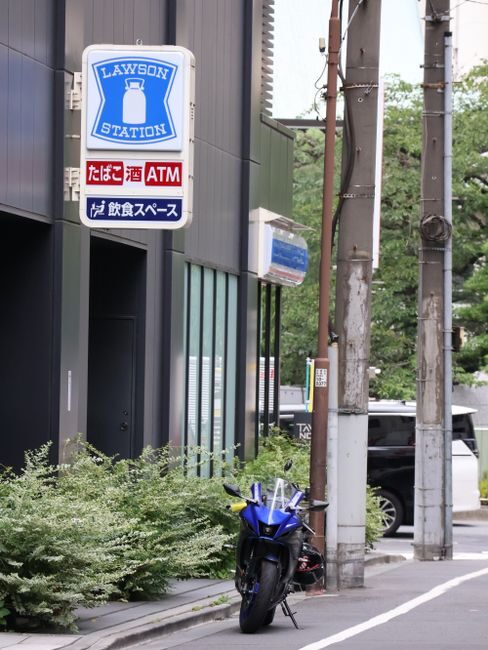
All admission is by advance reservation for a set date and entry time, and Lawson Ticket is the only seller. There are two Lawson sites. The Japanese one, called Lo-Tike, is for people living in Japan, and Lawson’s own help pages say it cannot be used from overseas, even when it still shows stock for a day the English site has sold out. Visitors from abroad buy through the English site, which the museum links from its official ticket page under “Lawson Ticket (English)”.
The day sales open
Tickets for a whole calendar month go on sale at once, at 10 a.m. Japan Standard Time on the 10th of the month before. Tickets for any day in January 2027 go on sale on December 10, 2026; February goes on sale January 10. Sales run until the day itself or until a slot fills, whichever comes first.
Japan has no daylight saving, so the conversion shifts with your own clock. In the northern winter, 10 a.m. in Tokyo is 8 p.m. the evening before in New York, 5 p.m. the evening before in Los Angeles, 1 a.m. in London and noon in Sydney. Add an hour for New York, Los Angeles and London in their summer, and take one off for Sydney in its winter.
Entry times, hours and closed days
The museum is open from 10 a.m. to 6 p.m., and you choose one of seven entry times: 10 a.m., 11 a.m., noon, 1 p.m., 2 p.m., 3 p.m. or 4 p.m. You must walk in within an hour of the time on your ticket. There is no set exit time, so a 10 a.m. ticket buys you the whole day if you want it, while a 4 p.m. ticket gives you two hours at most.
It closes every Tuesday, plus longer breaks that change from year to year; in 2026 it shut for maintenance from November 4 to 18. Check the calendar at the bottom of the ticket page before you set your heart on a date. When a typhoon threatened the trains on September 21, 2026, it let ticket holders in late, and it posts notices like that on its site and its X account.
Prices as of November 2026
| Age | Admission |
|---|---|
| 19 and over (adults and university students) | ¥1,000 |
| 13 to 18 (high school and junior high) | ¥700 (about US$4) |
| 7 to 12 (elementary school) | ¥400 (about US$3) |
| 4 to 6 | ¥100 (well under US$1) |
| 3 and under | Free, no ticket needed |
Each ticket now carries the ¥110 fee on top, and there are no group rates or other discounts. At ¥1,110 all in for an adult, it is cheap, which is part of why it is so hard to get.
Booking it, step by step
Before the 10th
- Open the museum calendar and pick a first choice and two back-up dates, with more than one acceptable entry time on each.
- Decide who is going. Every ticket goes on one order under one lead name, and you cannot add people later.
- Have your passport to hand. Enter the lead name exactly as it is printed there.
- Have a credit card, an email address you can check on your phone, and your phone number with its country code.
- Work out 10 a.m. Japan time in your own time zone and set two alarms.
On the day
- Be on the museum’s ticket page a few minutes before 10 a.m. Japan time and click the Lawson Ticket (English) button.
- The first screen is Lawson Entertainment’s terms of use. Tick the box next to “Agree” and go on to the next screen.
- On busy release days, expect an online waiting line before the sale opens. Leave the page alone; refreshing can cost you your place.
- When you get in, pick the date and entry time, then the number of tickets in each age band.
- Fill in the lead name, email, phone and card details. The forms are strict about format, so if the phone field rejects your number, try it with the country code and no plus sign or dashes.
- Check the date and time once more, then pay. Nothing can be changed afterward.
- Keep the confirmation email. It tells you what to bring and show at the museum.
If a slot you clicked turns out to be gone by the time the page loads, go straight to your back-up rather than trying the same one again. If your dates can move at all, I would aim at a weekday rather than a weekend.
Names, ID and the six-ticket limit
These rules come from Lawson’s Ghibli Museum pages. The ticket is a named ticket: the purchaser’s name is printed on it, and Lawson asks you to buy with the account of the person who will actually visit. One account can make one purchase per admission month, for up to six tickets. Lawson does not allow buying for someone who is not coming.
Your whole party must enter together with the lead purchaser. Staff may check the lead purchaser’s ID at the entrance, so bring your passport. After purchase, Lawson cannot change the name, the date or the time, and it does not refund tickets.
If the lead purchaser falls ill, the rest of the party cannot go in on their own, so plan around the person whose name is on the order.
What the ticket looks like
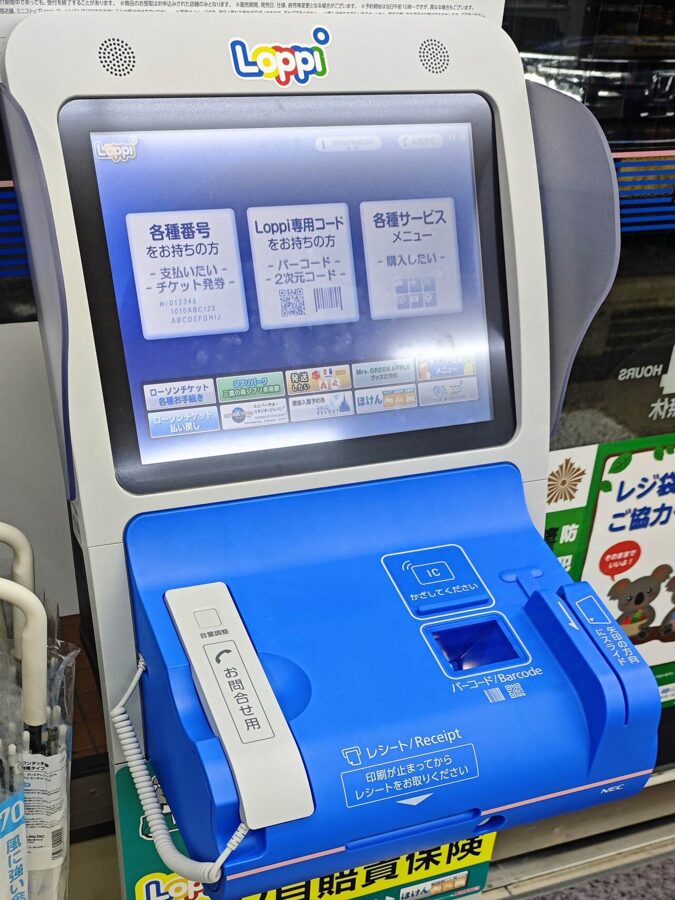
There are really two tickets. The first is what you buy: since November 2026, a reservation built around a QR code. On Lawson’s domestic site, buyers choose between an e-ticket shown in a phone browser through a service called MOALA Ticket, or a paper ticket printed at a Loppi machine in a Lawson store. The e-ticket needs SMS to a Japanese mobile number starting 090, 080 or 070, so it is built for people with a Japanese phone.
For e-tickets, the QR code only appears on the day of entry, and a screenshot or a printout of it will not get you in. Whichever version you hold, follow the confirmation email to the letter on what to show at the entrance, and keep your passport with it.
The second ticket is the one you keep. At the real reception desk you are handed a strip of genuine 35mm film from a Ghibli feature, and which scene you get is luck. Hold it up to the light once you are inside. Children get a step up at the counter so they can take theirs with their own hands.
Sold out: what works and what to skip
There are no door sales, no standby line and no same-day tickets at the museum. The resident quota you may read about is real but closed to you: it is sold in person at the Mitaka tourist information desk to people who live, work or study in Mitaka and five neighboring cities, against proof of address.
The official bus tour
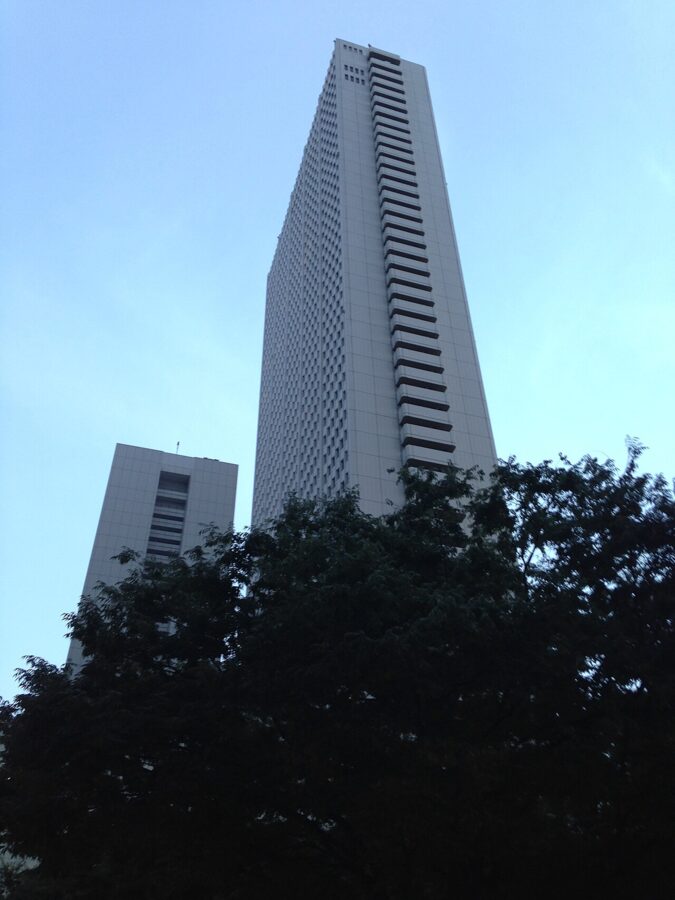

The museum’s ticket page names one other route for overseas visitors: the Ghibli Museum and Ghibli Film Appreciation Bus Tour run by Sunrise Tours, part of the JTB group. It leaves from the Sunrise Tours desk on the third floor of the Keio Plaza Hotel’s Main Tower in Shinjuku at 10:20 a.m., gives you 2.5 hours in the museum, then lunch, then the Edo-Tokyo Open Air Architectural Museum in Koganei Park, a collection of rebuilt old houses and shops.
The English-speaking tour leader does not guide you inside; you walk the museum on your own. The tour is sold only to visitors from overseas, takes bookings until 5 a.m. on the day if seats remain, and charges cancellation fees from ten days out. It is priced as a full-day tour with lunch (check the figure on its booking calendar), and it is the one official way in that does not depend on winning the Lawson sale.
Requests for April to December 2027 are already open, but the museum has not set its open days that far ahead, so confirmations start only in January 2027.

Other tours, and resellers
Other agencies sell Ghibli-themed day trips from Tokyo. Before you book one, find the line in “included” that names a Ghibli Museum admission ticket; a tour that only drives past the museum is not the same thing.
Skip resale completely. There is no official resale or transfer system: Lawson’s rules forbid buying for resale, tickets are named, and the museum says plainly that a resold ticket will be refused at the entrance. Japanese flea-market apps and auction sites do list Ghibli Museum tickets, and many of those listings are used film strips, a keepsake that opens no doors.
If your dates are gone, the real fallbacks are a different month, a weekday slot, or the bus tour. Or look at Ghibli Park in Aichi, near Nagoya.
Getting to Mitaka
The museum is at 1-1-83 Shimorenjaku, Mitaka, in the western section of Inokashira Park. Two stations serve it, Mitaka and Kichijoji, one stop apart on the JR Chuo Line.

From Mitaka Station
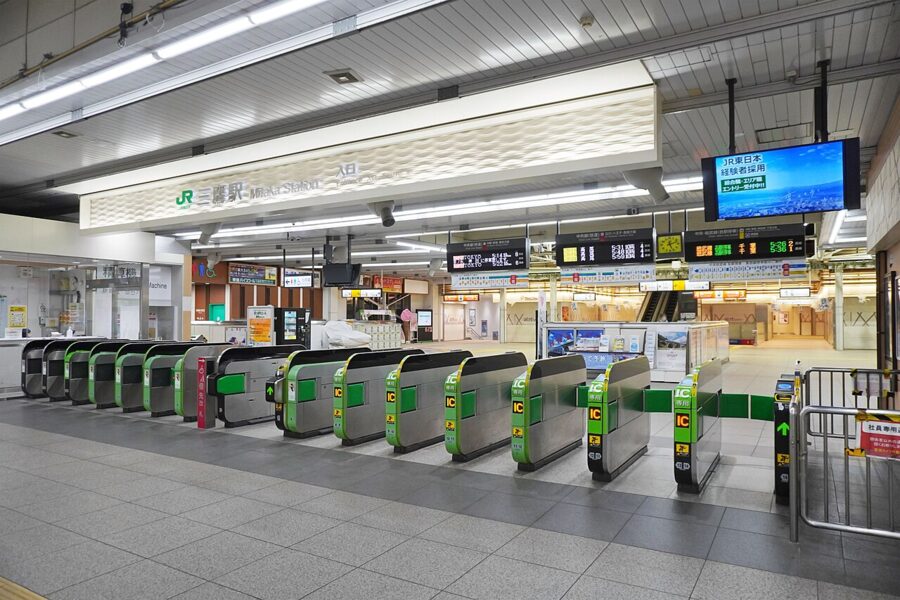
Take the JR Chuo Line rapid service from Shinjuku; the museum puts the ride at 20 minutes, and from Tokyo Station it is about 35. The line is JR East’s, so the Japan Rail Pass covers it, and so does an ordinary Suica or other transit IC card. Leave by the south exit.
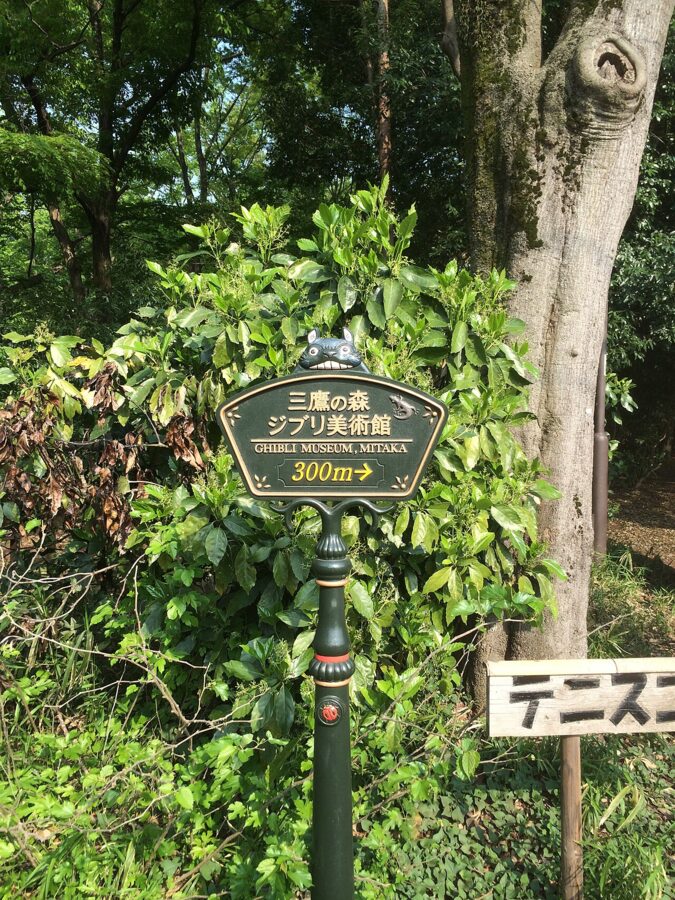
From there you can walk or ride. The walk takes about 15 minutes along the Tamagawa Josui, an old aqueduct that now runs as a narrow tree-lined channel, with signs pointing the way to the museum. On a dry day it is the nicer approach; leave the station half an hour before your slot.
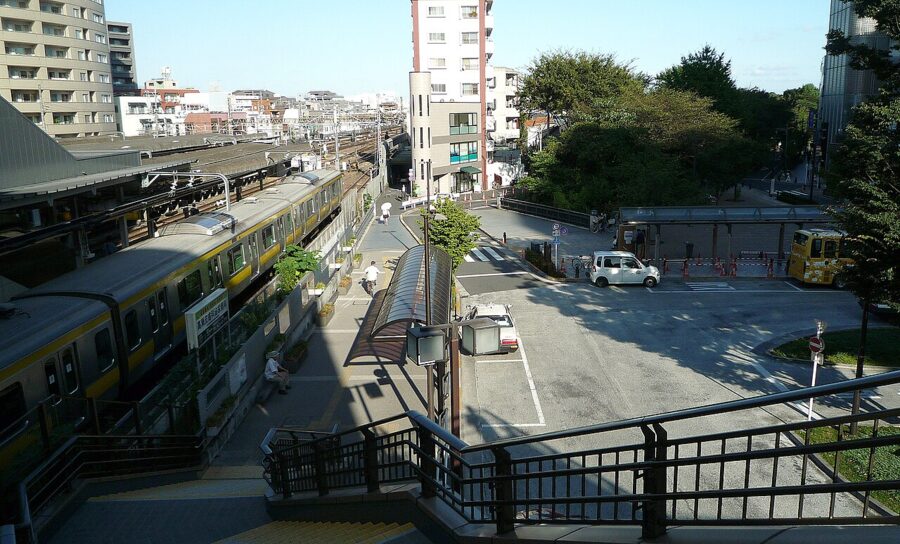
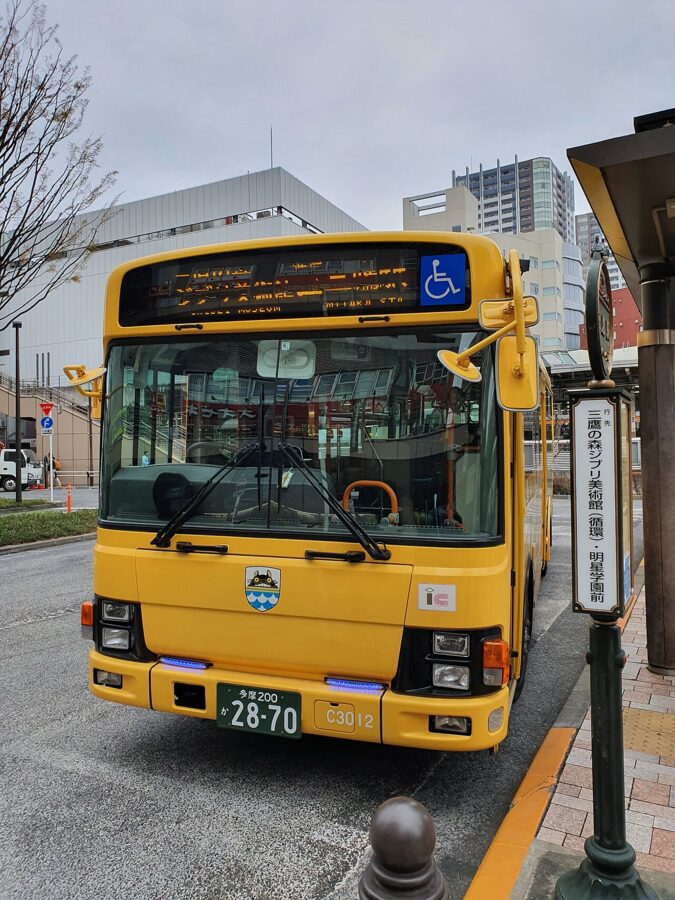
The community bus, and the actual Catbus
The Mitaka City Bus leaves from stop No. 9 at the south exit; the ride takes about five minutes. The fare, as of November 2026, is ¥230 (about US$1.50) for adults by cash or IC card, and for children aged 7 to 12 it is ¥120 by cash or ¥50 by IC card. The round-trip ticket older guides mention was dropped in September 2024, when fares went up.
The English page says every 15 minutes, but the museum’s Japanese timetable shows the loop route leaving every 10 minutes from 9 a.m. into the evening, plus a second route every half hour. It does not run on museum closed days. Some buses wear a Studio Ghibli livery, which is pleasant but not the Catbus.

The real Catbus is inside, on the second floor: a soft, oversized version of the My Neighbor Totoro bus, with soot sprites alongside. Only children of elementary-school age and younger may climb in.
From Kichijoji, through Inokashira Park
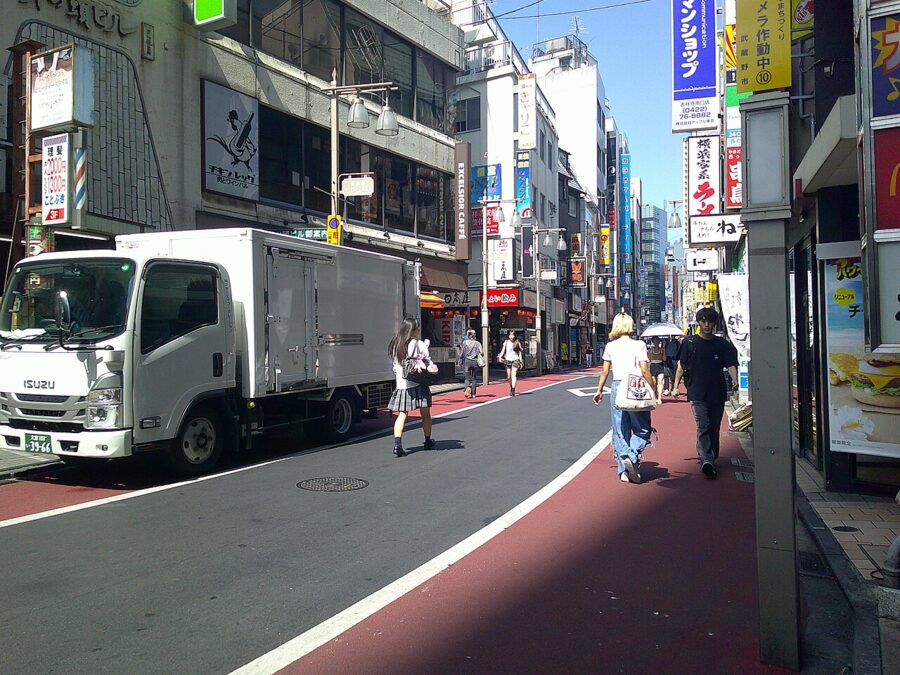
Kichijoji Station, on the JR Chuo Line and the Keio Inokashira Line, is about 15 minutes away on foot, and so is Inokashira-koen Station on the Keio line. This is the park walk: past the pond, through the trees and across into the west section where the museum stands.
From Kichijoji’s south exit, local buses toward Chofu leave every two to five minutes; get off at Mansukebashi. My pick is the bus out from Mitaka and the park walk back to Kichijoji, which has more places to eat (see how to book restaurants in Japan for the popular ones). Both stations are one train from Shinjuku, an easy base when you start booking hotels in Japan.
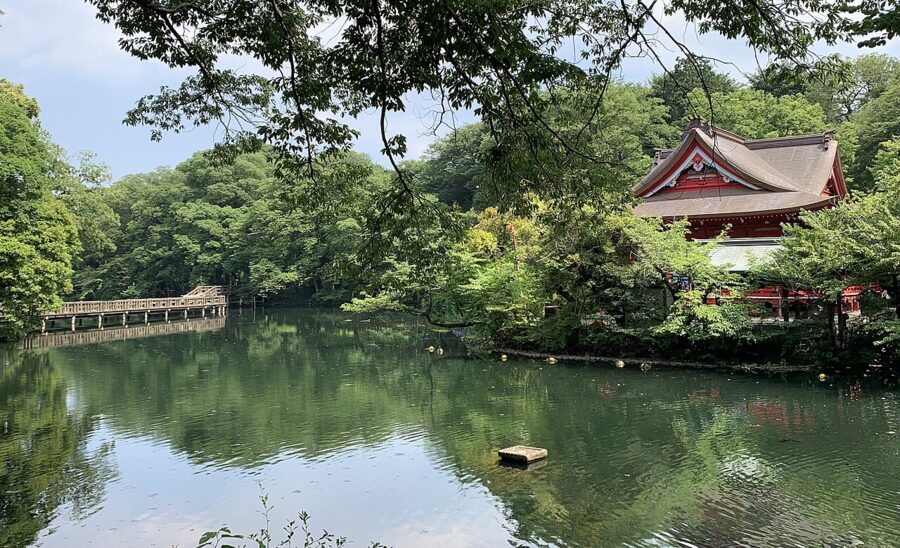

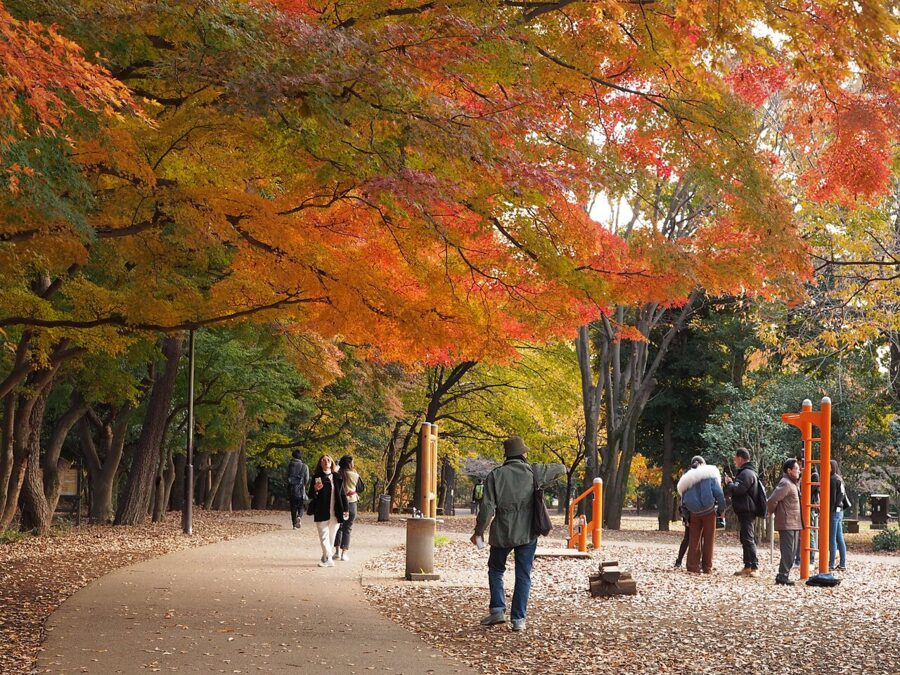

Do not drive: the museum has no parking, though it has space for about 100 bicycles.
Inside: the film, the rooms, and the camera rule
The museum has no set route. Once the film strip is in your hand, you are in a central hall that rises from the basement to the roof, with spiral stairs, bridges and a painted ceiling of fruit trees, Kiki on her broom and Nausicaä on her glider. On November 19, 2026, the glass dome at the top gained new fused-glass panels showing the parakeets of The Boy and the Heron, the first addition since Ponyo in 2009.
The short film
In the basement, the Saturn Theater seats about 80 people and shows short films Studio Ghibli made only for this room. Your film-strip ticket admits you to one screening per visit, so choose your moment. The program changes every month or so: Treasure Hunting, about nine minutes long, runs from November 19 to December 26, 2026, and The Day I Bought a Star, about 16 minutes, from January 3 to 31, 2027.
Most films get Japanese subtitles at a few screenings a day, and the museum lends hearing-assist earphones.
The rooms
The permanent exhibit, “Where a Film Is Born”, is five small rooms made up as if the animator has just stepped out: sketches pinned edge to edge, books, and model planes hanging from the ceiling. The special exhibition room changes about once a year. The current show, on the illustrator Yamawaki Yuriko’s workroom, opened on November 19, 2025 and is planned to run until May 2027.
The Tri Hawks reading room holds picture books and children’s books chosen by Miyazaki Hayao and the museum staff; the name plays on Mitaka, “three hawks”.

Café, shop and courtyard
The Straw Hat Café is the orange building with red window frames. It opens at 10:30 a.m. inside and 11 a.m. on the deck, and it serves a hot katsu sandwich, hot dogs, baked sweets and drinks. Between the café and the museum, a hand pump in the courtyard draws real well water.
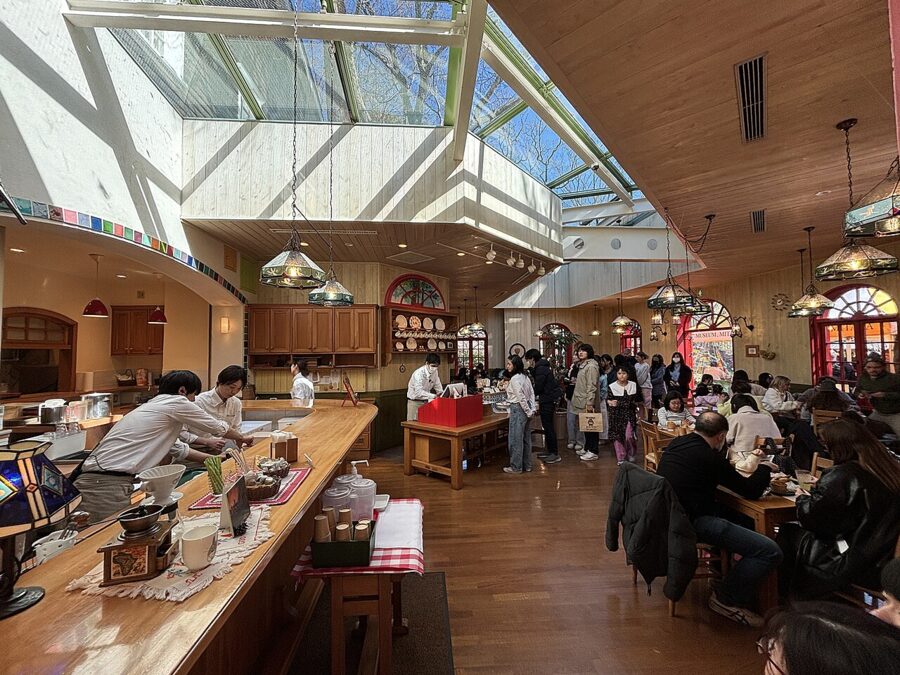

The shop, Mamma Aiuto, is named after the sky pirates in Porco Rosso and sells museum-only originals alongside the familiar character goods; some of them are now sold through the museum’s online shop as well. Shop, café and reading room take credit cards, e-money and QR payments.
The camera rule, and the others
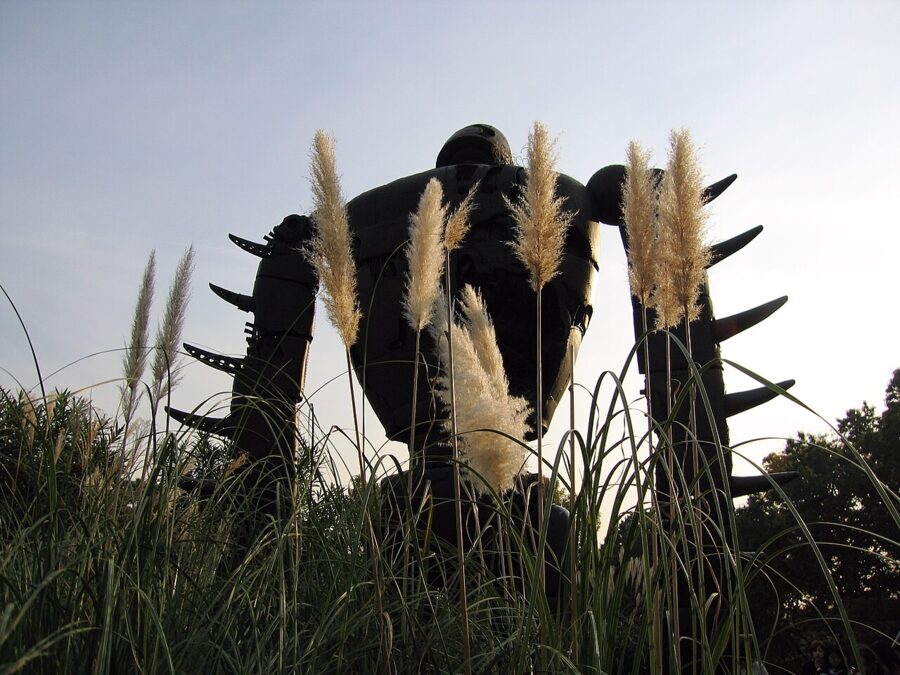
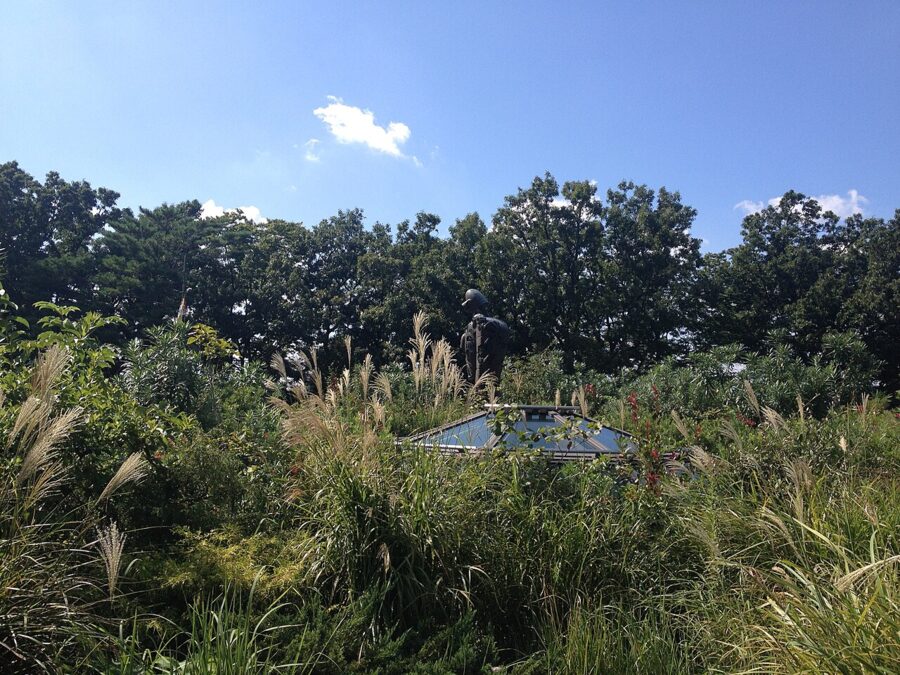
No photos and no video inside the museum. The museum says it wants you to look with your own eyes rather than through a lens, and to carry the memory home that way. The rule is for the inside of the museum; the rooftop garden is outdoors, and photos of the robot soldier up there are everywhere.

More rules from the museum’s visitor guide:
- No re-entry. Once you leave, the visit is over.
- No eating or drinking inside; food goes in the café or on its deck.
- Strollers stay in the stroller park outside.
- There are 96 free coin lockers; you put in ¥100 and get it back.
- One basement exhibit uses flashing strobe light, which matters if you are light-sensitive.
The bus tour allows 2.5 hours, which is about right for most adults with a coffee; families with a Catbus to climb can fill a morning.
Ghibli Park, in short
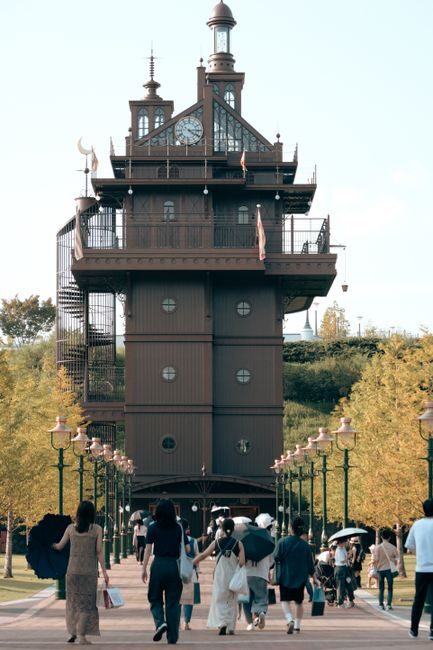
Ghibli Park is a different place with different tickets, and neither ticket works at the other. It fills five areas of Expo 2005 Aichi Commemorative Park, near Nagoya. Ghibli Park’s overseas tickets go on sale two months ahead, on the 10th at 2 p.m. Japan time, so February 2027 opens on December 10, 2026. As of November 2026, the O-Sanpo Day Pass Premium, which covers all five areas, costs adults ¥7,300 (about US$46) on weekdays and ¥7,800 (about US$49) on weekends and holidays, and the Standard pass for three areas costs ¥3,300 (about US$21) and ¥3,800 (about US$24), plus a service charge.
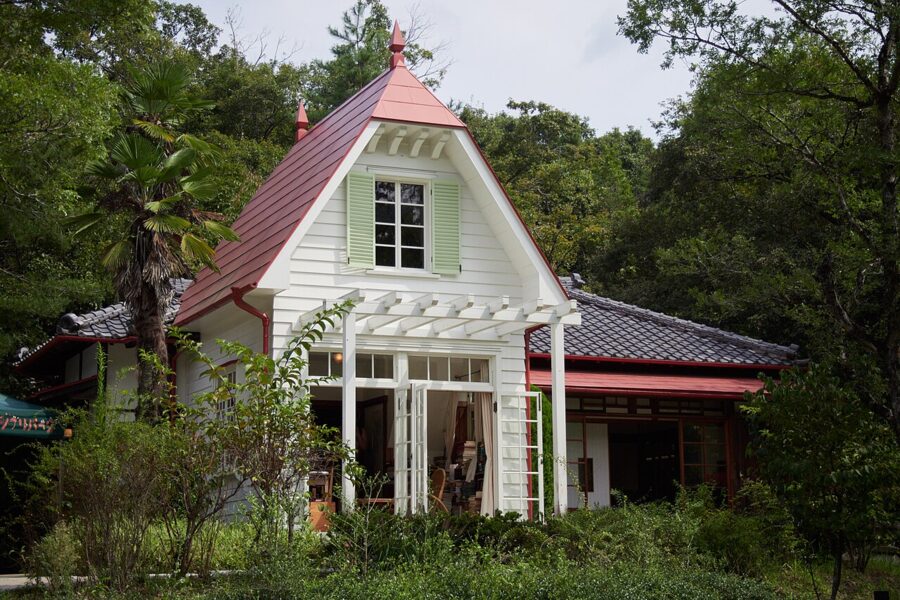
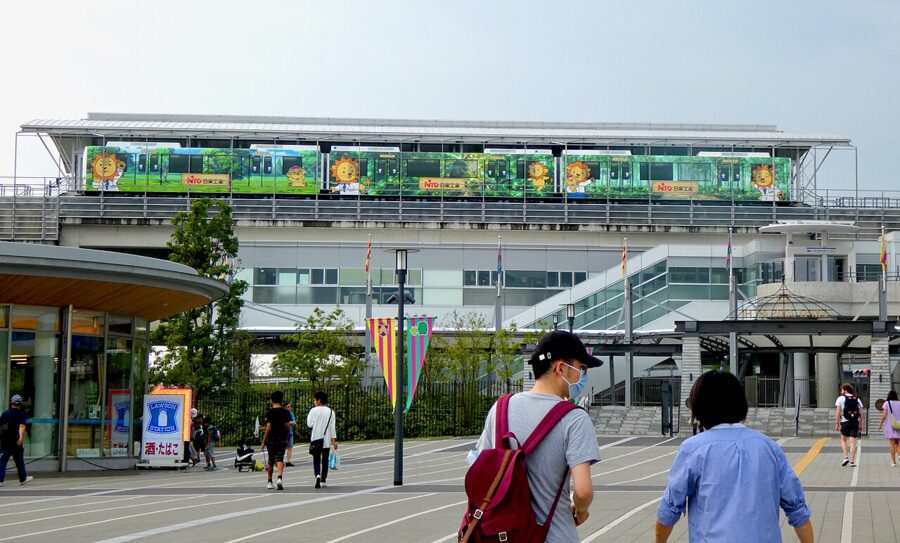
It is a long day from Tokyo. The Nozomi runs from Tokyo to Nagoya in about 100 minutes (see how to book Shinkansen tickets), and from Nagoya Station the subway and the Linimo line take about an hour to Ai-Chikyuhaku-Kinen-Koen Station, right in front of the park. Only Ghibli’s Grand Warehouse has a timed entry.

So the first job is not hotels or trains. Open the museum’s calendar, find the 10th of the month before your trip, and write 10 a.m. Japan time into your own calendar in your own time zone. The fake booth with Totoro in it will be waiting either way; the real ticket is the one you buy that morning.